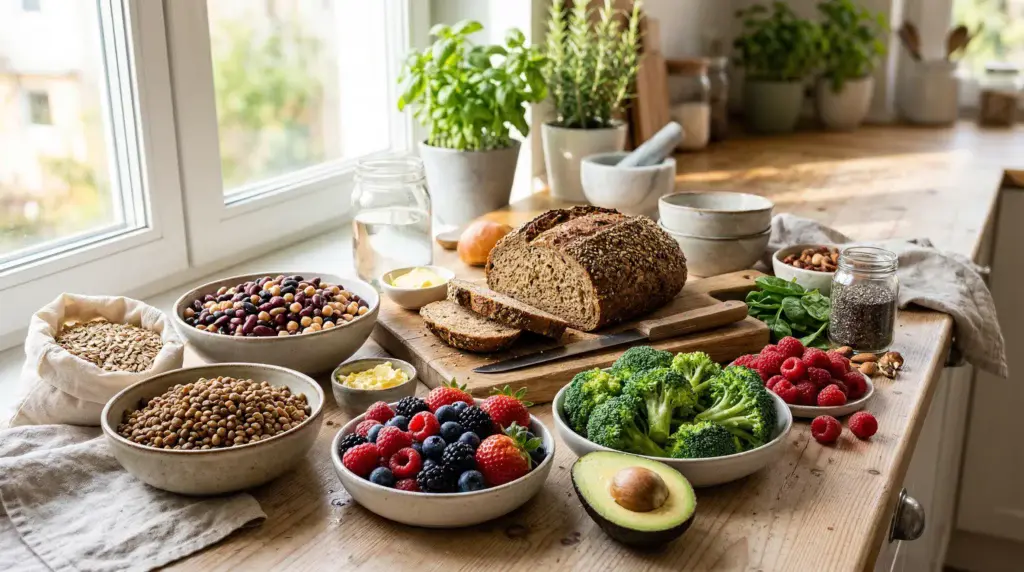

Adding fiber to your diet can boost your digestion and help out with other areas of health too, like heart and blood sugar levels. Even if you’re not dealing with any health concerns, it’s a smart choice for anyone who wants to feel fuller, keep things moving in the bathroom, and support overall wellness. I’m breaking down how you can slip more fiber into your daily routine, plus answering some of the most common fiber questions I hear all the time.
Why Fiber Matters in Everyday Nutrition
Fiber is a type of carbohydrate that your body can’t actually digest. Instead, it passes through your gut, doing some important work on the way out. Not everyone meets the daily recommended fiber intake, so paying closer attention to fiberrich foods can make a difference. It can help with feeling full after meals, steadying blood sugar, lowering cholesterol, and even reducing the chances of some diseases in the long run.
I often say fiber is the unsung hero of the nutrient world. Diets high in fiber are linked to lower risks of type 2 diabetes, heart conditions, and some cancers, according to the Harvard T.H. Chan School of Public Health. Plus, fiber’s effect on regularity can help people avoid uncomfortable constipation and support a healthy digestive tract over time.
Getting Started: Simple Ways to Add More Fiber
Piling on the fiber doesn’t mean you have to change your whole meal setup. It’s usually about making a couple of swaps and remembering to reach for those fiberrich snacks. Here are some starter tips for sliding more fiber onto your plate:
- Swap white bread for whole grain. Multigrain or 100% whole wheat breads double or even triple the fiber you get.
- Add beans to anything. Toss canned (and rinsed) black beans or chickpeas onto salads, pastas, or into soups for a fiber punch.
- Top your breakfast with fruit. Berries, pears, and apples all have a good fiber boost; perfect for yogurt bowls or cereal.
- Grab crunchy vegetables for snacks. Carrots, bell peppers, and snap peas work as super handy, raw, highfiber snacks.
- Try popcorn instead of chips. Popcorn is actually a whole grain and has more fiber than you might think. Go easy on the butter, though!
- Leave the skin on. Lots of fiber is in the skins of fruits and veggies like potatoes, apples, and cucumbers.
The easiest way to add fiber is to just swap out one thing at a time. Replacing a refined grain with its whole grain version is low effort but adds up over days and weeks. Even small additions, like sprinkling chia seeds on oatmeal, can move the needle quite a bit.
Types of Fiber: What You Need to Know
There are two main types of fiber to know about: soluble and insoluble. Both matter, and they work a little differently inside your body.
- Soluble fiber dissolves in water and forms a gel, which helps lower cholesterol and steady blood sugar. You’ll find it in oats, beans, apples, carrots, and citrus fruits.
- Insoluble fiber won’t dissolve in water; this kind is great for helping everything move smoothly through your gut, so it helps prevent constipation. Look for it in whole wheat, brown rice, nuts, cauliflower, and potatoes.
Both types are important, and most plant based foods contain a mix of both. By eating a varied diet packed with fruits, vegetables, whole grains, beans, and seeds, you’ll naturally get a good balance of both kinds. Fiber can also help feed the healthy bacteria living in your gut. These bacteria play a key role in regulating inflammation, producing certain vitamins, and even supporting mental health. So, building up your daily fiber intake isn’t just about digestion; it contributes to a stronger, more balanced gut microbiome as well.
Best High Fiber Foods for Different Needs
Sometimes, different health concerns can nudge you toward focusing on certain fiber sources. High fiber foods are helpful for everyone, but a few stand out for specific reasons.
Best High Fiber Foods for Diabetics
If you’re working with diabetes, fiber helps slow how fast sugar gets absorbed into your blood, which can help keep blood sugar levels steady. I usually suggest focusing on:
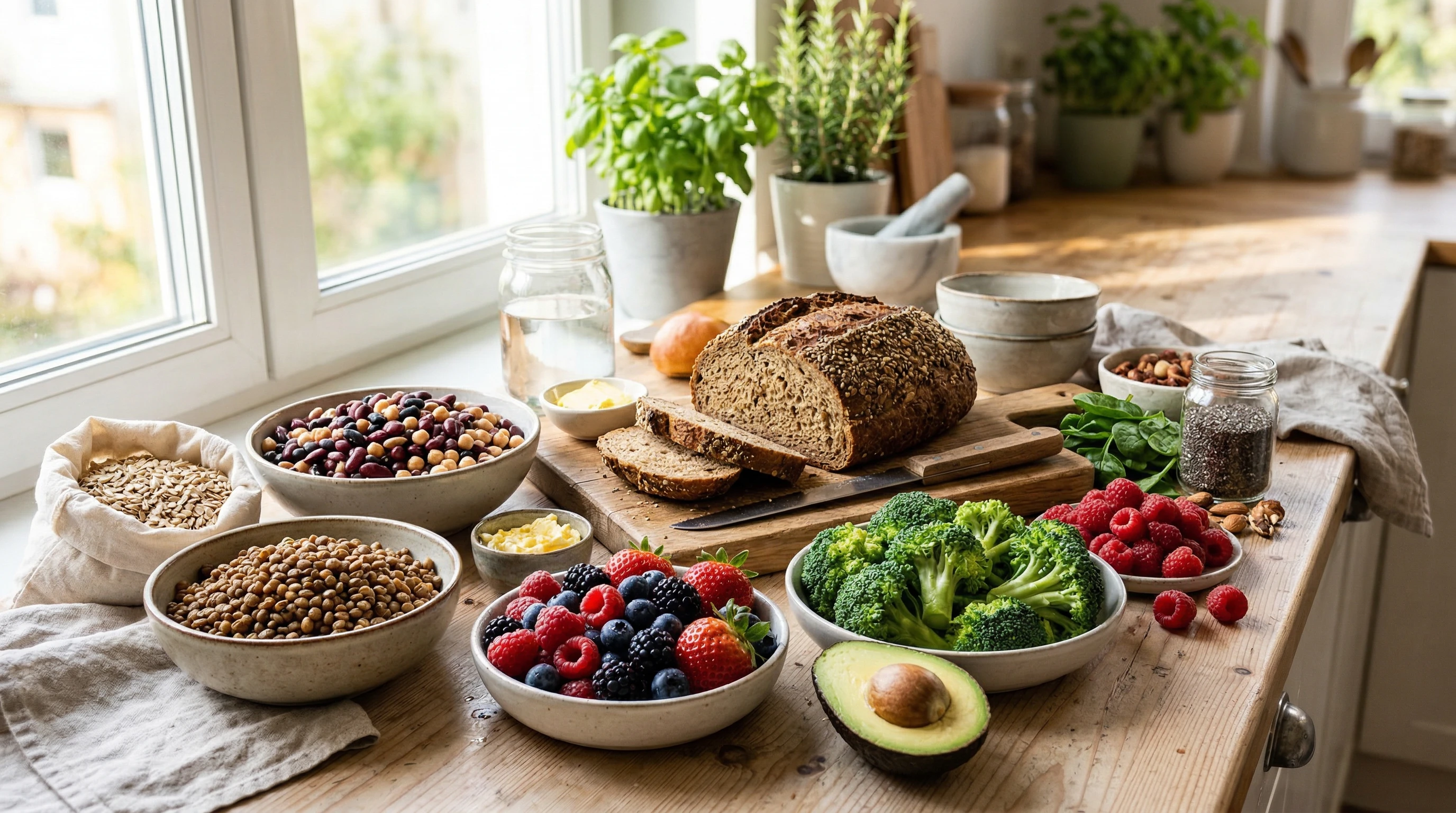
- Lentils and chickpeas
- Black beans, kidney beans, and pinto beans
- Avocado
- Berries (especially raspberries and blackberries)
- Pears and apples (with skin)
- Whole oats or steelcut oats
- Barley and quinoa
- Vegetables like broccoli, carrots, and sweet potatoes (with skin)
These foods don’t just offer fiber; they also have a mix of slow digesting carbs and helpful minerals. Pairing highfiber foods with healthy fats (like nuts or olive oil) can also help keep blood sugar more balanced. Eating these regularly can help you feel full for longer and might even support weight management, another important factor for blood sugar control.
How Much Fiber to Lower Cholesterol?
Soluble fiber is the part that helps drop cholesterol levels by binding to it in your gut and whisking it out of your system. Most studies and heart health guidelines suggest aiming for about 5 to 10 grams a day of soluble fiber for noticeable cholesterol lowering effects. But the overall fiber target for adults sits a bit higher.
For general health, the American Heart Association recommends women eat at least 25 grams a day, and men around 38 grams. Oats, barley, beans, apples, pears, and citrus fruits are good sources if cholesterol is something you’re keeping an eye on. Even adding just a bowl of oatmeal every morning makes a real difference.
The 5 to 1 Fiber Rule Explained
The 5 to 1 fiber rule is a quick and practical tip when you’re shopping for packaged bread and cereals. The rule says: look at the ratio of total carbohydrates to dietary fiber on the nutrition label. If the total grams of carbs divided by grams of fiber is 5 or less, you’re looking at a good highfiber option.
Example: If a slice of bread has 20 grams of total carbs and 4 grams of fiber, the ratio is 5 (20 divided by 4). That’s a solid choice. If the carbs are a lot higher compared to fiber, the product is probably made with more processed ingredients and less whole grain.
This quick check helps you pick products with more of the natural fiber that helps your body instead of just added fiber or clever marketing. Remember, whole foods like fruits, vegetables, legumes, and grains will usually provide more nutrients and fiber than processed products.
Everyday Fiber Challenges and RealLife Tips
- Going too fast can backfire. If you add a mountain of fiber overnight, you might get bloated or gassy. I always suggest increasing fiber intake slowly over a week or two, and keeping water intake up at the same time; that helps everything settle faster.
- Picky eaters can still get fiber. If someone in your house turns their nose up at veggies, try blending beans into soups, using whole grain pasta, or adding extra fruit to smoothies. You can also sneak grated carrots or zucchini into sauces and baked goods, giving a fiber boost without changing flavor too much.
- Travel can mess up routines. When I’m traveling or super busy, I pack highfiber bars (following that 5 to 1 rule) or little bags of roasted chickpeas or nuts to snack on. Dried fruit is handy too; just keep an eye on serving sizes, because the sugar content can stack up quickly.
- Getting kids to eat more fiber? Try adding mixed berries to pancakes, or letting them help build their own snack boxes with apple slices, whole wheat crackers, and nut butter. Kids often enjoy smoothies, so blend in a handful of spinach or oats to punch up the fiber content with hardly any fuss.
Common Fiber FAQs
Here are honest answers to some of the top fiber questions I hear:
What’s the easiest way to add fiber to your diet?
Switching your bread, pasta, or rice from white to whole grain, and tossing in a handful of beans or berries to salads or breakfast. Even small swaps add up if you keep at it. Chia seeds are also a winner; just sprinkle a spoonful onto yogurt or in smoothies for a quick bump.
What are the best high fiber foods for diabetics?
Beans, lentils, barley, oats, berries, avocado, and sturdy veggies (think: broccoli, carrots, and sweet potato) stand out. These have a good mix of soluble and insoluble fiber, and the slower carbs help with blood sugar control.
How much fiber to lower cholesterol?
Aim for at least 5 to 10 grams of soluble fiber a day, which is about one serving of oats with some berries in the morning plus beans at lunch. But more total fiber is even better; shoot for around 25 grams (women) or 38 grams (men) a day if you can.
What is the 5 to 1 fiber rule?
On packaged foods, divide total carbs by grams of fiber. If it’s 5 or less, it’s a solid highfiber choice. I use this trick for picking out cereal, bread, tortillas, or snack bars.
Final Thoughts: Building a Fiber Friendly Diet Without Stress
Adding fiber is a lot easier when you do it little by little and make it a habit rather than a hassle. Start with whole grains, beans, and extra vegetables, then try new recipes or products that fit your tastes. If you’re looking for recipe ideas, fiberrich foods are super flexible in soups, smoothies, salads, and even baked goods. And if you get stuck, plenty of apps and resources online can help track your fiber and give practical suggestions (try USDA’s FoodData Central for nutrition info).
As always, if you have any health conditions, such as diabetes, irritable bowel, or kidney issues, it’s a good idea to check in with your doctor or a dietitian before cranking up the fiber. Otherwise, experiment, snack on real foods, and notice how you feel. Energy, regularity, and that full, satisfied feeling after meals all show you’re on the right track!
If you make these small, sustainable changes, you may notice other benefits too—like more consistent energy levels, healthier cholesterol, and even some weight management perks over time. Just remember: building a fiber packed diet is about progress, not perfection. Enjoy the variety, try new foods, and take it at your own pace. Soon enough, eating more fiber will feel second nature, making your meals tastier and your body happier.