
High cholesterol is one of those problems that can build quietly for years.
No pain. No warning. No obvious symptoms in most people.
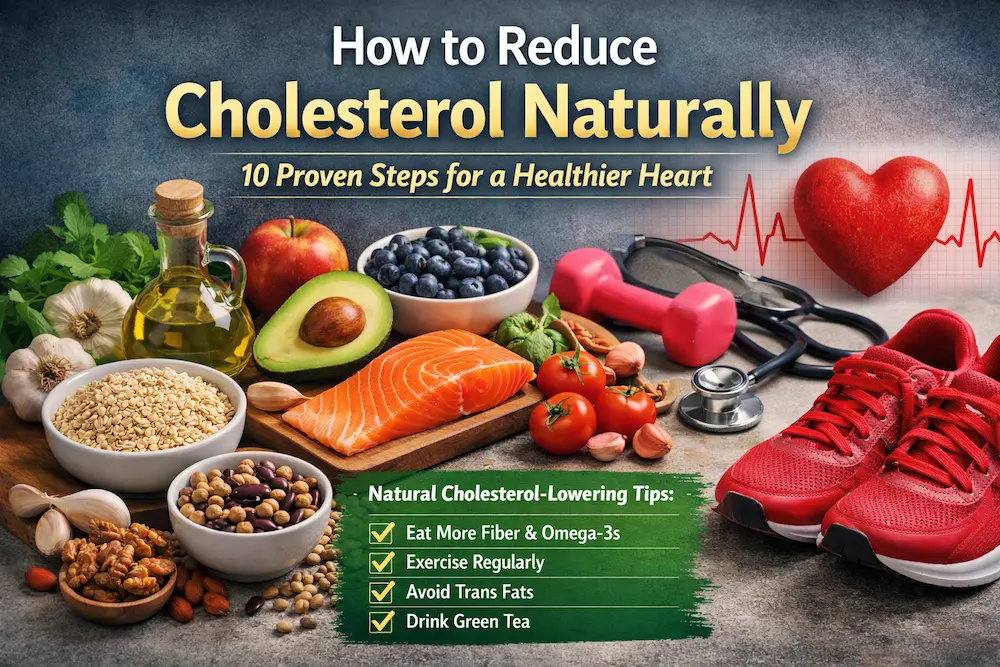
That is why so many people assume the only real solution is medication. But that is not the full story. While some people absolutely need statins or other medical treatment, many others can make meaningful progress with the right food choices, daily movement, and a few targeted lifestyle changes.
The truth is simple: you can often improve cholesterol naturally, especially LDL, by changing what you eat, how you move, and what you repeat every day.
This guide breaks that process down into clear steps. It also answers the questions people search for most:
- What reduces cholesterol quickly?
- What is the best drink to reduce cholesterol?
- What are the 5 signs of high cholesterol?
- How can I lower my cholesterol in 7 days naturally?
Important: This article is educational, not personal medical advice. If you have very high cholesterol, chest pain, diabetes, a strong family history of heart disease, or known cardiovascular disease, speak with your doctor.
Quick Answer: What Reduces Cholesterol Quickly?
The fastest natural cholesterol improvements usually come from combining these actions:
- Eat soluble fiber daily from oats, beans, lentils, apples, and barley
- Cut trans fats completely
- Reduce saturated fats
- Use healthier fats like olive oil, nuts, seeds, and avocado
- Walk or exercise every day
- Choose fish or plant proteins more often than processed meats
- Reduce ultra-processed foods and sugary snacks
You may not completely transform your lab results in a few days, but you can start changing the pattern immediately.
The Hook: Cholesterol Does Not Only Improve With Medicine
A lot of people hear “high cholesterol” and instantly panic.
They imagine a lifetime of restrictions, bland food, and medication with no other options. That is not always true. For many people, the biggest opportunity comes before the prescription pad: a heart-healthy lifestyle built around fiber, better fats, smarter meals, and consistency.
When I first started looking at how people actually improved their numbers, one thing stood out. The people who made progress were not searching for one miracle food. They were changing the same few habits over and over until those habits became automatic.
That is what this guide is about.
What Are the 5 Signs of High Cholesterol?
Most people have no symptoms at all, which is why high cholesterol is often called a silent condition.
Still, in some cases, possible warning signs or related clues can include:
- No symptoms, but abnormal blood test results
- Xanthomas — yellowish fatty deposits under the skin
- Xanthelasma — yellow patches around the eyelids
- Corneal arcus — a grayish ring around the cornea, especially in younger people
- Symptoms of heart or circulation problems if cholesterol has already contributed to plaque buildup, such as chest pain or leg pain with walking
The most important point is this: you cannot reliably feel high cholesterol. A blood test is what confirms it.
LDL vs HDL: A Simple Explanation
Before the 10 steps, it helps to understand two key terms.
LDL: The “Bad” Cholesterol
LDL carries cholesterol through the bloodstream. When levels are too high, cholesterol can build up in artery walls and raise the risk of heart attack and stroke.
HDL: The “Good” Cholesterol
HDL helps carry cholesterol back to the liver so the body can remove it more effectively.
In general:
- Lower LDL is usually better
- Healthy HDL and triglycerides also matter
- Your overall heart risk matters more than one number alone
10 Proven Steps to Reduce Cholesterol Naturally
1. Eat More Soluble Fiber Every Day
Soluble fiber is one of the most effective natural ways to lower LDL.
It works by forming a gel-like substance in the digestive tract that helps trap cholesterol and remove it from the body.
Foods rich in soluble fiber
- Oats
- Barley
- Beans
- Lentils
- Chickpeas
- Apples
- Pears
- Citrus fruits
- Chia seeds
- Ground flaxseed
Why it works
Think of soluble fiber like a sponge. It grabs onto cholesterol-related compounds and helps carry them out of the body.
This is one of the strongest foundations of a high cholesterol diet that actually works.
[Insert external link opportunity: PubMed review on soluble fiber and LDL reduction]
2. Replace Bad Fats With Better Fats
Swapping unhealthy fats for healthier ones can help reduce LDL without making your diet miserable.
Not all fats are the same.
Bad Fats vs Good Fats
| Bad fats to limit | Good fats to prefer |
|---|---|
| Trans fats | Olive oil |
| Deep-fried foods | Avocado |
| Processed pastries | Walnuts |
| Processed fatty meats | Almonds |
| Butter in large amounts | Seeds |
| Stick margarine with trans fats | Salmon and sardines |
Why it works
Trans fats can raise LDL and harm overall cardiovascular health. Replacing them with unsaturated fats supports a healthier lipid profile.
This is one of the simplest natural ways to lower LDL without counting every calorie.
3. Eat More Omega-3-Rich Foods
Omega-3 fats do not directly slash LDL in the same way fiber can, but they support heart health and can improve triglycerides.
Best sources:
- Salmon
- Sardines
- Mackerel
- Trout
- Chia seeds
- Flaxseed
- Walnuts
Why it works
Omega-3 fats help support a healthier inflammatory environment and are especially useful for triglyceride management.
If fish is expensive, canned sardines are one of the best budget-friendly options.
4. Eliminate Trans Fats Completely
One of the fastest ways to improve the quality of your diet is to remove trans fats entirely.
Look out for:
- Fried fast food
- Packaged baked goods
- Some snack foods
- Products with partially hydrogenated oils
Why it works
Trans fats are especially harmful because they can raise LDL and lower HDL. Even small regular amounts can work against your goals.
Read labels carefully.
5. Choose Better Protein Sources
What you eat for protein matters just as much as how much protein you eat.
Better choices:
- Beans
- Lentils
- Tofu
- Tempeh
- Edamame
- Fish
- Skinless poultry
Limit more often:
- Bacon
- Sausage
- Salami
- Pepperoni
- Fatty cuts of red meat
- Fried chicken
Why it works
Plant proteins and fish tend to come with less saturated fat and more heart-supportive nutrients than processed meats.
Most people fail at this because they think cholesterol improvement is about “eating less.” It is often more about eating differently.
6. Exercise Most Days of the Week
Exercise helps cholesterol by improving the bigger metabolic picture, including weight, insulin sensitivity, and HDL support.
A good target:
- Brisk walking
- Cycling
- Swimming
- Light strength training
- 20 to 30 minutes most days
Why it works
Physical activity can help raise HDL modestly, improve weight management, and support better heart function overall.
You do not need a perfect gym routine. You need consistency.
7. Reduce Excess Weight If Needed
Even modest weight loss can help improve cholesterol and triglyceride levels in some people.
Why it works
Extra body fat, especially around the abdomen, is often linked with a less favorable cholesterol pattern.
This is not about chasing a perfect body. It is about lowering cardiovascular strain.
A 5% to 10% weight reduction can matter.
8. Add Plant Sterols and Stanols
Plant sterols and stanols can help block cholesterol absorption in the gut.
You can find them in:
- Nuts
- Seeds
- Legumes
- Whole grains
- Some fortified foods
Why it works
They compete with cholesterol during absorption, so less cholesterol gets into the bloodstream.
This is a useful add-on, not a substitute for the basics.
9. Consider Whey Protein or Other Targeted Nutrition Support
Some people may benefit from targeted nutrition tools such as whey protein, especially if it helps replace less healthy foods.
Why it may help
Some research has suggested whey protein may support aspects of metabolic and cholesterol health in certain people, though results vary.
That said, food-first is still the best strategy.
If you use supplements for cholesterol, think of them as support, not the foundation.
[Insert external link opportunity: PubMed overview on whey protein and lipid markers]
10. Build a Repeatable Heart-Healthy Routine
The most effective cholesterol plan is the one you can repeat for 30, 60, and 90 days.
A good daily pattern looks like this:
- Oatmeal or another high-fiber breakfast
- Beans, lentils, or vegetables at lunch
- Fish or plant protein at dinner
- Olive oil instead of butter
- Fruit instead of pastries
- Daily walking
- Better sleep and lower stress where possible
Why it works
Cholesterol improves through repetition, not random effort.
Here is the part nobody tells you: the real breakthrough usually comes when healthy choices become easier than unhealthy ones.
Top 5 Natural Cholesterol Killers
These foods deserve a permanent place in a cholesterol-friendly kitchen:
- Oats
- Beans and lentils
- Salmon or sardines
- Apples and berries
- Olive oil
They are simple, practical, and powerful.
What Is the Best Drink to Reduce Cholesterol?
There is no miracle drink, but some options can support a cholesterol-friendly diet better than others.
Best drink choices
- Water
- Unsweetened green tea
- Black tea
- Smoothies with oats, berries, and flaxseed
- Unsweetened soy milk
Why these help
The best drink for cholesterol is usually one that supports a healthier overall diet and replaces sugary beverages.
A smoothie with oats, berries, and flaxseed can be especially useful because it adds fiber and plant nutrients.
Sugary coffee drinks and sodas do the opposite.
How Can I Lower My Cholesterol in 7 Days Naturally?
You may not fully normalize cholesterol in one week, but you can make a strong start.
7-Day Natural Cholesterol Reset
Day 1 to Day 7 basics
- Eat oatmeal every morning
- Add beans or lentils daily
- Replace butter with olive oil
- Cut out fried foods and pastries
- Walk 20 to 30 minutes daily
- Eat fruit instead of dessert
- Add at least 2 vegetables per day
- Choose fish or plant protein for dinner more often
A simple 7-day focus
- Breakfast: oats + fruit
- Lunch: bean soup, salad, or lentil bowl
- Dinner: salmon, tofu, or chickpeas + vegetables + whole grains
- Snacks: apple, pear, nuts, carrots, hummus
That alone can shift your routine very quickly.
Internal and External Link Opportunities
To strengthen authority and usefulness, this article could include links to:
- PubMed for studies on soluble fiber, plant sterols, and exercise
- Mayo Clinic for patient-friendly cholesterol guidance
- American Heart Association for LDL and heart-health education
- A related internal post on cholesterol-friendly recipes
- A related internal post on a 7-day cholesterol meal plan
- A related internal post on foods to avoid with high cholesterol
When to See a Doctor
You should speak with a doctor promptly if:
- Your LDL is very high
- You have a strong family history of early heart disease
- You have diabetes
- You have chest pain or shortness of breath
- You have known cardiovascular disease
- You are trying lifestyle changes but your numbers remain high
- You notice yellow fatty deposits around the eyes or skin
Natural strategies are helpful, but some people need medication too. Both can work together.
FAQ
Can I lower my cholesterol in 30 days naturally?
Yes, many people can make noticeable progress in 30 days with consistent diet and lifestyle changes, especially if they reduce saturated fat, increase fiber, and exercise more regularly.
What is the fastest way to drop cholesterol?
The fastest realistic approach is to combine soluble fiber, less saturated fat, no trans fats, regular exercise, and better meal consistency. Some people may also need medical treatment for faster or larger changes.
What reduces cholesterol quickly?
Foods high in soluble fiber, removing trans fats, switching to healthier fats, and staying active are among the most effective natural strategies.
What is the best drink to reduce cholesterol?
There is no single magic drink, but water, unsweetened tea, and fiber-rich smoothies with oats and berries are better choices than sugary drinks.
What are the 5 signs of high cholesterol?
Most people have no symptoms. Possible signs can include abnormal blood tests, xanthomas, xanthelasma, corneal arcus, and symptoms related to cardiovascular disease if plaque has already built up.
What to Do Next
Start with these three actions today:
- Buy oats, beans, and fruit
- Replace one processed meal with a home-cooked high-fiber meal
- Walk for 20 minutes
That is enough to create momentum.
CTA: Download our Heart-Healthy Grocery List and use it on your next shopping trip so your kitchen starts working for your cholesterol goals, not against them.
Final Thoughts
You do not need a perfect diet.
You need a better pattern.
That pattern might start with oatmeal tomorrow morning. It might start with lentil soup instead of fast food. It might start with walking after dinner instead of sitting down right away. Small steps do not look dramatic in the moment, but over 30, 60, and 90 days, they can change your numbers and your future.
If nothing changes, nothing changes. But if you commit to these 10 proven steps and repeat them consistently, your heart can benefit in ways that matter far beyond the next blood test.
Author: A health-focused writer specializing in evidence-based nutrition, cardiovascular prevention, and practical lifestyle strategies that make cholesterol management easier to follow in real life.