
Tired of counting calories and still seeing no real results? Feeling like you are “eating healthy” but still dealing with cravings, low energy, and a stubborn scale?
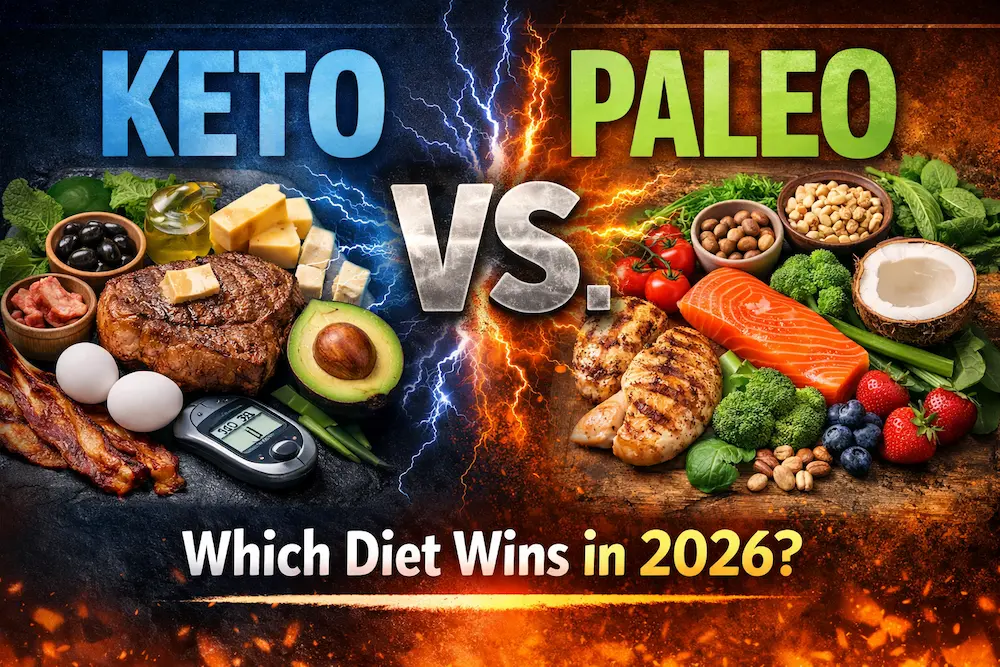
You are not alone. That is exactly why two of the most talked-about diets keep dominating the conversation: the keto diet and the paleo diet. Both promise better energy, easier fat loss, and a healthier way of eating. But they are not the same thing at all.
The keto diet is built around very low carbohydrates, higher fat intake, and getting the body into ketosis, a state where it burns fat and ketones for fuel instead of relying mostly on glucose. The paleo diet, on the other hand, focuses on whole, minimally processed foods and removes grains, legumes, and ultra-processed products, but it does not necessarily require extremely low carbs.
So the big question is simple:
Which diet wins in 2026 for fast weight loss, better energy, and real-life sustainability?
In this guide, we will break it down clearly, simply, and honestly.
What Is the Keto Diet and What Is the Paleo Diet?
What Is the Keto Diet?
The ketogenic diet is a way of eating based on:
- very low carbohydrates
- moderate protein
- higher fat intake
The goal is to help the body enter ketosis, so it starts using fat as its main fuel source.
Typical keto foods include:
- eggs
- meat and poultry
- fish
- avocado
- olive oil
- nuts
- low-carb vegetables
- cheese and full-fat dairy, depending on the version
What Is the Paleo Diet?
The paleo diet is based on the idea of eating more like humans did before modern industrial food systems. It emphasizes whole, natural foods and removes many highly processed items.
Typical paleo foods include:
- meat
- fish
- eggs
- fruits
- vegetables
- nuts
- seeds
- natural fats
And it usually avoids:
- grains
- legumes
- refined sugar
- ultra-processed foods
- often dairy
The key difference is this: paleo does not require ketosis or ultra-low carbs. It can be lower in carbs than a standard modern diet, but it can still include fruit and starchy vegetables.
Keto vs. Paleo: The Main Differences at a Glance
| Category | Keto Diet | Paleo Diet |
|---|---|---|
| Main Goal | Ketosis and fat burning | Whole-food, less processed eating |
| Carbs | Very low | Moderate to lower |
| Fat | High | Moderate to high |
| Protein | Moderate | Often higher |
| Grains | No | No |
| Legumes | Usually no | No |
| Dairy | Often yes | Often no |
| Fruit | Limited | More flexible |
| Best for fast weight loss | Often yes | More gradual |
| Best for long-term ease | For some, harder | Often easier |
What Do You Eat and Avoid on Each Diet?
Keto Diet: What You Eat
- meat and poultry
- fish and seafood
- eggs
- butter, olive oil, coconut oil
- avocado
- olives
- cheese
- zucchini, broccoli, cauliflower, spinach
- nuts in moderate amounts
Keto Diet: What You Avoid
- bread
- rice
- potatoes
- pasta
- legumes
- most fruits
- sweets
- sugar
- many “healthy” snacks with hidden carbs
Paleo Diet: What You Eat
- meat
- fish
- eggs
- vegetables
- fruit
- sweet potatoes
- nuts
- seeds
- olive oil
- avocado
Paleo Diet: What You Avoid
- grains
- legumes
- white sugar
- industrial snack foods
- ultra-processed products
- often dairy
Is Paleo or Keto Better for Weight Loss?
If you are asking, “Is paleo or keto better for weight loss?”, the most honest answer is:
Keto often produces faster short-term results on the scale, but paleo may be easier to stick with long term.
Why keto often leads to faster initial weight loss:
- carbs drop very low
- glycogen stores decrease quickly
- water weight often comes off fast
- many people feel less hungry
Why paleo can work well too:
- it removes a lot of ultra-processed foods
- it improves food quality
- it increases fullness through protein and whole foods
- it is often easier socially and mentally
So in simple terms:
- for fast initial weight loss, keto often wins
- for long-term sustainability, paleo often has the edge
The Science: Ketosis vs. Anti-Inflammatory Eating
How Ketosis Works
On a keto diet, when carbohydrate intake drops low enough, the body shifts toward burning fat for fuel. The liver starts producing ketones, which can be used as an alternative energy source.
This often leads to:
- reduced appetite
- steadier energy for some people
- fewer blood sugar spikes
- quick early scale movement
How Paleo Works in a More Anti-Inflammatory Way
Paleo does not rely on ketosis. Instead, it works by removing many ultra-processed foods, refined sugar, and heavily manufactured ingredients that may contribute to poor energy, digestive stress, and overall inflammation load.
This can help through:
- better food quality
- fewer industrial oils and snack foods
- more vegetables and whole foods
- fewer dietary triggers for some people
Can Keto Help Lower Triglycerides?
In many cases, yes, keto can help lower triglycerides, especially when it replaces a diet high in sugar, refined carbs, and processed snack foods.
Lower triglycerides are often linked to:
- reduced sugar intake
- reduced processed carbs
- weight loss
- improved insulin control
But there is an important caveat:
- not everyone responds the same way
- fat quality matters a lot
- keto is not automatically healthy just because it is low carb
A keto diet built around olive oil, fish, avocado, eggs, and real food is very different from one based mostly on processed meats and low-carb junk food.
Is the Paleo Diet Good for Anti-Inflammatories?
That question is usually asking whether paleo has an anti-inflammatory effect.
The answer is: it can, for many people.
Paleo is often considered helpful in an anti-inflammatory lifestyle because it:
- removes many ultra-processed foods
- reduces sugar
- focuses on whole foods
- includes vegetables, healthy fats, and quality protein
That said, paleo is not automatically anti-inflammatory just because it has the label. If someone eats mostly processed meat and barely any vegetables, the outcome will not be ideal.
Which Diet Fits Your Lifestyle Better?
Best for Athletes or Active People
The paleo diet is often easier for athletes and highly active people because it allows more carbohydrates from fruit and starchy vegetables like sweet potatoes.
That can support:
- performance
- recovery
- workout intensity
- easier adherence
Keto can work for some endurance athletes or people who genuinely feel better on low carbs, but it is not always the most practical option for high-intensity training.
Best for Someone Who Wants Fast Fat Loss
The keto diet usually has the advantage here, especially in the beginning, because:
- it cuts out many easy overeating foods
- it often reduces appetite
- it gives fast feedback on the scale
That makes it appealing for people who want a stronger initial push.
Best for Someone Who Wants a Cleaner Long-Term Diet
The paleo diet is often easier. It does not require strict ketosis, ketone tracking, or ultra-low carbs, and it usually feels more flexible for social events and everyday life.
What Is the 85-15 Rule in Paleo?
The 85-15 rule in paleo usually means eating according to paleo principles about 85% of the time, while leaving around 15% room for flexibility.
In plain English:
- most of your diet stays focused on whole, unprocessed foods
- but you do not fall into an all-or-nothing mindset
This matters a lot because perfectionism is one of the main reasons people quit diets in the first place.
3 Keto Myths You Need to Stop Believing
Myth 1: Keto is just bacon and butter
Not true. A well-built keto diet can include olive oil, fish, eggs, vegetables, avocado, and high-quality fats.
Myth 2: If you are not in perfect ketosis, you failed
No. Consistency matters more than perfection.
Myth 3: Keto is ideal for everyone
Definitely not. For some people it works extremely well. For others it feels too restrictive or difficult to maintain.
3 Paleo Myths You Need to Stop Believing
Myth 1: Paleo is just meat all day
Not at all. A solid paleo diet should include vegetables, fruit, healthy fats, and variety.
Myth 2: If it is paleo, it is automatically healthy
Not always. There are still “paleo desserts” and overeating patterns.
Myth 3: Paleo is easy just because there is no macro counting
For some people yes, but for others removing grains and legumes feels very restrictive.
Pros and Cons of Each Diet
Keto Diet: Pros
- often faster early weight loss
- better appetite control for many people
- fewer energy crashes for some
- possible support for triglycerides and blood sugar regulation
Keto Diet: Cons
- more restrictive
- harder socially
- requires more discipline
- the adjustment phase can be tough
Paleo Diet: Pros
- often easier to follow
- encourages whole foods
- may support a lower-inflammatory lifestyle
- often better suited to active people
Paleo Diet: Cons
- may not lead to rapid fat loss as quickly as keto
- removing grains and legumes does not work for everyone
- can become expensive if not planned well
What Happens in Real Life?
If you talk to people who actually succeeded, you will notice something interesting:
- people who choose the keto diet often say it helped them most with hunger control and fast initial results
- people who choose the paleo diet often say it helped them clean up their eating without feeling trapped
That is the entire point.
The best diet is not the one that looks most dramatic on TikTok or in a before-and-after photo. It is the one that actually works in your real life.
Which Diet Is Better for Energy?
The answer depends on the person.
Keto and Energy
Some people report:
- fewer crashes
- more stable focus
- fewer cravings
Others report:
- fatigue in the beginning
- reduced workout performance
- difficulty adjusting
Paleo and Energy
Many people do well on paleo because:
- they remove processed foods
- they still have enough glucose from natural food sources
- they avoid extremely strict restriction
Verdict: Which Diet Wins in 2026?
If we have to give a clear final verdict, here is the most honest answer:
For fast weight loss:
Keto wins
Especially if you want a stronger reset, quicker scale movement, and better appetite control.
For long-term healthy eating and lifestyle balance:
Paleo wins
It is often more balanced, more flexible, and easier to maintain in everyday life.
The real answer?
The best diet is the one you can sustain without falling apart after three weeks.
If you want a more aggressive metabolic reset, the keto diet may be your tool.
If you want a cleaner, more natural, and more sustainable healthy diet, the paleo diet often has the advantage.
Final Thoughts
You do not need another diet that promises miracles and leaves you more frustrated than before. You need an approach that fits your body, your schedule, and your mindset.
Keto and paleo are not magic. They are tools. And like all tools, they only work well when used in the right context.
If you feel confused right now, remember this:
- want faster initial fat loss? look at ketosis
- want a more natural and sustainable food pattern? look at the paleo diet
- want results that last? choose the one you can still follow after the first wave of motivation fades
The real question is not just “keto vs. paleo.”