

Medical disclaimer: This article is for educational purposes only and does not replace medical advice. If you have diabetes, insulin resistance, obesity, fatty liver disease, or another metabolic condition, speak with your doctor or a registered dietitian before making significant dietary changes.
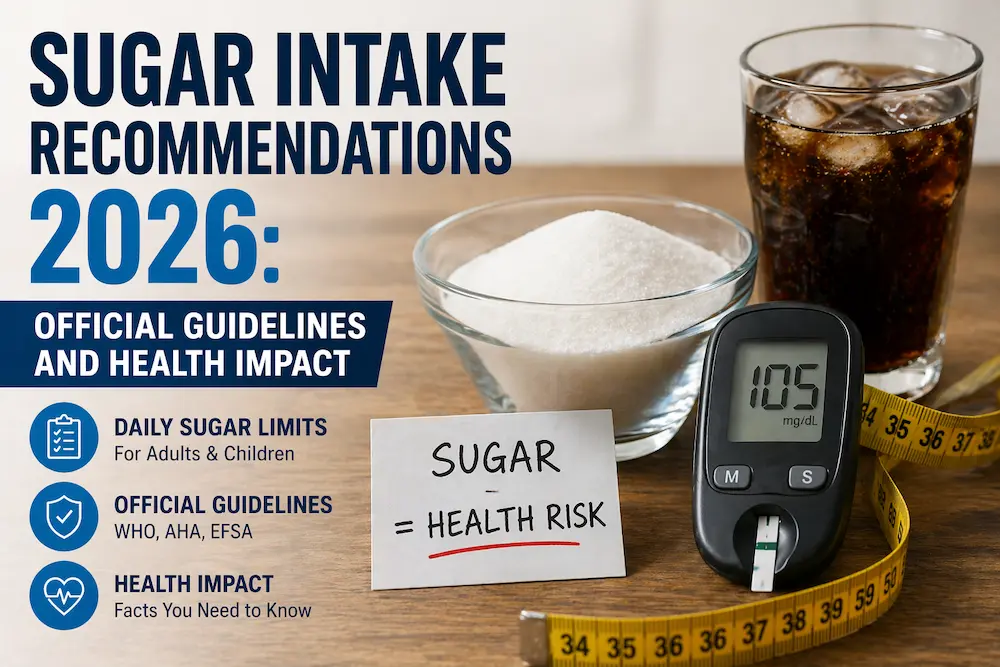
Sugar remains one of the most misunderstood parts of modern nutrition. Some people worry about all sugar equally. Others focus only on desserts and ignore sweetened drinks, flavored yogurts, breakfast cereals, sauces, and packaged snacks.
For 2026, the public-health message remains consistent: limit added or free sugars, especially from processed foods and sugary drinks. While official bodies use slightly different terms and frameworks, the overall direction is clear. Lower intake is associated with better metabolic health, improved dental health, and a lower risk of excessive calorie intake over time.
Featured snippet: How much sugar should you eat a day?
Most official guidance suggests keeping added or free sugar intake below 10% of daily calories, with some health organizations recommending even lower targets for extra health benefits. For many adults, that means about 25 to 50 grams per day, depending on the guideline used and total calorie intake.
What this article covers
- How much sugar you should eat a day
- The most relevant official guidance used in 2026
- The difference between added sugar and natural sugar
- How guidelines can improve free sugar intake
- Whether new school meal standards could reduce sugar consumption
- A simple grams-to-teaspoons conversion guide
Daily sugar limit 2026: the most important official recommendations
As used in public-health practice entering 2026, the most commonly referenced guidance comes from the <a href=”https://www.who.int/publications/i/item/9789241549028″ target=”_blank” rel=”noopener noreferrer”>World Health Organization (WHO)</a>, the <a href=”https://www.heart.org/en/healthy-living/healthy-eating/eat-smart/sugar/added-sugars” target=”_blank” rel=”noopener noreferrer”>American Heart Association (AHA)</a>, and the <a href=”https://www.efsa.europa.eu/” target=”_blank” rel=”noopener noreferrer”>European Food Safety Authority (EFSA)</a>.
WHO sugar guidelines
The <a href=”https://www.who.int/publications/i/item/9789241549028″ target=”_blank” rel=”noopener noreferrer”>WHO sugar guidelines</a> recommend reducing free sugars to:
- Less than 10% of total daily energy intake
- Ideally below 5% for additional health benefits
WHO uses the term free sugars, which includes:
- sugars added to foods and drinks
- sugars naturally present in honey, syrups, fruit juices, and fruit juice concentrates
For a person eating 2,000 calories per day, that means:
- 10% of calories from sugar = about 50 grams
- 5% of calories from sugar = about 25 grams
American Heart Association added sugar recommendations
The <a href=”https://www.heart.org/en/healthy-living/healthy-eating/eat-smart/sugar/added-sugars” target=”_blank” rel=”noopener noreferrer”>American Heart Association</a> gives more specific daily added sugar targets:
- Men: no more than 36 grams per day
- Women: no more than 25 grams per day
- Children age 2 and older: no more than 25 grams per day
- Children under 2: avoid added sugars when possible
These recommendations focus on added sugar, not free sugars.
EFSA and European guidance
The <a href=”https://www.efsa.europa.eu/” target=”_blank” rel=”noopener noreferrer”>European Food Safety Authority</a> has taken a more cautious scientific position. Rather than setting one precise universal upper number for sugar, EFSA has concluded that it is difficult to define a strict tolerable upper intake level for total, added, or free sugars. However, the broader public-health direction supports keeping sugar intake as low as possible within a nutritionally adequate diet.
You can review the broader EU scientific framework through the <a href=”https://www.efsa.europa.eu/en/topics/topic/dietary-reference-values” target=”_blank” rel=”noopener noreferrer”>EFSA dietary reference values</a> section.
How much sugar should you eat a day?
The practical answer depends on which official framework you use.
For most adults
A realistic daily range is:
- Around 25 grams per day if following a more conservative heart-health target
- Up to 50 grams per day as a WHO-style upper limit on a 2,000-calorie diet
- Lower is generally better when the sugar comes from sugary drinks and ultra-processed foods
For children
Children benefit from even tighter control of added sugar because high intake may shape taste preferences early and contribute to poor diet quality.
A practical guide:
- Under age 2: avoid added sugar when possible
- Age 2 and above: try to keep added sugar below 25 grams per day
The most practical interpretation
If you want a simple rule for daily life:
- Treat 25 grams per day as a strong target
- Treat 50 grams per day as an outer limit, not a goal
- Prioritize reducing liquid sugar first
Added sugar vs natural sugar
This distinction matters for both SEO and reader clarity.
What is added sugar?
Added sugar is any sugar added during processing, preparation, or cooking.
Examples include:
- table sugar
- cane sugar
- brown sugar
- glucose syrup
- high-fructose corn syrup
- honey added to packaged products
- sweeteners in cereals, desserts, sauces, and drinks
What is natural sugar?
Natural sugar occurs naturally in whole foods, such as:
- fruit
- plain milk
- unsweetened yogurt
- vegetables
These foods also contain beneficial nutrients such as:
- fiber
- vitamins
- minerals
- antioxidants
- protein or calcium, depending on the food
Why added sugar vs natural sugar matters
A soft drink and an apple both contain sugar, but they do not affect the body in the same nutritional context. The apple comes with fiber and a more filling food structure. The soft drink provides fast sugar with little nutritional value.
Practical guide: sugar grams to teaspoons
This is one of the easiest ways to help readers understand sugar intake.
1 teaspoon of sugar = about 4 grams
| Sugar (grams) | Approximate teaspoons |
|---|---|
| 5 g | 1.25 tsp |
| 10 g | 2.5 tsp |
| 12 g | 3 tsp |
| 20 g | 5 tsp |
| 24 g | 6 tsp |
| 25 g | 6.25 tsp |
| 36 g | 9 tsp |
| 50 g | 12.5 tsp |
Quick takeaways
- 25 grams = about 6 teaspoons
- 36 grams = about 9 teaspoons
- 50 grams = about 12.5 teaspoons
This is why many “healthy” products become misleading. A flavored yogurt with 20 grams of added sugar already gives you about 5 teaspoons.
How can a guideline be used to improve free sugar intake?
This is one of the most important user questions, and the answer is practical: guidelines create a measurable reference point.
1. Guidelines turn vague advice into a usable number
Most people know they should “eat less sugar,” but that phrase is too vague to change behavior. Once a person knows the target is, for example, 25 grams per day, food labels suddenly become more meaningful.
2. Guidelines improve label reading
A clear sugar guideline helps users compare products quickly.
For example:
- One cereal has 11 grams of added sugar
- Another has 3 grams
- The better choice becomes obvious
This is especially useful in foods people do not always suspect, such as:
- yogurt
- plant milks
- breakfast cereals
- granola bars
- ketchup
- pasta sauces
- salad dressings
3. Guidelines shape public-health policy
Official sugar targets are not only for individuals. They also influence:
- school meal policies
- food reformulation by manufacturers
- front-of-pack labeling
- marketing standards for children’s foods
4. Guidelines help people focus on free sugar, not all carbohydrates
This matters because some people wrongly cut fruit or plain dairy while continuing to consume soft drinks and sugary coffee beverages. A proper guideline helps distinguish between free sugars and more nutritious whole foods.
Could new school meal standards reduce sugar consumption?
Yes, they could make a meaningful difference.
Why school meal standards matter
Children eat a large share of their weekly food in school or childcare settings. When school meal standards reduce added sugar in breakfast items, drinks, desserts, and snacks, they can reduce sugar exposure at scale.
Potential benefits include:
- lower daily sugar intake
- fewer sugary drinks
- improved taste adaptation over time
- better long-term eating habits
- less normalization of highly sweet foods
Where school standards can have the biggest impact
The biggest improvements often come from changing:
- sweetened milk products
- breakfast cereals
- dessert frequency
- fruit juice portions
- packaged snack foods
- vending machine items
Could this work in real life?
Yes. School standards work best when they are paired with:
- clear nutrition rules
- procurement policies
- education for parents and staff
- gradual reformulation rather than sudden extreme changes
If implemented well, new school meal standards can absolutely reduce sugar consumption, especially in children who otherwise rely heavily on packaged or sweetened foods.
WHO sugar guidelines and health impact
Limiting excess sugar intake is not only about body weight. It also affects broader health outcomes.
1. Dental health
High free sugar intake is strongly associated with dental caries, especially in children. This is one reason why the <a href=”https://www.who.int/publications/i/item/9789241549028″ target=”_blank” rel=”noopener noreferrer”>WHO</a> places strong emphasis on reducing free sugars.
2. Excess calorie intake
Sugary drinks and processed sweets can add large amounts of calories without much satiety. This makes it easier to overconsume energy across the day.
3. Metabolic health
A diet high in added sugars, especially from beverages and ultra-processed foods, may contribute to:
- weight gain
- insulin resistance
- fatty liver risk
- poor blood sugar control
4. Diet quality
One of the biggest hidden problems with sugar is that it often displaces healthier foods. A person who consumes a lot of sweets and sugary drinks often eats less fiber, fewer whole foods, and fewer nutrient-dense meals.
Hidden sources of sugar in the modern diet
Many people underestimate their sugar intake because they only think about desserts.
Common hidden sugar sources
- flavored yogurt
- breakfast cereal
- granola
- protein bars
- sweetened coffee drinks
- fruit juice
- ketchup
- barbecue sauce
- pasta sauce
- sweetened plant-based milk
- bottled smoothies
- snack packs marketed as “healthy”
A simple label-reading rule
When shopping, check:
- added sugars on the nutrition label
- serving size
- ingredient list
If sugar appears near the top of the ingredient list, the product is probably not a low-sugar choice.
Daily sugar limit 2026: a simple framework for readers
If your readers want one practical system to follow, this is a strong one:
Aim for this
- Keep added sugar closer to 25 grams per day
- Avoid going over 50 grams per day regularly
- Reduce sugary drinks first
- Keep whole fruit in the diet unless medically advised otherwise
- Choose plain dairy over sweetened dairy when possible
Prioritize reducing these first
- soft drinks
- energy drinks
- sweetened iced coffee
- flavored yogurt
- sweet breakfast cereals
- packaged pastries
- high-sugar snack bars
FAQ
How much sugar should you eat a day?
For most people, official guidance supports keeping added or free sugars below 10% of daily calories, with many experts recommending a lower target around 25 grams per day for better health protection.
How can a guideline be used to improve free sugar intake?
A guideline gives people a clear daily benchmark, helps them read food labels more effectively, and supports policy changes such as school standards, product reformulation, and public-health campaigns.
Could new school meal standards reduce sugar consumption?
Yes. New school meal standards can reduce sugar consumption by limiting sugary drinks, sweetened dairy, desserts, and high-sugar snacks while improving children’s exposure to healthier foods.
What is the difference between added sugar and natural sugar?
Added sugar is introduced during processing or preparation. Natural sugar occurs naturally in foods like fruit and milk, which usually also provide fiber or other nutrients.
Final takeaway
The most important message for 2026 is not complicated: keep added and free sugars low, especially from drinks and ultra-processed foods. The exact numbers vary slightly across organizations, but the direction is the same.
For many readers, the smartest approach is to think in layers:
- 25 grams per day is a strong target
- 50 grams per day is a ceiling, not a goal
- cutting sugary drinks usually brings the biggest improvement first
What to do next
Start with these 3 actions today:
- Check the added sugar line on every yogurt, cereal, and drink you buy.
- Replace one sugary drink per day with water, sparkling water, or unsweetened tea.
- Use the grams-to-teaspoons table to make labels easier to understand at a glance.