

Counting calories can help, but it only tells part of the story. Two meals can have the same calorie total and affect your energy, hunger, recovery, and health very differently. That is why understanding macronutrients matters. When you know what protein, carbs, and fats actually do, you stop guessing and start building meals that work for your goals.
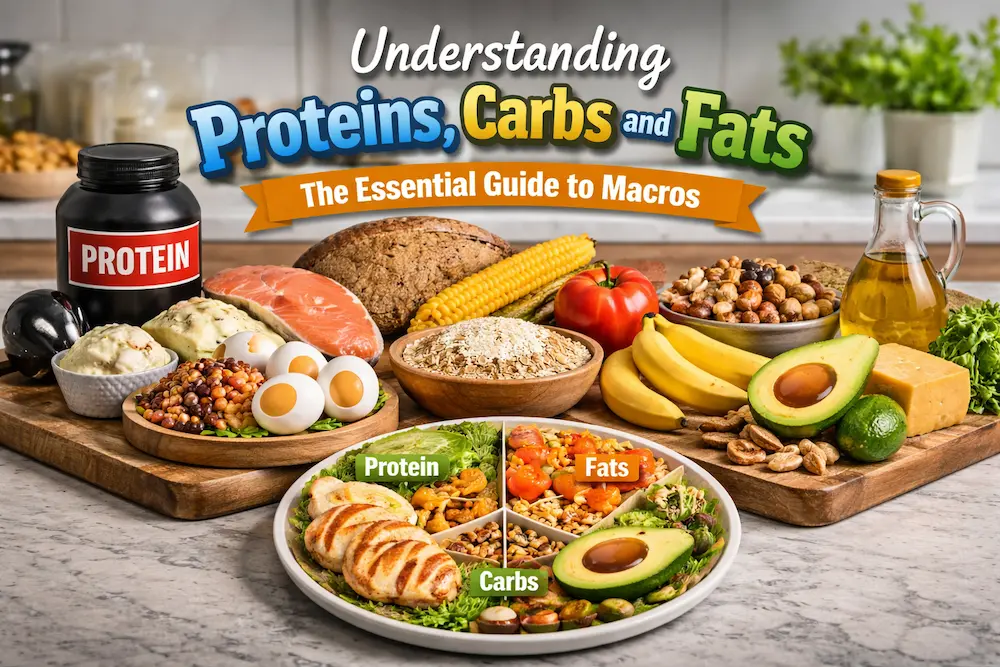
This guide breaks down the macro basics for beginners in a simple, practical way. You will learn protein, carbs, fats explained clearly, how they affect weight loss and muscle gain, and how to build a balanced plate without overcomplicating nutrition.
What Are Macronutrients?
Macronutrients are the nutrients your body needs in larger amounts to function properly and produce energy.
The three main macronutrients are:
- Protein
- Carbohydrates
- Fats
Carbohydrates, proteins and fats are known as
They are known as macronutrients because the body needs them in relatively large amounts compared with vitamins and minerals.
Protein, fat and carbohydrates in the diet provide
Protein, fat, and carbohydrates provide energy, measured in calories.
Here is the calorie value of each:
- Protein: 4 calories per gram
- Carbohydrates: 4 calories per gram
- Fat: 9 calories per gram
That is why macros matter so much in nutrition. They do not just fill your plate. They fuel every major system in the body.
Carbohydrates, proteins and fats, vitamins and minerals
This is where many beginners get confused.
- Carbohydrates, proteins, and fats are macronutrients
- Vitamins and minerals are micronutrients
Both are essential. Macronutrients provide energy and structure. Micronutrients support processes like immunity, metabolism, bone health, oxygen transport, and nerve function.
Micronutrients: The Other Half of Good Nutrition
You cannot talk about healthy eating without mentioning micronutrients.
Micronutrients include:
- Vitamins
- Minerals
Examples:
- Vitamin D
- Vitamin C
- Vitamin B12
- Iron
- Magnesium
- Calcium
- Zinc
- Folate
A meal can hit your macros and still be low in quality if it lacks micronutrients. That is why whole foods matter. A balanced diet should give you enough protein, carbs, and fats, but also enough vitamins, minerals, and fiber.
Protein: The Building Blocks
Protein is often the first macro people think about, and for good reason. It plays a major role in:
- Muscle repair and growth
- Hormone production
- Enzyme function
- Immune support
- Satiety and appetite control
If carbs are fuel, protein is more like the repair crew.
Why protein matters
Protein is made up of amino acids. Some of these are called essential amino acids, which means your body cannot make them on its own. You have to get them from food.
This is especially important if you:
- exercise regularly
- want to build muscle
- want to preserve muscle during weight loss
- want meals that keep you full longer
High-quality protein sources
Animal-based sources
- Chicken breast
- Turkey
- Eggs
- Greek yogurt
- Cottage cheese
- Fish
- Lean beef
- Milk
Plant-based sources
- Lentils
- Chickpeas
- Tofu
- Tempeh
- Edamame
- Beans
- Quinoa
- Soy yogurt
- Hemp seeds
How much protein do you actually need?
This depends on your size, activity level, age, and goal.
A practical general range is:
- Sedentary adults: around 0.8 g per kg of body weight
- Active adults: often 1.2–2.0 g per kg
- Muscle-building phases: often toward the higher end
- Fat-loss phases: moderate to higher protein often helps with fullness and muscle retention
For example, a 70 kg person may need anywhere from:
- 56 g/day at the low end
- up to 84–140 g/day if active and training regularly
You do not need to chase extreme numbers. You do need enough protein to support your lifestyle and goals.
Carbohydrates: The Body’s Preferred Fuel
Carbohydrates have been unfairly blamed for almost every nutrition problem online. But in reality, carbs are not the enemy. They are the body’s preferred source of quick energy, especially for the brain and muscles.
What carbs do
Carbohydrates help:
- fuel workouts
- support brain function
- refill muscle glycogen
- improve training performance
- provide fiber when you choose quality sources
Simple vs. complex carbs
Simple carbohydrates
These digest more quickly and are usually found in:
- sugar
- sweets
- juice
- soft drinks
- white bread
- refined snacks
Some simple carbs, like fruit and milk, also contain useful nutrients.
Complex carbohydrates
These usually digest more slowly and often provide more fiber and nutrients.
Examples:
- oats
- brown rice
- quinoa
- potatoes
- beans
- lentils
- whole grain bread
- vegetables
The goal is not to fear simple carbs. It is to make most of your daily carb intake come from more nutrient-dense sources.
The role of fiber
Fiber is a type of carbohydrate your body does not fully digest.
It helps with:
- digestion
- blood sugar control
- fullness
- heart health
- gut health
Good fiber sources include:
- vegetables
- fruit
- oats
- legumes
- whole grains
- seeds
Do carbs make you fat?
No. Carbs do not automatically make you fat.
Weight gain happens when total energy intake is consistently higher than what your body uses. Carbs can absolutely fit into a healthy diet, even for weight loss.
What matters more is:
- total calories
- portion sizes
- food quality
- activity level
- consistency over time
A bowl of oats and berries is not the same as a daily habit of oversized pastries and sugary drinks, even though both contain carbs.
Fats: Energy and Absorption
Fat is essential for health. It is not something your body can simply remove from the equation.
Why fats matter
Fats help with:
- hormone production
- brain health
- cell structure
- long-lasting energy
- absorption of vitamins A, D, E, and K
Without enough dietary fat, the body struggles to absorb these fat-soluble vitamins efficiently.
Types of fat
Unsaturated fats
These are generally considered the healthiest fats.
Examples:
- olive oil
- avocado
- nuts
- seeds
- fatty fish
- nut butters
Saturated fats
These are found in foods like:
- butter
- cheese
- fatty cuts of meat
- coconut oil
They can fit in moderation, but most people benefit from emphasizing unsaturated fats more often.
Trans fats
These are the fats to avoid as much as possible.
They are often found in:
- highly processed baked goods
- some fried foods
- older packaged products with hydrogenated oils
Why fat is important even for weight loss
Some people cut fat too aggressively when trying to lose weight. That can backfire.
Healthy fats help:
- improve satiety
- make meals more satisfying
- support hormones
- reduce the urge to snack constantly
The key is portion awareness, not fat avoidance.
Carbohydrates, Proteins and Fats Chart
Here is a simple reference chart for beginners:
| Macronutrient | Calories per Gram | Main Role | Common Food Sources |
|---|---|---|---|
| Protein | 4 | Muscle repair, enzymes, hormones, fullness | Chicken, eggs, Greek yogurt, tofu, lentils |
| Carbohydrates | 4 | Main fuel source, glycogen, brain energy | Oats, rice, potatoes, fruit, beans |
| Fats | 9 | Hormones, brain health, vitamin absorption, long-term energy | Olive oil, avocado, nuts, seeds, salmon |
This is the kind of carbohydrates proteins and fats chart that helps beginners understand how each macro works in real life.
Carb, Protein, Fat Ratio for Weight Loss
There is no single perfect ratio for everyone, but a good starting point for weight loss is a balanced approach that prioritizes:
- enough protein to stay full and preserve muscle
- enough carbs to support energy
- enough fat to support hormones and satisfaction
A common beginner-friendly approach might look like:
- 40% carbs
- 30% protein
- 30% fat
That said, some people do better with slightly more carbs, while others prefer slightly more fat. The best carb protein, fat ratio for weight loss is the one that helps you stay consistent, manage hunger, and maintain a calorie deficit without feeling miserable.
Carb, Fat, Protein Ratio for Muscle Gain
For muscle gain, the goal is different. You need enough calories overall, enough protein for recovery, and enough carbs to support training quality.
A common starting point for muscle-building nutrition might be:
- 45–55% carbs
- 20–30% protein
- 20–30% fat
A practical example:
- 50% carbs
- 25% protein
- 25% fat
This often works well because carbs help fuel hard training, while protein supports repair and growth. The best carb fat protein ratio for muscle gain depends on your training volume, appetite, and total calories.
How to Balance Your Plate
You do not need to track every gram to eat well.
A simple Golden Rule for a balanced meal is the plate method:
- Half your plate: vegetables or fruit
- One quarter: protein
- One quarter: quality carbohydrates
- Add a moderate amount of healthy fat
Example balanced meals
Breakfast
- Greek yogurt
- berries
- oats
- chia seeds
Lunch
- chicken or tofu
- brown rice
- roasted vegetables
- olive oil dressing
Dinner
- salmon or lentils
- potatoes
- broccoli
- avocado or nuts
This method helps beginners build better meals without getting stuck in numbers.
Macro Basics for Beginners: What Matters Most?
If you are just starting out, keep it simple.
Focus on these basics:
- Include protein in every main meal
- Choose mostly fiber-rich carbs
- Add healthy fats in sensible portions
- Eat more whole foods
- Stop thinking only about calories
The truth is that understanding macronutrients gives you more control over your diet than calorie counting alone.
FAQs
Which macro is most important for weight loss?
No single macro causes weight loss by itself. Total calorie balance matters most. That said, protein is often especially helpful because it supports fullness and muscle retention.
Can I live without carbs?
Technically, the body can make some glucose from other sources, but that does not mean a no-carb diet is ideal for most people. Many people feel and perform better with quality carbohydrates, especially if they are active.
What is a good macro ratio for a beginner?
A balanced beginner-friendly range is often:
- 40–50% carbs
- 20–30% protein
- 20–30% fat
This is not a strict rule. It is a simple starting point.
Carbohydrates, proteins and fats list PDF
If you want a carbohydrates proteins and fats list PDF, the most useful version is usually a printable food list organized by:
- protein sources
- carbohydrate sources
- fat sources
- mixed foods
- fiber-rich options
For blog SEO, it is smart to offer this as a downloadable lead magnet or content upgrade.
Final Thoughts
Nutrition gets much easier when you stop seeing food as just calories and start seeing it as information for your body.
That is the real value of understanding macronutrients.
When you know how proteins, carbs, and fats work, you can build meals that support your energy, hunger, body composition, and long-term health. You do not need perfection. You need a better foundation.
Start with one habit:
build each meal around a protein source, a quality carb, and a healthy fat.
That one shift can improve your nutrition more than most trendy diet rules ever will.


