
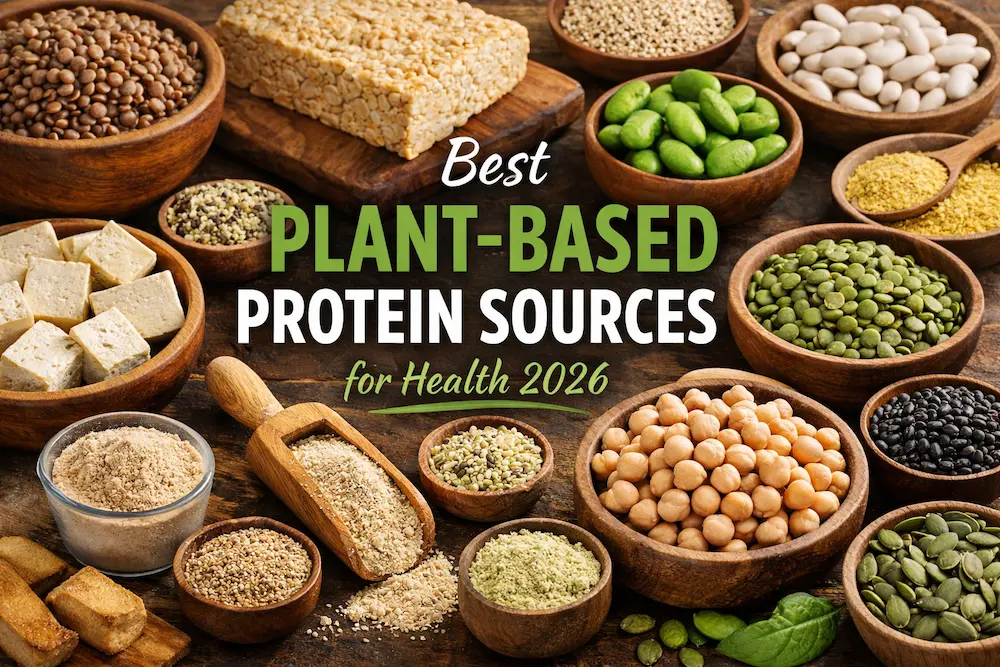
If you want the short answer first, the healthiest plant-based protein sources are usually lentils, soy foods (tempeh, tofu, edamame), beans, peas, quinoa, hemp seeds, pumpkin seeds, chickpeas, and minimally processed pea or soy protein products. These foods stand out because they combine protein, fiber, minerals, and long-term health value—not just grams on a label. For most people, the best strategy in 2026 is simple: build meals around mostly whole or minimally processed plant proteins, then use cleaner protein concentrates only when convenience matters.
That is the real shift happening right now.
People are no longer asking only, “How much protein does this have?” They are asking smarter questions:
“Is it easy to digest?”
“Is it clean-label?”
“Will it support muscle, gut health, and healthy aging?”
“Can I actually eat it consistently without feeling bloated?”
This guide answers all of that.
You will learn which plant proteins are best for everyday health, which are best for athletes, how to think about complete vs incomplete proteins, what the likely protein trend in 2026 looks like, whether pea protein is okay for SIBO, and whether plant protein increases creatinine.
What This Article Covers
In this guide, we will break down:
- The 10 best plant-based protein sources for health
- A data table with protein and calories per 100g
- Complete vs incomplete proteins
- Best sources for athletes vs longevity
- Unprocessed vs processed protein sources
- Clean label trends shaping 2026
- Tips from experts on reducing bloating from legumes
- Evidence-based answers to:
- What is the healthiest plant-based protein?
- What is the protein trend in 2026?
- Is pea protein ok for SIBO?
- Does plant protein increase creatinine?
Why Plant-Based Protein Matters More Than Ever in 2026
The conversation around protein has changed.
For years, the internet treated protein like a bodybuilding-only topic. But in 2026, protein is now part of a bigger conversation about metabolic health, healthy aging, muscle preservation, appetite control, digestive tolerance, and food quality.
That means people want more than high numbers. They want protein sources that also support:
- Satiety
- Energy stability
- Gut friendliness
- Lower reliance on ultra-processed foods
- Better nutrient density
- Sustainable daily eating patterns
Here is the part many blogs miss: the “best” protein source is not always the one with the highest grams per serving. A protein food can be impressive on paper but still be low in fiber, hard to digest, or overly processed.
The healthiest choice is usually the one that gives you a strong mix of:
- High-quality protein
- Good digestibility
- Helpful nutrients
- Practical everyday use
- Minimal unnecessary additives
Top 10 Best Plant-Based Protein Sources for Health 2026
Below is a practical comparison table with approximate values per 100g. These numbers can vary slightly by brand and preparation, but they are good working averages.
Data Table: Protein and Calories per 100g
| Plant-Based Protein Source | Protein (per 100g) | Calories (per 100g) | Why It Stands Out |
|---|---|---|---|
| Seitan | 24–25g | 140–170 kcal | Very high protein, excellent for muscle-focused meals |
| Tempeh | 18–20g | 190–210 kcal | Fermented soy, protein-rich, more whole-food feel |
| Edamame | 11–12g | 120–130 kcal | High protein, fiber, and easier as a snack or meal add-on |
| Tofu (firm) | 12–15g | 120–150 kcal | Versatile, high-protein, easy to cook |
| Lentils (cooked) | 8–9g | 110–120 kcal | Great protein + fiber + iron + budget-friendly |
| Chickpeas (cooked) | 8–9g | 160–170 kcal | Filling, flexible, good for bowls and spreads |
| Black beans (cooked) | 8–9g | 130–140 kcal | Fiber-rich and very useful in everyday meals |
| Quinoa (cooked) | 4–5g | 115–125 kcal | Complete protein, useful as a base grain |
| Hemp seeds | 30–32g | 550–600 kcal | Dense in protein and healthy fats |
| Pumpkin seeds | 28–30g | 550–580 kcal | Excellent protein, zinc, magnesium |
A quick note on the table
Some foods like hemp seeds and pumpkin seeds look incredibly high in protein per 100g, but that does not mean you typically eat 100g of them in one sitting. Meanwhile, foods like lentils or tofu may look more modest, but they are often far more practical as real meal foundations.
That is why health value + usability matters more than headline numbers.
What Is the Healthiest Plant-Based Protein?
If I had to choose the single healthiest plant-based protein, the answer for most people would be:
Lentils and soy foods are the strongest overall choices
That is because they offer more than protein alone.
Why lentils are a top-tier choice
Lentils provide:
- Protein
- Fiber
- Iron
- Folate
- Slow-digesting carbohydrates
- Excellent satiety
- Strong affordability
They are one of the best choices for people focused on heart health, gut health, blood sugar stability, and longevity.
Why soy foods rank so highly
Minimally processed soy foods like:
- Tempeh
- Tofu
- Edamame
offer:
- High protein density
- A strong amino acid profile
- Excellent versatility
- Practical support for muscle maintenance
For many nutrition professionals, tempeh stands out as one of the smartest overall picks because it combines protein quality with fermentation and a less processed feel than many packaged alternatives.
The most honest answer
There is no single “perfect” plant protein for everyone.
The healthiest choice depends on your goal:
- For everyday health: lentils, beans, tempeh, tofu, edamame
- For muscle support: seitan, soy foods, pea/soy blends
- For longevity-focused eating: legumes, soy foods, seeds, quinoa
- For gut sensitivity: often tofu, tempeh, peeled lentils, or protein isolates in moderation
So the better answer is this:
The healthiest plant-based protein is the one that gives you protein, micronutrients, digestibility, and consistency—not just impressive macros.
Complete vs Incomplete Proteins: What Actually Matters
This topic confuses people more than it should.
A complete protein contains all nine essential amino acids in sufficient amounts. Many animal foods do this naturally. Some plant foods do too, such as:
- Soy
- Quinoa
- Buckwheat
- Hemp seeds
Other plant foods are sometimes called “incomplete” because they are lower in one or more essential amino acids.
But here is the important part:
You do not need to combine proteins perfectly at every meal
That old myth has been overstated for years.
What matters more is eating a variety of plant protein foods across the day. Your body is not checking whether your lentils and rice arrived in the exact same bite.
Smart pairings that work well
That said, food combinations are still useful.
Examples:
- Lentils + rice
- Chickpeas + whole grain pita
- Beans + corn tortillas
- Peanut butter + oats
- Hummus + whole grain bread
- Tofu + noodles
- Tempeh + quinoa
These combinations improve amino acid balance and often create meals that are more satisfying and practical.
Best complete protein plant foods
If you want easy choices, focus on:
- Tempeh
- Tofu
- Edamame
- Quinoa
- Hemp seeds
- Soy milk
- Soy yogurt
Best Plant-Based Protein Sources for Athletes
Athletes usually need a different protein strategy than someone focused mainly on general wellness.
For athletic performance, the best sources are usually the ones that offer:
- Higher protein density
- Better amino acid profile
- Easy digestion after training
- Practical meal timing
- Scalability
Best options for athletes
1. Tempeh
Strong protein, easy to build meals around, more substantial than tofu.
2. Tofu
Versatile and efficient for meal prep, post-workout bowls, and stir-fries.
3. Seitan
Very high protein and useful for muscle-focused meal planning.
4. Edamame
Easy as a snack, bowl topping, or side with solid protein value.
5. Pea or soy protein powder
Helpful when whole foods alone are not enough.
6. Lentil pasta
A smart hybrid option for those who want carbs and protein together.
Best use case for athletes
Athletes often do best when they spread protein over 3 to 5 feedings per day instead of trying to eat everything at dinner.
Best Plant-Based Protein Sources for Longevity
Longevity-focused eating is slightly different.
The goal is not just maximum muscle gain. It is usually about:
- Preserving lean mass with age
- Supporting metabolic health
- Reducing chronic disease risk
- Prioritizing nutrient density
- Supporting gut health and inflammation balance
Best options for longevity
1. Lentils
Probably one of the strongest overall picks.
2. Beans
Especially black beans, kidney beans, and cannellini beans.
3. Chickpeas
Flexible, filling, and excellent in Mediterranean-style eating patterns.
4. Tempeh
Protein-rich and relatively less processed than many alternatives.
5. Edamame
A balanced choice for protein, fiber, and micronutrients.
6. Seeds
Hemp, chia, and pumpkin seeds add protein plus beneficial fats and minerals.
Why legumes matter so much
For long-term health, legumes are hard to beat because they provide a rare combination of:
- Protein
- Fiber
- Mineral density
- Good satiety
- Lower cost
- Strong compatibility with whole-food dietary patterns
Unprocessed vs Processed Plant Protein Sources
This is one of the biggest content opportunities for 2026 because people increasingly care about ingredient quality, not just macros.
Unprocessed or minimally processed sources
These include:
- Lentils
- Beans
- Chickpeas
- Edamame
- Tofu
- Tempeh
- Quinoa
- Seeds
- Nuts
These are usually the strongest everyday foundation foods because they offer:
- Fiber
- Phytonutrients
- Better nutrient density
- More balanced satiety
More processed sources
These include:
- Protein powders
- Protein bars
- Vegan deli slices
- Meat analogues
- Isolated protein products
These are not automatically bad.
The honest answer is that they can be useful, especially for:
- Busy professionals
- Athletes
- People with low appetite
- People trying to raise protein intake efficiently
But they should usually play a supporting role, not become the entire diet.
Clean Label Trends in 2026
If one protein trend is shaping 2026, it is this:
People want cleaner, shorter ingredient lists
The likely protein trend in 2026 is not just “more protein.” It is:
- High protein + fewer additives
- Minimal ingredients
- Less artificial texture engineering
- Better digestibility
- Alternative protein sources beyond soy
- Functional foods that combine protein with gut or metabolic benefits
Key clean-label directions
Consumers increasingly prefer:
- Tempeh over highly engineered fake meats
- Pea protein blends with simpler ingredient lists
- Fava bean protein and other newer legume proteins
- Yogurts and beverages with fewer gums and sweeteners
- Fermented plant proteins
- Higher-protein staples, not just snack bars
In other words, the 2026 consumer is more skeptical. They want protein, but they also want transparency.
What Is the Protein Trend in 2026?
The strongest protein trend in 2026 is likely the move toward clean-label, high-protein, plant-forward foods that support muscle, satiety, and metabolic health without excessive processing.
More specifically, the biggest trends appear to be:
- Protein becoming part of mainstream health, not just sports nutrition
- More interest in plant-based protein for everyday eating
- Growth in pea protein, fava bean protein, and fermented protein products
- Demand for products with shorter ingredient lists
- More focus on protein quality and digestibility
- Greater interest in high-protein foods for healthy aging
- Better understanding that total diet quality matters more than hype
That is where the market is moving: away from flashy claims, toward usable nutrition.
Is Pea Protein OK for SIBO?
This needs an honest answer.
Pea protein may be okay for some people with SIBO, but tolerance varies
There is no one universal rule because SIBO symptoms are highly individual. Some people tolerate pea protein isolate quite well, while others find that it worsens bloating, gas, or digestive discomfort.
Why it may work
Pea protein isolate is more refined than whole peas, which means it usually contains:
- Less fiber
- Fewer fermentable carbohydrates than whole legumes
- A more concentrated protein form
That can make it easier for some people than eating beans or lentils.
Why it may still be a problem
Some people with SIBO react not only to fiber, but also to:
- Additives in flavored powders
- Thickeners and gums
- Sugar alcohols
- Large serving sizes
- Overall digestive sensitivity
Practical guidance
If someone has SIBO, the safest approach is:
- Try a small amount first
- Choose an unflavored, simple-ingredient product
- Avoid powders with a long additive list
- Track symptoms carefully
- Work with a clinician if symptoms are persistent
A transparent answer
So, is pea protein ok for SIBO?
Sometimes yes, sometimes no. It depends on the individual, the product, the dose, and the rest of the diet.
That is the most honest answer.
Does Plant Protein Increase Creatinine?
This question often creates unnecessary fear.
Plant protein itself does not inherently “damage” the kidneys or automatically increase creatinine in a harmful way
Creatinine is a normal waste product related to muscle metabolism. Levels can be influenced by multiple factors, including:
- Muscle mass
- Hydration status
- Exercise
- Kidney function
- Some supplements
- High total protein intake in certain contexts
What matters here
Eating more protein—whether animal or plant—may affect lab markers in some cases, but that does not automatically mean harm.
For healthy people:
- A higher protein intake does not automatically mean kidney damage
- Plant-based proteins are often considered gentler within overall healthy dietary patterns
- Mild lab changes should always be interpreted in context
Important distinction
If someone already has:
- Chronic kidney disease
- Reduced kidney function
- A medical condition affecting filtration
then protein intake should be discussed with a doctor or renal dietitian.
The most accurate practical answer
So, does plant protein increase creatinine?
It can influence protein intake totals and sometimes lab interpretation, but plant protein is not inherently a harmful trigger of creatinine elevation in healthy individuals. Lab values should always be read in the context of hydration, exercise, muscle mass, and medical history.
Tips from Experts: How to Avoid Bloating from Legumes
This is one of the most important real-world sections because many people want the benefits of legumes but hate the digestive discomfort.
Expert Tips to Reduce Bloating
1. Increase slowly
Do not go from almost no legumes to giant bean bowls overnight.
2. Start with easier options
Many people tolerate these better first:
- Red lentils
- Split lentils
- Tofu
- Tempeh
- Small portions of chickpeas
3. Rinse canned legumes well
This can help reduce some compounds that contribute to gas.
4. Soak dried beans properly
Soaking and discarding the soaking water often improves tolerance.
5. Cook them thoroughly
Undercooked legumes are harder to digest.
6. Use smaller portions first
Even a healthy food can be too much if the dose is too aggressive.
7. Pair with simple meals
Do not test a new legume in a giant high-fiber meal loaded with onions, garlic, and cruciferous vegetables.
8. Try fermented options
Tempeh is often easier for some people than regular soybeans or beans.
9. Chew properly
It sounds basic, but it matters more than people think.
10. Watch total fiber load, not just one food
Sometimes the issue is not “beans.” It is the combination of beans, raw salad, protein bar, fruit, and seeds all in one day.
When I see people struggle with legumes, it is often not because legumes are “bad.” It is because the transition was too fast. A slower build-up works much better.
How to Choose the Best Plant Protein for Your Goal
The best source depends on what you want most.
For overall health
Choose:
- Lentils
- Beans
- Chickpeas
- Tempeh
- Tofu
- Edamame
For muscle support
Choose:
- Tempeh
- Tofu
- Seitan
- Edamame
- Pea or soy protein isolate
- Lentil pasta
For longevity
Choose:
- Lentils
- Beans
- Chickpeas
- Edamame
- Seeds
- Tempeh
For sensitive digestion
Try carefully:
- Tofu
- Tempeh
- Smaller portions of lentils
- Simple protein isolates with short ingredient lists
For clean-label eating
Look for:
- Whole food or minimally processed options
- Short ingredient lists
- Products without unnecessary gums, fillers, or sweeteners
A Simple Ranking: Best Plant-Based Protein Sources for Health 2026
If I were ranking them for the average health-conscious reader, the list would look like this:
- Lentils
- Tempeh
- Tofu
- Edamame
- Beans
- Chickpeas
- Quinoa
- Hemp seeds
- Pumpkin seeds
- Pea protein isolate as a convenience tool, not a dietary foundation
This ranking balances protein quality, nutrient density, digestibility, practicality, and long-term health value.
Common Mistakes People Make with Plant Protein
1. Chasing numbers only
A “high-protein” label does not guarantee a healthy food.
2. Ignoring fiber tolerance
Whole-food proteins are excellent, but gut adaptation matters.
3. Relying too heavily on ultra-processed products
Protein bars and fake meats can help, but they should not replace real meals.
4. Forgetting total diet quality
Protein matters, but so do vegetables, sleep, activity, and meal structure.
5. Assuming one food must do everything
The best results usually come from variety, not obsession with one superfood.
Quick Answers for Google AI Overview and Featured Snippets
What is the healthiest plant-based protein?
The healthiest plant-based proteins are usually lentils, tempeh, tofu, edamame, beans, and chickpeas, because they provide protein along with fiber, minerals, and long-term health benefits.
What is the protein trend in 2026?
The biggest protein trend in 2026 is the rise of clean-label, high-protein, minimally processed plant-based foods that support muscle, satiety, digestion, and healthy aging.
Is pea protein ok for SIBO?
Pea protein may be okay for some people with SIBO, especially in a simple isolate form, but tolerance varies and it should be tested carefully in small amounts.
Does plant protein increase creatinine?
Plant protein does not inherently cause harmful creatinine increases in healthy people. Creatinine levels depend on several factors, including muscle mass, hydration, exercise, and kidney health.
What to Do Next
Do not overcomplicate this.
If your goal is better health in 2026, start with a simple rule:
Base most of your protein intake on lentils, beans, soy foods, seeds, and other minimally processed plant proteins.
Then use powders or packaged options only when they genuinely make life easier.
That one shift can improve protein quality, satiety, and dietary consistency faster than chasing trends on social media.
If you want, leave a comment with the plant protein source you tolerate best—or the one you still struggle with. That is usually where the most useful next step begins.
Author: A nutrition-focused writer specializing in plant-based eating, sustainable health strategies, and evidence-informed content designed to be practical, honest, and easy to apply.