

Trying to lose weight while fighting sugar cravings can feel like a daily trap. You cut desserts, skip soda, and promise yourself you will be “good,” only to end up wanting something sweet by the afternoon. That is where sugar alternatives become useful. The right one can help reduce calories and limit blood sugar spikes. The wrong one can leave you bloated, disappointed, or still craving more sweetness.
Here is the part most people miss: sugar substitutes are not magic. They do not automatically cause weight loss. But they can make a calorie deficit easier to maintain, especially when they help reduce added sugar without making food feel joyless.
This guide breaks down the best sugar alternatives for weight loss, how they affect blood sugar, what their pros and cons are, and which one may fit best depending on whether you want something for coffee, baking, blood sugar control, or kidney-related concerns.
TL;DR
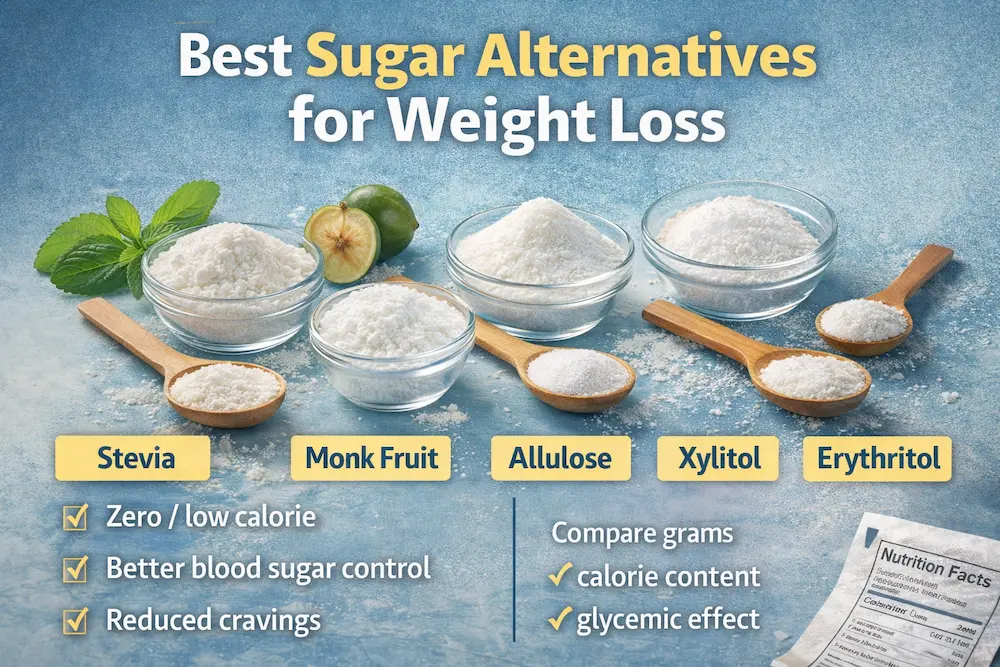
- Stevia, monk fruit, erythritol, xylitol, and allulose are among the most common sugar alternatives for weight loss.
- The best overall choice for many people trying to lose weight is often stevia or monk fruit, because both are very sweet, very low in calories, and do not meaningfully raise blood sugar in typical use.
- The healthiest option depends on your goal, your digestion, your medical history, and how you plan to use it.
What This Article Covers
You will learn:
- why sugar can make weight loss harder
- which sugar substitute is best for weight loss
- what to eat instead of sugar for weight loss
- what the healthiest replacement for sugar may be
- which sweeteners may be better or worse for people with kidney concerns
- how popular alternatives compare in calories and glycemic impact
Why Sugar Can Slow Down Weight Loss
Sugar is not “fattening” because it is evil. It becomes a problem because it is easy to overconsume. Added sugar can quickly raise calorie intake without adding much fullness, especially in drinks, sauces, packaged snacks, flavored yogurt, coffee drinks, and desserts.
High-sugar foods can also make weight loss harder by:
- increasing total daily calories
- triggering more cravings in some people
- contributing to blood sugar swings
- making highly processed foods more rewarding and easier to overeat
According to the World Health Organization, reducing free sugars is recommended as part of a healthier diet. Harvard Health and Harvard’s Nutrition Source have also discussed how excess added sugar is linked with weight gain and metabolic problems (Harvard Health, Harvard T.H. Chan School of Public Health).
That does not mean all sweet taste must disappear. It means replacing at least some added sugar with lower-calorie options can make the process more manageable.
Which Sugar Substitute Is Best for Weight Loss?
For many people, stevia or monk fruit are the best sugar substitutes for weight loss.
Why? Because they are:
- extremely sweet, so you need only a small amount
- very low in calories or calorie-free in practical use
- low impact on blood sugar in typical amounts
- easy to use in drinks, yogurt, oatmeal, and some recipes
That said, the “best” one depends on what matters most to you:
- Best for coffee or tea: stevia or monk fruit
- Best for baking texture: allulose or erythritol blends
- Best for reducing calories aggressively: stevia or monk fruit
- Best for a sugar-like taste: allulose or erythritol
- Best for low glycemic impact: stevia, monk fruit, erythritol, or allulose
Best Sugar Alternatives for Weight Loss
Stevia for Weight Loss
What is stevia?
Stevia is a sweetener derived from the leaves of Stevia rebaudiana. Refined steviol glycosides are the compounds typically used in commercial products.
Sweetness compared to sugar
Stevia is much sweeter than regular sugar, often estimated to be many times sweeter depending on the extract and formulation.
Glycemic impact
Stevia is generally considered to have little to no meaningful effect on blood sugar in typical amounts. Sources like the Mayo Clinic and FDA information on high-intensity sweeteners support its use as a low- or no-calorie sweetener.
Benefits
- very low in calories
- useful for cutting sugar in drinks
- suitable for many lower-carb eating patterns
- generally blood-sugar friendly
Possible downsides
- some people dislike the aftertaste
- not ideal in every baking recipe on its own
- product quality varies a lot
Best use
Stevia works especially well in coffee, tea, yogurt, sauces, and simple low-sugar recipes.
Erythritol for Weight Loss
What is erythritol?
Erythritol is a sugar alcohol that provides sweetness with very few calories. It is commonly used in keto and low-sugar products.
Sweetness compared to sugar
It is less sweet than sugar, so larger quantities may be needed unless blended with other sweeteners.
Glycemic impact
Erythritol has minimal impact on blood sugar for most people. This is one reason it has become popular in diabetic-friendly and weight-loss-focused products. The Mayo Clinic discusses sugar alcohols as lower-calorie alternatives, though tolerance varies.
Benefits
- low in calories
- more sugar-like texture than stevia
- useful in baking blends
- low glycemic response for many people
Possible downsides
- can cause digestive discomfort in some people
- may create a cooling sensation in the mouth
- not everyone tolerates sugar alcohols well
Best use
Erythritol is often better in baking than stevia alone because it adds bulk.
Monk Fruit Sweetener for Weight Loss
What is monk fruit?
Monk fruit sweetener comes from monk fruit extract, with sweetness mainly from mogrosides rather than regular sugar.
Sweetness compared to sugar
It is much sweeter than table sugar, so very little is needed.
Glycemic impact
Monk fruit is generally considered to have little to no significant effect on blood sugar in normal use.
Benefits
- very low in calories
- low blood sugar impact
- often tastes better than stevia for some people
- useful in beverages and simple recipes
Possible downsides
- can be expensive
- many products are blended with erythritol or fillers
- taste differs by brand
Best use
Monk fruit is a strong option for people who want low calories with a more pleasant taste than some stevia products.
Xylitol for Weight Loss
What is xylitol?
Xylitol is another sugar alcohol often used in gum, mints, and low-sugar products.
Sweetness compared to sugar
It is close to sugar in sweetness, which makes it easy to use.
Glycemic impact
Xylitol has a lower glycemic effect than regular sugar, but it is not calorie-free and is not as metabolically neutral as stevia or monk fruit.
Benefits
- sugar-like sweetness
- useful in some recipes
- often easier to substitute cup-for-cup than high-intensity sweeteners
Possible downsides
- can cause bloating or diarrhea in some people
- contains calories
- extremely dangerous for dogs, even in small amounts
Best use
Xylitol can work well in recipes and oral-care products, but it is usually not my first pick for weight loss if you want the lowest-calorie option.
Allulose for Weight Loss
What is allulose?
Allulose is a rare sugar found naturally in small amounts in certain foods and produced commercially for sweetening.
Sweetness compared to sugar
It is somewhat less sweet than sugar but tastes very similar.
Glycemic impact
Allulose is often described as having minimal effect on blood glucose in typical use. It has become popular in lower-sugar products because it behaves more like sugar in recipes than stevia or monk fruit.
Benefits
- taste is very close to sugar
- useful in baking and syrups
- low-calorie compared with sugar
- low blood sugar effect in typical amounts
Possible downsides
- can be expensive
- some people get digestive symptoms in larger doses
- availability varies by market
Best use
Allulose is one of the strongest options for baking when taste and texture matter.
Comparison Table: Best Sweeteners for Weight Loss
| Sweetener | Sweetness vs Sugar | Calories | Glycemic Impact | Best For | Possible Downsides |
|---|---|---|---|---|---|
| Stevia | Much sweeter | Very low / near zero | Minimal | Coffee, tea, yogurt | Aftertaste |
| Erythritol | Less sweet | Very low | Minimal for most people | Baking blends | Digestive upset |
| Monk Fruit | Much sweeter | Very low / near zero | Minimal | Drinks, low-calorie sweetening | Expensive, blended products |
| Xylitol | Similar | Lower than sugar, not zero | Lower than sugar | Sugar-like use, some recipes | GI issues, toxic to dogs |
| Allulose | Slightly less sweet | Low | Minimal in typical use | Baking, sauces, sugar-like taste | Cost, possible GI issues |
What to Eat Instead of Sugar for Weight Loss
If your goal is fat loss, the smartest move is not only swapping sweeteners. It is also changing what you reach for when cravings hit.
Better options than sugary snacks often include:
- plain Greek yogurt with berries
- cottage cheese with cinnamon
- fruit with nut butter
- chia pudding with stevia or monk fruit
- dark chocolate in small amounts
- protein-rich snacks with fiber
These choices tend to be more filling than pure sugar and can help control hunger better. For many people, this matters more than the sweetener itself.
When I first started reducing sugar, I made the classic mistake of replacing every sweet thing with “diet” versions. That helped a little, but the real difference came when I started eating more protein and fiber. Cravings did not disappear overnight, but they became easier to manage.
What Is the Healthiest Replacement for Sugar?
The healthiest replacement for sugar depends on how you define healthy.
If you mean lowest calorie and lowest blood sugar impact, stevia and monk fruit are usually leading choices.
If you mean closest to sugar in cooking performance, allulose is often one of the most practical.
If you mean overall best approach, it may be smarter to use less sweetness overall, rely more on whole foods, and use small amounts of a lower-calorie sweetener where needed.
No sweetener is perfect. The healthiest strategy is usually:
- reduce your need for extreme sweetness
- choose a sweetener that fits your tolerance and goals
- avoid assuming “sugar-free” automatically means healthy
What Sweetener Is Good for Kidney Disease?
This is where caution matters.
There is no single universal sweetener for kidney disease that is best for everyone. The safest answer is that people with kidney disease should speak with a doctor or renal dietitian before making regular changes to sweeteners or packaged “diet” products.
That said, lower-calorie sweeteners such as stevia are often discussed as alternatives for people trying to reduce sugar intake, but kidney-related decisions depend on the person’s condition, stage of disease, medications, potassium needs, and full diet pattern. The National Kidney Foundation is a more reliable place to start than social media advice. For medical guidance, it is also worth checking clinical sources like Mayo Clinic and evidence databases such as PubMed.
What Most Beginners Do vs What Works Better
| What most beginners do | What works better |
|---|---|
| Replace sugar with huge amounts of “healthy” sweeteners | Use small amounts and gradually reduce sweetness overall |
| Focus only on calories | Also consider taste, digestion, and real-life use |
| Buy the first “sugar-free” product they see | Read labels and check what sweetener blend is actually inside |
| Use sweeteners without changing diet quality | Pair sweetener changes with higher protein, fiber, and better meal balance |
| Expect instant weight loss | Use sweeteners as a tool, not a miracle |
How to Choose the Right Sugar Alternative
Best for coffee and tea
Stevia or monk fruit
Best for baking
Allulose or erythritol blends
Best for strict calorie reduction
Stevia or monk fruit
Best for a more sugar-like taste
Allulose
Best for beginners
Monk fruit or allulose, because taste is often easier to accept
Frequently Asked Questions
Which sugar substitute is best for weight loss?
For many people, stevia or monk fruit are the best choices for weight loss because they are very low in calories and have minimal impact on blood sugar.
What to eat instead of sugar for weight loss?
Choose more filling options like Greek yogurt, fruit, chia pudding, nuts, cottage cheese, or high-protein snacks instead of sugary desserts and drinks.
What is the healthiest replacement for sugar?
There is no one perfect answer, but stevia and monk fruit are often seen as strong options for low-calorie sweetening, while allulose is useful when you want a more sugar-like result.
What sweetener is good for kidney disease?
People with kidney disease should ask a doctor or renal dietitian before making regular changes. There is no single best sweetener for every kidney patient.
Are sugar substitutes safe every day?
Many approved sweeteners are considered safe within recommended intake levels, but tolerance and health needs vary. Trusted sources include WHO, FDA, EFSA, and Mayo Clinic.
Final Recommendation
If your main goal is weight loss, start with stevia or monk fruit. If your main goal is baking without losing texture, try allulose or an erythritol-based blend. If you want something that feels closer to real sugar, allulose is often the most satisfying compromise.
The smartest move is not just finding a better sweetener. It is building a diet that makes you need less sweetness in the first place. That is where real progress usually happens.
Trusted Sources
- PubMed
- Mayo Clinic
- Harvard Health
- Harvard T.H. Chan School of Public Health
- World Health Organization
- EFSA
- FDA
- National Kidney Foundation
Disclaimer
This content is for informational purposes only and does not constitute medical advice. If you have kidney disease, diabetes, metabolic syndrome, or any other medical condition, consult your doctor or a qualified health professional before changing your diet.
If nothing changes, nothing changes. But if you make one smarter swap and stick to it for the next 60 to 90 days, your cravings, calories, and progress can look very different.
Author: A health and nutrition-focused writer covering evidence-based weight loss, sugar reduction, and practical diet strategies in a clear, beginner-friendly way.


