
Sugar-free living is no longer a niche goal. In 2026, it has become one of the strongest food and wellness trends for people who want steadier energy, better eating habits, and stronger metabolic health.
That shift is happening for a reason.
More people are paying attention to how added sugar affects daily life. Not just body weight, but also cravings, poor focus, energy crashes, and the constant feeling that they are always hungry again. According to trusted health resources like Harvard Health and the Mayo Clinic, reducing added sugars can support a healthier overall dietary pattern and better long-term wellbeing.
That is why the best sugar-free recipes for 2026 are not about bland “diet food.” They are about practical meals, smarter ingredients, and satisfying options that help people eat better without feeling restricted.
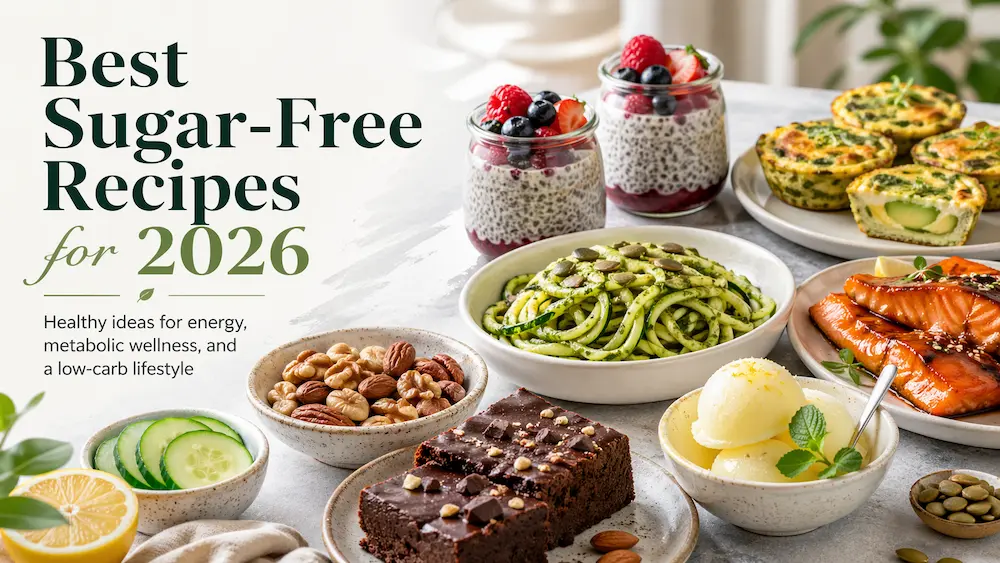
This guide includes the best sugar-free recipes for 2026, including breakfast ideas, lunch and dinner options, desserts, gluten-free sugar-free cakes, diabetic friendly cake recipes, and no-sugar snack recipes.
Why sugar-free eating is trending in 2026
People are no longer looking only for “low-calorie” food. They are looking for meals that help them feel better.
That means more readers are choosing recipes that support:
- steadier energy
- fewer cravings
- better appetite control
- less dependence on ultra-processed snacks
- stronger metabolic wellness
This is one reason sugar-free eating keeps growing as part of broader health and longevity habits. Trusted medical sources such as Harvard Health and Mayo Clinic have both highlighted the importance of limiting added sugars in everyday diets.
For many people, the biggest early win is simple: fewer crashes, fewer cravings, and better consistency.
The Best Sugar-Free Breakfast Options
Breakfast shapes the rest of the day.
A highly sweet breakfast often leads to hunger and snacking later. A balanced sugar-free breakfast can help you feel more full, focused, and stable.
Overnight Chia Pudding with Berries
This is one of the easiest sugar-free breakfasts to prepare ahead of time.
Ingredients
- 3 tablespoons chia seeds
- 1 cup unsweetened almond milk or coconut milk
- 1/2 teaspoon vanilla extract
- 1/2 teaspoon cinnamon
- 1/2 cup mixed berries
- optional: a small amount of stevia or monk fruit
Method
- Mix chia seeds, milk, vanilla, and cinnamon in a jar.
- Stir well and refrigerate overnight.
- Top with berries in the morning.
- Add chopped nuts for extra texture if you like.
Why it works
Chia seeds add fiber and help with fullness, while berries bring natural sweetness without relying on added sugar.
Savory Avocado & Egg Muffins
Not every good breakfast has to taste sweet.
These muffins are ideal for busy mornings and work especially well for people trying to reduce cravings later in the day.
Ingredients
- 6 eggs
- 1 avocado, diced
- 1/2 cup chopped spinach
- 1/4 cup diced bell pepper
- salt and pepper
- optional: feta or shredded cheese
Method
- Preheat oven to 180°C / 350°F.
- Whisk eggs with salt and pepper.
- Add vegetables and avocado.
- Pour into a greased muffin tray.
- Bake for 18 to 22 minutes.
Why it works
Protein-rich breakfasts often help people stay full longer and reduce the urge to snack on sweet foods later.
More sugar-free breakfast ideas
- plain Greek yogurt with cinnamon and walnuts
- cottage cheese with cucumber and seeds
- almond flour pancakes with berries
- tofu scramble with spinach
- unsweetened smoothie with avocado and chia
Satisfying Sugar-Free Lunch & Dinner
Sugar-free eating becomes much easier when the main meals are genuinely enjoyable.
The goal is not to remove flavor.
The goal is to create meals that satisfy you enough that you do not keep chasing snacks afterward.
Zucchini Noodles with Pumpkin Seed Pesto
Fresh, flavorful, and ideal for a lighter meal.
Ingredients
- 3 zucchini, spiralized
- 1 cup basil
- 1/3 cup pumpkin seeds
- 1 garlic clove
- 1/4 cup olive oil
- 2 tablespoons lemon juice
- salt and pepper
Method
- Blend basil, pumpkin seeds, garlic, olive oil, lemon juice, salt, and pepper into a pesto.
- Lightly sauté zucchini noodles for 1 to 2 minutes.
- Toss with pesto and serve immediately.
Why it works
It feels fresh and satisfying without relying on sugary sauces.
Glazed Salmon with Monk Fruit
This recipe gives you that sweet-savory finish many people love, without traditional sugar-heavy glazes.
Ingredients
- 2 salmon fillets
- 1 tablespoon coconut aminos or low-sodium soy sauce
- 1 teaspoon monk fruit sweetener
- 1 teaspoon Dijon mustard
- 1 teaspoon olive oil
- garlic and black pepper
Method
- Mix coconut aminos, monk fruit, mustard, olive oil, garlic, and pepper.
- Brush over the salmon.
- Bake at 200°C / 400°F for 12 to 15 minutes.
- Serve with roasted vegetables or cauliflower mash.
Why it works
It keeps the recipe flavorful while helping readers reduce added sugar.
More sugar-free lunch and dinner ideas
- turkey lettuce wraps
- stuffed peppers with quinoa and herbs
- grilled chicken salad with olive oil and lemon
- cauliflower rice stir-fry
- grilled shrimp with avocado slaw
- eggplant bake with tomato and feta
Viral Sugar-Free Desserts for 2026
Sugar-free desserts are improving fast.
In 2026, readers want desserts that feel real, not “healthy but disappointing.” The best ones deliver flavor, texture, and satisfaction without a sugar overload.
Almond Flour Dark Chocolate Brownies
Rich, dense, and one of the most appealing desserts in the best sugar-free recipes for 2026.
Ingredients
- 1 1/2 cups almond flour
- 1/3 cup unsweetened cocoa powder
- 2 eggs
- 1/3 cup melted butter or coconut oil
- 1/3 cup erythritol or monk fruit blend
- 1 teaspoon vanilla
- 1/4 teaspoon salt
- optional: sugar-free dark chocolate chunks
Method
- Mix the dry ingredients in one bowl.
- Whisk the wet ingredients in another.
- Combine and fold gently.
- Bake at 175°C / 350°F for 18 to 22 minutes.
Why it works
Almond flour gives the brownies a soft texture and keeps them naturally gluten-free.
Stevia-Sweetened Lemon Sorbet
Bright, refreshing, and perfect for readers who want something lighter.
Ingredients
- 1 cup fresh lemon juice
- 2 cups cold water
- stevia to taste
- lemon zest
- optional mint leaves
Method
- Mix lemon juice, water, stevia, and zest.
- Freeze in a shallow container.
- Stir every 30 to 45 minutes until it reaches a sorbet texture.
Why it works
It is simple, clean, and much lighter than traditional sugary frozen desserts.
Gluten-Free Sugar-Free Cakes
This is one of the most popular combinations for readers trying to avoid both sugar and gluten.
Flourless Almond Vanilla Cake
Ingredients
- 2 cups almond flour
- 3 eggs
- 1/3 cup monk fruit sweetener
- 1/4 cup Greek yogurt
- 1 teaspoon vanilla
- 1 teaspoon baking powder
Method
- Mix eggs, yogurt, vanilla, and sweetener.
- Add almond flour and baking powder.
- Bake at 175°C / 350°F for 25 to 30 minutes.
- Let it cool before slicing.
Serving idea
Top with unsweetened whipped cream and berries.
Coconut Lemon Tea Cake
Ingredients
- 1 1/2 cups coconut flour blend
- 4 eggs
- 1/4 cup melted coconut oil
- lemon zest and juice
- 1/3 cup erythritol
- 1 teaspoon baking powder
Why it works
It feels bakery-style while staying lighter and lower in added sugar.
Diabetic Friendly Cake Recipes
These recipes are designed to be more mindful of added sugar, but portion size and personal response still matter.
Cinnamon Yogurt Almond Cake
Ingredients
- 1 1/2 cups almond flour
- 3 eggs
- 1/2 cup plain Greek yogurt
- 1/3 cup monk fruit sweetener
- 1 teaspoon cinnamon
- 1 teaspoon baking powder
Why it works
It avoids the classic combination of refined flour, frosting, and high sugar load.
Mini Cocoa Walnut Cakes
Ingredients
- 1 cup almond flour
- 2 tablespoons unsweetened cocoa
- 2 eggs
- 1/4 cup erythritol
- 1/4 cup chopped walnuts
- 1 teaspoon vanilla
Why it works
Smaller cakes can make portion control easier and more realistic.
A helpful reminder from organizations like the American Diabetes Association is that meal planning should always be personalized, especially for people managing blood sugar.
No-Sugar Snack Recipes
This is where consistency usually gets won or lost.
Most people do not struggle because lunch was a problem.
They struggle because they get hungry at the wrong moment and reach for whatever is easy.
Cucumber Tuna Bites
Ingredients
- cucumber slices
- tuna mixed with olive oil or Greek yogurt
- lemon, pepper, dill
Why it works
Fast, savory, and high in protein.
Cocoa Chia Energy Cups
Ingredients
- chia seeds
- unsweetened almond milk
- cocoa powder
- vanilla
- a little stevia if needed
Why it works
It feels like a treat while still fitting a lower-sugar routine.
Roasted Spiced Nuts
Ingredients
- almonds
- walnuts
- pumpkin seeds
- olive oil
- paprika
- sea salt
Why it works
Crunchy snacks often help people replace processed sweet snacks more easily.
More no-sugar snack ideas
- boiled eggs
- cheese cubes with cucumber
- celery with nut butter
- plain Greek yogurt with cinnamon
- avocado on seed crackers
- olives and cherry tomatoes
Why science backs reducing added sugars
Reducing added sugar is not just a trend. It is one of the most consistently recommended steps for improving diet quality.
Trusted sources like Harvard Health, Mayo Clinic, and the American Heart Association all emphasize the value of limiting added sugars as part of a healthier eating pattern.
Reducing added sugar may help support:
- more stable energy
- better appetite control
- improved overall diet quality
- healthier long-term eating habits
That does not mean every person must avoid all sweetness forever.
It means that cutting back on added sugars is one of the simplest and most practical upgrades many people can make.
A realistic note on sweeteners
Some sugar-free recipes use stevia, monk fruit, or erythritol.
These can be useful tools, especially for people trying to move away from high-sugar desserts. But the real goal is not just to swap one sweetener for another. It is to gradually need less sweetness overall.
That is what makes sugar-free eating feel sustainable instead of temporary.
Medical disclaimer
This article is for informational purposes only and does not replace medical advice. Readers should consult their doctor or a qualified healthcare professional before making major dietary changes, especially if they have diabetes, are pregnant, take medication, or have a medical condition that affects blood sugar or digestion.