

Medical disclaimer: This article is for educational purposes only and does not replace medical advice. If you have diabetes, hypoglycemia, are pregnant, take glucose-lowering medication, or have any medical condition, speak with your doctor or registered dietitian before making major dietary changes.
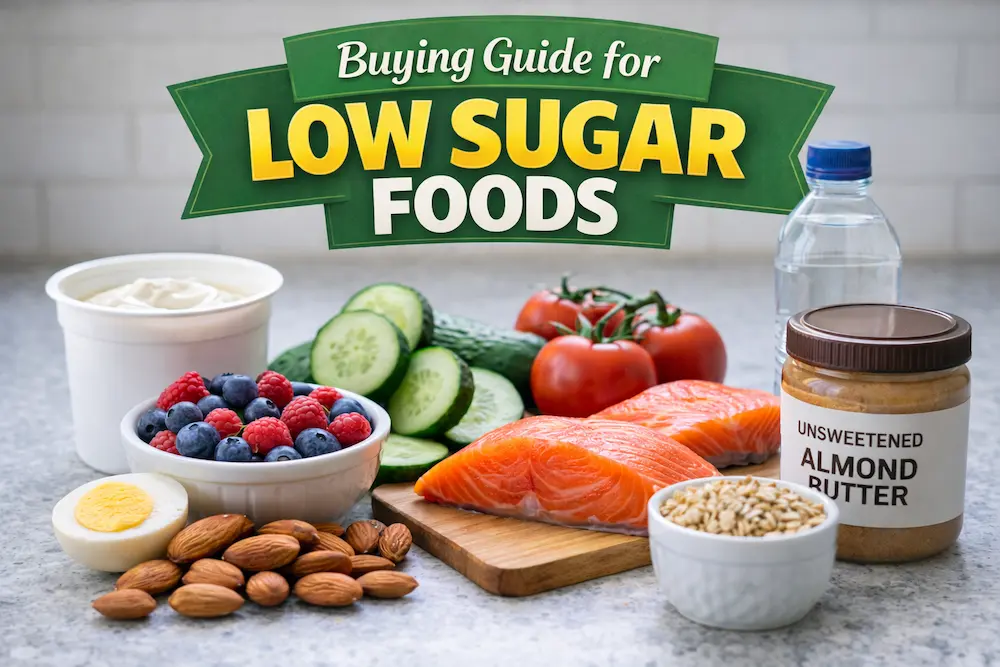
Cutting back on sugar sounds simple until you walk into a supermarket and realize sugar is hiding in yogurt, sauces, cereal, “healthy” snack bars, and even bread. That is where most people get stuck. They try to eat better, but food labels are confusing, marketing claims are vague, and products labeled “natural” or “light” can still be loaded with added sugars.
This guide will help you shop smarter. You will learn what to eat if you have low blood sugar, which low-sugar foods are worth buying, how to read labels, what a no sugar diet really means, and which sugar alternatives make sense in real life.
What this article covers
- What to eat if you have low blood sugar
- The best low-sugar foods to keep at home
- What a no sugar diet actually means
- What to use instead of sugar
- How to read food labels and spot hidden sugar
- Better low sugar swaps for dairy, snacks, and drinks
Why low-sugar eating matters
Too much added sugar may make it harder to manage energy levels, appetite, weight, blood sugar control, and long-term metabolic health. Health organizations such as the World Health Organization and the American Heart Association advise limiting added sugars as part of a healthy eating pattern.
That does not mean all sugar is “bad.” Fruit, milk, and other whole foods naturally contain sugar along with fiber, protein, vitamins, or minerals. The bigger issue is usually added sugar, especially in ultra-processed foods.
What to eat if you have low blood sugar?
This is one of the most important distinctions in this article: low-sugar eating is not the same as treating low blood sugar.
If you have low blood sugar (hypoglycemia), especially with symptoms such as shaking, sweating, dizziness, confusion, weakness, or rapid heartbeat, you usually need fast-acting carbohydrate, not a low-sugar snack. Guidance from the American Diabetes Association commonly recommends the “15-15 rule” for many adults:
- Take 15 grams of fast-acting carbohydrate
- Wait 15 minutes
- Recheck blood sugar if you monitor it
- Repeat if still low, according to your clinician’s advice
Fast-acting foods often used for low blood sugar
- Glucose tablets
- Glucose gel
- 4 ounces (about 120 ml) of fruit juice
- 4 ounces of regular soda, not diet
- 1 tablespoon of sugar or honey
- Hard candies, if the carb amount is known
What to eat after your blood sugar comes back up
If your next full meal is not soon, many people do better with a small snack that combines carbohydrate + protein to help maintain levels, depending on medical advice:
- Apple slices with peanut butter
- Whole grain crackers with cheese
- Greek yogurt with berries
- Half a sandwich with turkey
- Banana with a handful of nuts
If you get low blood sugar often, do not just “snack around it.” Talk to your doctor. Recurrent hypoglycemia can need medication review, meal timing changes, or a deeper medical evaluation.
What are the best low-sugar foods to eat?
The best low-sugar foods are usually the least confusing ones: whole or minimally processed foods with a short ingredient list and little or no added sugar.
Best low-sugar foods by category
Protein-rich foods
- Eggs
- Chicken breast
- Turkey
- Fish and seafood
- Tofu, tempeh, edamame
- Plain Greek yogurt
- Cottage cheese
- Unsweetened protein powders with simple ingredients
Vegetables
- Leafy greens
- Broccoli
- Cauliflower
- Zucchini
- Cucumbers
- Bell peppers
- Mushrooms
- Green beans
Fruits that fit well in a low-sugar plan
Fruit can still be part of a low-sugar lifestyle. In general, focus on whole fruit rather than juice.
- Berries
- Kiwi
- Apples
- Pears
- Oranges
- Peaches
Healthy fats
- Avocados
- Nuts
- Seeds
- Natural nut butters
- Olives
- Extra virgin olive oil
Smart low sugar carbs
- Oats
- Quinoa
- Brown rice
- Lentils
- Chickpeas
- Beans
- Whole grain bread with no or very low added sugar
Best low sugar snacks
When shoppers search for low sugar snacks, they often end up with expensive “diet” products. In reality, many of the best options are basic foods:
- Plain Greek yogurt with cinnamon
- Cottage cheese with cucumber or tomatoes
- Hard-boiled eggs
- Hummus with carrots or peppers
- A handful of almonds or walnuts
- Apple with peanut butter
- Cheese with whole grain crackers
- Roasted chickpeas
- Unsweetened chia pudding
- Tuna packets with cucumber slices
What most beginners do vs what works better
| What most beginners do | What works better |
|---|---|
| Buy anything labeled “sugar-free” | Check the ingredients and total eating pattern |
| Cut all fruit immediately | Reduce added sugar first, keep whole fruit in sensible portions |
| Replace meals with protein bars | Build meals around protein, fiber, and whole foods |
| Ignore sauces and drinks | Audit condiments, coffee drinks, yogurt, cereal, and beverages |
| Focus only on grams of sugar | Also check fiber, protein, ingredients, and portion size |
What is a no sugar diet?
A no sugar diet usually means avoiding added sugars and highly sweetened foods, not eliminating every food that naturally contains sugar.
That matters because milk contains lactose, fruit contains fructose, and vegetables contain small amounts of natural sugars. A realistic and healthy no sugar diet is often better understood as a no added sugar or very low added sugar approach.
What a no sugar diet usually avoids
- Soda and sweetened drinks
- Candy and desserts
- Sweetened yogurt
- Breakfast cereals with added sugar
- Syrups
- Sweetened coffee drinks
- Pastries
- Many packaged snack bars
- Flavored oatmeal packets
- Sugary sauces such as sweet BBQ sauce, ketchup, or sweet chili sauce
What a no sugar diet usually includes
- Plain dairy or unsweetened dairy alternatives
- Meat, fish, eggs, tofu
- Vegetables
- Whole fruit
- Beans and lentils
- Nuts and seeds
- Whole grains with minimal added sugar
- Water, sparkling water, unsweetened tea, black coffee
A practical definition
For many people, the best version of a no sugar diet is:
- No sugary drinks
- No sweets as daily staples
- Minimal added sugar in packaged foods
- Mostly whole foods
- Labels checked carefully
That approach is far more sustainable than trying to make your diet perfectly sugar-free.
What can I substitute for sugar on a no sugar diet?
The best substitute depends on what you are making and why you want to reduce sugar.
Best sugar alternatives for everyday use
1. Fruit for natural sweetness
Works well in:
- Oatmeal
- Yogurt bowls
- Smoothies
- Chia pudding
- Baking, depending on recipe
Examples:
- Mashed banana
- Unsweetened applesauce
- Dates in small amounts
- Berries for topping
2. Non-sugar flavor boosters
These reduce the need for sweetness:
- Cinnamon
- Vanilla extract
- Nutmeg
- Cocoa powder
- Cardamom
- Citrus zest
3. Low- or no-calorie sweeteners
Some people use these to reduce added sugar intake:
- Stevia
- Monk fruit sweetener
- Erythritol blends
- Sucralose, depending on preference and tolerance
The American Diabetes Association offers useful information on sugar substitutes. Tolerance and preference vary, and some sugar alcohols may cause digestive discomfort in certain people.
Best substitutes by situation
In coffee or tea
- Stevia
- Monk fruit
- Cinnamon
- Unsweetened milk or cream
In yogurt
- Berries
- Cinnamon
- Vanilla
- Chopped nuts
- A very small amount of a preferred sweetener
In baking
- Unsweetened applesauce
- Mashed banana
- Stevia baking blends
- Monk fruit baking blends
In sauces
- Tomato paste plus herbs instead of sweetened jarred sauces
- Mustard, tahini, yogurt-based dressings, or olive oil and lemon instead of sweet dressings
Here’s the part nobody tells you: many people do not need a perfect sugar substitute. They need their taste buds to adapt. After a few weeks of eating less added sugar, foods often start tasting sweeter naturally.
How to read food labels and spot hidden sugar
This is the skill that makes the biggest difference. You do not need to memorize every “healthy” product. You need to know how to read food labels.
Step 1: Check the Nutrition Facts panel
Look at:
- Serving size
- Total sugars
- Added sugars if listed
- Fiber
- Protein
A product may look low in sugar until you notice the serving size is tiny.
Step 2: Read the ingredient list
Ingredients are listed from highest to lowest by weight. If sugar or a sugar-like ingredient appears near the top, that is a clue the product may not be as healthy as it seems.
Common names for hidden sugar
- Cane sugar
- Brown sugar
- Raw sugar
- Corn syrup
- High-fructose corn syrup
- Glucose syrup
- Dextrose
- Fructose
- Maltose
- Sucrose
- Invert sugar
- Rice syrup
- Agave syrup
- Honey
- Molasses
- Maltodextrin
Red flags on packaging
- “Natural”
- “Multigrain”
- “Fat-free”
- “Fruit flavored”
- “Made with real fruit”
- “Energy boosting”
- “Healthy”
- “Organic”
These claims do not automatically mean low sugar.
Quick label rules for busy shoppers
- Choose products with 0 to 5 grams added sugar when possible
- Prefer short ingredient lists
- Look for protein and fiber, especially in snacks
- Compare similar products side by side
- Watch sauces, cereals, yogurts, plant milks, granola, and drinks closely
Buying guide: the best low-sugar choices by food category
Low-sugar dairy and dairy alternatives
Choose:
- Plain Greek yogurt
- Plain skyr
- Cottage cheese
- Unsweetened kefir if tolerated
- Unsweetened almond or soy milk
Avoid or limit:
- Flavored yogurt
- Dessert yogurt
- Sweetened milk drinks
- Chocolate milk
- Sweetened plant milks
Smart swap: Buy plain yogurt and add berries plus cinnamon yourself.
Low sugar snacks
Choose:
- Nuts and seeds
- Cheese sticks
- Hummus cups
- Hard-boiled eggs
- Plain popcorn
- Roasted edamame
- Unsweetened jerky with simple ingredients
Avoid or limit:
- Granola bars
- Frosted protein bars
- Candy-like “energy bites”
- Sweetened trail mix
- Fruit snacks
Smart swap: Replace a sugary bar with apple slices and nut butter or a plain yogurt cup.
Low-sugar drinks
Choose:
- Water
- Sparkling water
- Unsweetened tea
- Black coffee
- Coffee with unsweetened milk
- Electrolyte drinks only when needed, with labels checked carefully
Avoid or limit:
- Soda
- Juice drinks
- Sports drinks for casual use
- Flavored coffee beverages
- Sweetened iced tea
- Sweetened smoothies
Smart swap: Sparkling water with lemon or lime instead of soda.
Bread, cereal, and breakfast foods
Choose:
- Plain oats
- Unsweetened muesli
- Eggs
- Whole grain bread with low added sugar
- Chia pudding made at home
- Plain yogurt bowls
Avoid or limit:
- Sugar-coated cereals
- Instant flavored oatmeal
- Sweet breakfast pastries
- Pancake syrups
- Sweetened breakfast drinks
Smart swap: Oats with chia, cinnamon, and berries instead of sugary cereal.
Sauces, condiments, and pantry items
Choose:
- Mustard
- Salsa with no added sugar
- Olive oil and vinegar
- Unsweetened tomato products
- Tahini
- Plain nut butter
Avoid or limit:
- Sweet BBQ sauce
- Ketchup with high added sugar
- Teriyaki sauce
- Sweet salad dressings
- Sweet chili sauce
Smart swap: Mix olive oil, lemon juice, garlic, and herbs for an easy low-sugar dressing.
A simple low-sugar shopping list
Protein
- Eggs
- Chicken
- Tuna
- Salmon
- Tofu
- Plain Greek yogurt
- Cottage cheese
Produce
- Spinach
- Broccoli
- Cucumbers
- Bell peppers
- Avocados
- Berries
- Apples
Pantry
- Oats
- Lentils
- Chickpeas
- Brown rice
- Chia seeds
- Nuts
- Nut butter
Drinks
- Water
- Sparkling water
- Unsweetened tea
- Coffee
Flavor boosters
- Cinnamon
- Vanilla
- Cocoa powder
- Lemon
- Herbs and spices
A realistic 1-day low-sugar meal example
Breakfast
Plain Greek yogurt with berries, chia seeds, and cinnamon
Lunch
Chicken salad with olive oil dressing, avocado, cucumber, and whole grain crackers
Snack
Apple with peanut butter
Dinner
Salmon, roasted vegetables, and quinoa
Evening option
Herbal tea and a few nuts
[Suggested visual: simple supermarket checklist graphic showing “Best picks,” “Watch out,” and “Hidden sugar names to avoid.”]
Common mistakes people make on a low-sugar diet
1. They cut sugar but eat too little overall
That can backfire and lead to cravings later.
2. They rely too much on “sugar-free” processed foods
Some are useful, but they are not automatically healthy.
3. They stop eating fruit
For most people, whole fruit is not the main problem.
4. They forget liquid sugar
Drinks can be one of the largest sources of added sugar.
5. They never check condiments
A “healthy” meal can still become sugar-heavy because of sauces.
When I first started cleaning up my own eating habits, I noticed that the biggest improvement did not come from giving up dessert entirely. It came from fixing the quiet sugar sources I barely noticed before: flavored yogurt, sauces, cereals, and coffee drinks. That is where many people win without feeling deprived.
Are low-sugar foods good for everyone?
Not always in the exact same way. Needs differ.
You may need personalized advice if you:
- Have diabetes or prediabetes
- Experience frequent low blood sugar
- Are taking insulin or sulfonylureas
- Are an athlete with high carbohydrate needs
- Have an eating disorder history
- Are pregnant or breastfeeding
- Have kidney, liver, or digestive conditions
For evidence-based guidance, readers can review information from the American Diabetes Association, the World Health Organization, and the NHS.
FAQ
What should I eat if I have low blood sugar?
Use fast-acting carbohydrate first, such as glucose tablets, juice, or regular soda in an appropriate amount, based on your clinician’s advice. After recovery, a snack with carbohydrate and protein may help if your next meal is not soon.
What are the best low-sugar foods to eat?
The best options are usually minimally processed foods such as eggs, fish, plain Greek yogurt, vegetables, beans, oats, nuts, seeds, and whole fruit in sensible portions.
What is a no sugar diet?
Usually it means avoiding added sugar, not removing every natural sugar from foods like fruit or milk. A practical no sugar diet focuses on whole foods and limits sugary drinks, sweets, and sweetened packaged foods.
What can I substitute for sugar on a no sugar diet?
Good options include stevia, monk fruit, cinnamon, vanilla, berries, unsweetened applesauce, and mashed banana in certain recipes.
Are sugar-free foods always healthy?
No. Some sugar-free products are still highly processed or low in fiber and protein. Always check the ingredient list and overall nutrition.
Is fruit allowed on a low-sugar diet?
Usually yes. Whole fruit is generally a better choice than juice because it contains fiber and is less concentrated.