

A man in his thirties sits down after lunch, tired again.
He blames work stress. Maybe poor sleep. Maybe age.
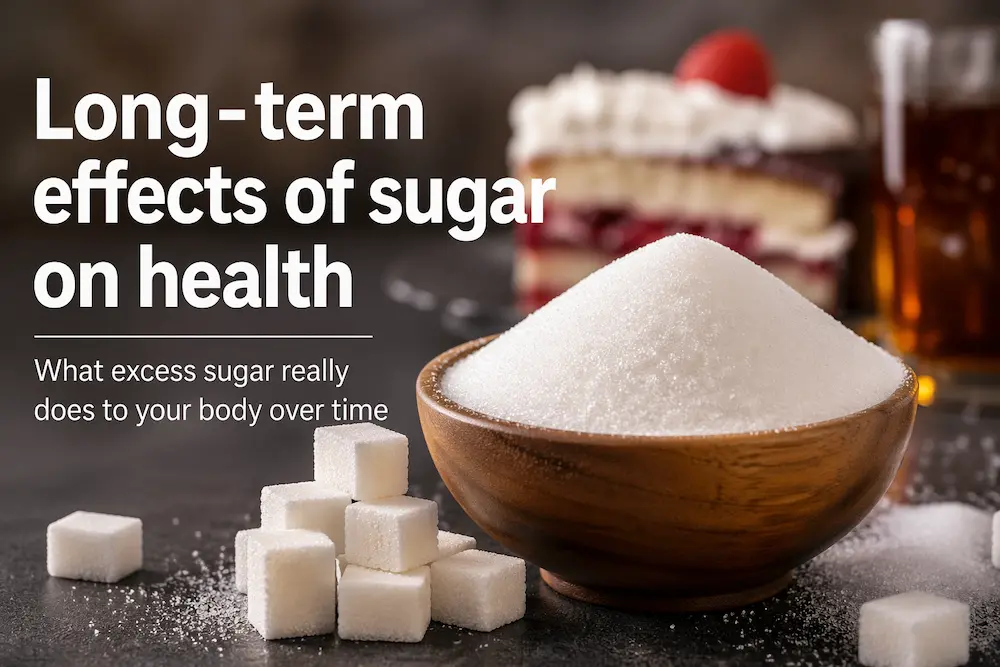
So he grabs a “healthy” yogurt, a granola bar, and a coffee with flavored syrup.
By 4 p.m., he crashes. Again.
This is how it often starts.
Not with a dramatic diagnosis.
Not with one spoonful of sugar.
But with years of hidden sugars, blood sugar spikes, energy dips, cravings, and slow damage that feels invisible—until it isn’t.
Here’s the uncomfortable truth: sugar does not always hurt you overnight.
It often reshapes metabolic health, inflammation, and even mood in ways that build quietly over time.
This article explains what the long-term effects of sugar on health really are, whether dietary sugar affects health outcomes, and how sugar influences both physical health and everyday wellbeing.
What this article covers
- Is sugar bad for your health?
- What are the long-term effects of sugar on the body?
- Does dietary sugar affect health outcomes?
- How does sugar affect health and wellbeing?
- Practical tips to cut back starting today
[Internal link placeholder: Read our guide to healthy eating habits]
[Internal link placeholder: Read our article on insulin resistance symptoms]
[Internal link placeholder: Read our beginner’s guide to metabolic health]
Competitor analysis summary
Most articles on this topic focus only on weight gain or diabetes.
That is too narrow.
The strongest content in this space usually covers sugar’s link to obesity, heart disease risk, and blood sugar control. Where many articles fall short is in explaining the full-body picture: the brain, skin, chronic inflammation, mood, cravings, aging, and the difference between naturally occurring sugars and excess added sugar.
This article improves on that by:
- Answering the exact questions readers ask
- Explaining mechanisms in simple language
- Covering both physical and mental wellbeing
- Adding shareable, practical action steps
- Leaving space for internal links to build topic authority
Is sugar bad for your health?
Sugar is not “bad” in a simplistic, all-or-nothing way.
Your body can handle small amounts of sugar, especially when it comes from whole foods like fruit, which also provide fiber, water, and nutrients. The bigger concern is excess added sugar, especially from sugary drinks, desserts, sweetened snacks, sauces, and ultra-processed foods.
In plain English:
it is not the occasional dessert that creates the biggest problem.
It is the repeated, long-term pattern of high sugar intake that can harm health.
According to the World Health Organization’s guidance on free sugars, limiting free sugar intake is recommended as part of a healthy diet. Major medical sources such as Harvard Health and Mayo Clinic also warn that too much added sugar is associated with poorer health outcomes.
The real issue is not just sugar alone
Sugar becomes more harmful when it is part of a larger pattern:
- Low-fiber diet
- High-calorie ultra-processed foods
- Frequent snacking
- Sugary drinks
- Poor sleep
- Low physical activity
- Ongoing stress
That combination can push the body toward insulin resistance, chronic inflammation, and declining metabolic health.
Does dietary sugar affect health outcomes?
Yes—especially when intake is high and consistent over time.
Research and public health guidance have linked diets high in added sugars, particularly sugar-sweetened beverages, with a higher risk of poor health outcomes such as weight gain, type 2 diabetes, dental disease, and cardiovascular problems.
That does not mean every gram of sugar has the same effect.
Sugar from whole fruit is not the same as added sugar
A banana is not the same as soda.
An apple is not the same as candy.
Whole fruit contains:
- Fiber
- Water
- Vitamins
- Plant compounds
- Slower digestion
Added sugars in drinks and processed foods tend to be easier to overconsume and less filling.
This is one reason why public health experts focus heavily on reducing added sugars and sugary beverages rather than telling people to fear all carbohydrates.
What are the long-term effects of sugar on our health?
The long-term effects of excess sugar can touch almost every system in the body.
1. Sugar and metabolic health
This is where the damage often begins.
When you regularly consume large amounts of added sugar—especially in liquid form—your body has to manage repeated rises in blood glucose and insulin. Over time, cells may respond less effectively to insulin. That is called insulin resistance.
Why insulin resistance matters
Insulin resistance can increase the risk of:
- Prediabetes
- Type 2 diabetes
- Belly fat gain
- Fatty liver
- Energy crashes
- Increased hunger and cravings
This is one of the biggest answers to the question, “What does sugar really do to the body over time?”
It can make your body worse at handling fuel.
For a general overview, see Mayo Clinic on added sugar.
Here’s the part nobody tells you
Many people think they are “just tired” or “just hungry all the time.”
Sometimes, those daily swings are not random.
They are the early lifestyle signals of poor blood sugar control.
When I first tried to reduce sugar more intentionally, I noticed something within a couple of weeks: fewer afternoon crashes. That alone made me realize how often people normalize symptoms that are not actually normal.
2. Sugar, chronic inflammation, and disease risk
High sugar intake may contribute to chronic inflammation, especially when it is part of a diet rich in refined carbohydrates and ultra-processed foods.
Inflammation is not always bad. Acute inflammation helps the body heal.
The problem is when low-grade inflammation stays switched on for months or years.
That can play a role in:
- Cardiovascular disease
- Type 2 diabetes
- Obesity-related complications
- Non-alcoholic fatty liver disease
- Potential worsening of some inflammatory conditions
For broader dietary guidance, the WHO healthy diet recommendations support limiting free sugars as part of reducing long-term disease risk.
Sugar and oxidative stress
Excess sugar may also increase oxidative stress, which can interact with inflammation and tissue damage over time. This does not mean sugar is the only cause. But in a high-sugar lifestyle, it can be part of the problem.
3. Sugar and heart health
Many people still think sugar is mainly a “weight issue.”
It is not.
Too much added sugar may negatively affect heart health by contributing to:
- Higher triglycerides
- Weight gain
- Insulin resistance
- Increased blood pressure in some dietary patterns
- Poorer overall diet quality
That means sugar can affect the cardiovascular system both directly and indirectly.
Harvard Health has repeatedly highlighted the connection between excess sugar intake, especially from sugary drinks, and heart-related risk factors.
H3: The heart risk many people miss
You can look slim and still have poor metabolic health.
That is why sugar’s long-term effects should never be judged only by the scale.
4. Sugar and the brain
Sugar affects more than blood tests.
It also affects how you feel.
A high-sugar pattern may contribute to:
- Energy swings
- Irritability
- Brain fog
- Cravings
- Trouble concentrating
- Mood instability in some people
This does not mean sugar directly “causes” mental illness.
It means that diet quality can influence mental and emotional wellbeing.
How does sugar affect health and wellbeing?
It often affects wellbeing through the rhythm of daily life:
- Quick energy, then a crash
- Temporary comfort, then more cravings
- Less stable focus
- Poorer sleep when eating patterns are chaotic
- Guilt, frustration, and “starting over tomorrow” cycles
If this sounds familiar, keep reading.
This is exactly why reducing sugar can feel so powerful. It is not only about long-term disease prevention. It is also about feeling more stable in your own body.
5. Sugar, weight gain, and appetite dysregulation
Sugar can make it easier to overeat, especially when it comes in foods engineered to be hyper-palatable.
Think of the foods people rarely binge on: plain potatoes, beans, apples.
Now think of the foods people easily overconsume: pastries, sweetened coffee drinks, candy, cereal bars, ice cream, soft drinks.
The issue is not just sweetness.
It is the combination of sugar, fat, texture, convenience, and low satiety.
H3: Why sugary drinks are especially problematic
Sugary beverages are one of the clearest examples of dietary sugar affecting health outcomes.
Why?
Because they deliver sugar quickly and do not create the same fullness as solid food. That makes it easier to consume excess calories without noticing.
6. Sugar and fatty liver
One of the more overlooked long-term effects of high sugar intake is its role in fatty liver, especially when diets are high in excess calories and refined foods.
The liver plays a central role in processing nutrients. Chronically high intake of added sugars—particularly in an unhealthy overall dietary pattern—may contribute to fat buildup in the liver.
This matters because fatty liver is often silent in the early stages.
No dramatic symptoms.
No immediate warning.
Just slow progression.
7. Sugar and skin aging
Yes, sugar can affect the skin too.
Over time, high sugar intake may contribute to processes that make skin look less firm and more aged. One reason is glycation, where sugars can interact with proteins in the body, potentially affecting collagen and elasticity.
Possible skin-related effects
- Duller-looking skin
- Faster visible aging
- More inflammation-linked skin flare-ups in some people
- Poorer recovery when overall diet quality is low
This is one of the most shareable parts of the topic because people often do not connect sugar with appearance.
But the truth is simple: what happens internally often shows up externally.
8. Sugar and dental health
This is one of the most established effects.
Frequent sugar exposure increases the risk of tooth decay because bacteria in the mouth feed on sugars and produce acids that damage enamel.
The World Health Organization includes dental health among the reasons for limiting free sugars.
This may be the oldest warning about sugar, but it is still one of the most relevant.
9. Sugar and long-term habits
Most people fail at reducing sugar for one reason:
they treat it like a willpower problem.
Usually, it is an environment problem.
If your breakfast, snacks, drinks, sauces, and convenience foods are packed with hidden sugars, then even “trying to be healthy” can keep you stuck in the same cycle.
Common hidden sugar sources
- Flavored yogurt
- Granola and cereal
- Protein bars
- Bottled smoothies
- Coffee creamers
- Salad dressings
- Ketchup and sauces
- “Low-fat” products
- Sports drinks
- Store-bought baked goods
This is why labels matter.
What most beginners do vs. what works better
| What most beginners do | What successful people do instead |
|---|---|
| Quit sugar completely overnight | Reduce the biggest sugar sources first |
| Focus only on desserts | Also cut sugary drinks and hidden sugars |
| Replace sugar with more ultra-processed “diet” foods | Build meals around protein, fiber, and whole foods |
| Rely on motivation | Change the home and work food environment |
| Ignore breakfast and then binge later | Eat balanced meals to reduce cravings |
| Think one slip means failure | Get back on track at the next meal |
Is all sugar equally harmful?
No.
That distinction matters.
Generally more concerning
- Sugary drinks
- Candy
- Desserts eaten frequently
- Sweetened coffee beverages
- Processed foods with multiple added sugars
- Large amounts of added sugar consumed daily
Generally less concerning in a healthy pattern
- Whole fruit
- Plain dairy with naturally occurring sugars
- Occasional dessert in a balanced diet
- Small amounts of sugar in otherwise nutrient-dense meals
The goal is not fear.
The goal is clarity.
Tips to cut sugar today
This is the section readers tend to save, share, and actually use.
1. Stop drinking your sugar
The fastest win for many people is cutting:
- Soda
- Sweetened coffee drinks
- Energy drinks
- Sweet tea
- Fruit drinks with added sugar
Swap them for:
- Water
- Sparkling water
- Unsweetened tea
- Coffee with less sweetener
- Plain yogurt smoothies made at home
2. Build meals that reduce cravings
At each meal, aim for:
- Protein
- Fiber
- Healthy fat
- Whole-food carbohydrates
That combination often helps reduce the blood sugar roller coaster.
3. Read labels for hidden sugars
Check ingredients and nutrition labels on:
- Yogurts
- Granola
- Cereal
- Sauces
- Snack bars
- Bread
- Plant-based milks
4. Keep sweet foods out of your immediate environment
Make the default choice easier.
If it is in the kitchen, on the desk, in the car, and in the bag, you will eat it more often.
5. Don’t try to be perfect
A perfect plan that lasts three days is worse than a realistic plan that lasts three months.
6. Start with a 7-day sugar audit
Write down every source of added sugar you consume for one week.
Most people are shocked by what they find.
7. Replace, don’t just remove
Instead of only cutting sugar, add better options:
- Fruit with nuts
- Plain Greek yogurt with berries
- Dark chocolate in smaller portions
- Oatmeal with cinnamon
- Eggs and toast instead of sweet cereal
[Suggested visual: simple “Hidden Sugars Swap Chart” showing common sugary foods and smarter replacements.]
A practical 3-step reset
If you want a simple place to start, do this for the next 10 days:
Step 1: Eliminate sugary drinks
This alone can dramatically reduce added sugar intake.
Step 2: Eat a protein-rich breakfast
This can help reduce later cravings and energy crashes.
Step 3: Identify your top three sugar triggers
Examples:
- Afternoon fatigue
- Stress eating
- Late-night snacking
Once you know the trigger, the habit becomes easier to change.
Internal linking opportunities for your blog
Use these placeholders so the article can connect to related content later:
- [Internal link placeholder: Best foods for stable blood sugar]
- [Internal link placeholder: How to improve insulin sensitivity naturally]
- [Internal link placeholder: Signs of poor metabolic health]
- [Internal link placeholder: Healthy snack ideas with low added sugar]
- [Internal link placeholder: What chronic inflammation does to the body]
- [Internal link placeholder: How ultra-processed foods affect long-term health]
FAQ: People also ask
Is sugar bad for your health?
In excess, especially as added sugar, yes. High long-term intake is associated with poorer metabolic health, insulin resistance, weight gain, dental problems, and increased risk factors for chronic disease. Small amounts in an overall healthy diet are different from a consistently high-sugar eating pattern.
What are the long-term effects of sugar on our health?
Potential long-term effects include insulin resistance, weight gain, type 2 diabetes risk, chronic inflammation, poorer heart health markers, fatty liver, dental decay, unstable energy, and possible effects on skin aging and overall wellbeing.
Does dietary sugar affect health outcomes?
Yes. Diets high in added sugars—especially sugar-sweetened beverages—are linked to worse health outcomes over time. The impact depends on the amount, the source, the overall diet, and lifestyle factors.
How does sugar affect health and wellbeing?
Sugar can affect both physical health and day-to-day wellbeing. It may contribute to energy crashes, cravings, poor appetite control, and mood fluctuations, while also increasing the risk of long-term metabolic and cardiovascular issues when consumed in excess.
Is fruit sugar bad too?
Whole fruit is generally not the main concern for most people. Fruit contains fiber, water, and nutrients that change how the body processes sugar. Added sugar in processed foods and drinks is usually the bigger issue.
Can cutting sugar improve how you feel?
For many people, yes. Reducing added sugar may improve energy stability, reduce cravings, and support better dietary patterns overall. Results vary, but many people notice everyday benefits before any lab result changes.
What to do next
Do not try to “never eat sugar again.”
Instead, pick one action you can sustain this week:
- Stop sugary drinks
- Check labels for hidden sugars
- Eat a higher-protein breakfast
- Replace one processed snack with a whole-food option
Small changes repeated daily beat extreme resets every time.
If you publish health content regularly, this article is also a strong hub page for a broader content cluster around blood sugar, inflammation, and metabolic health.
Final takeaway
Sugar is not just a calorie story.
It is a story about energy, cravings, inflammation, insulin resistance, and the quiet ways habits shape the body over the years. The biggest danger is not the obvious dessert. It is the steady drip of hidden sugars that makes poor metabolic health feel normal.
If nothing changes, nothing changes.
But if you commit to one realistic habit for the next 60 to 90 days, your energy, cravings, and long-term health trajectory can look very different.
Start today, not perfectly—just intentionally.
SEO title
Long-Term Effects of Sugar on Health: What Excess Sugar Really Does to Your Body
Meta description
Discover the long-term effects of sugar on health, including insulin resistance, chronic inflammation, heart risk, and metabolic health. Learn how sugar affects wellbeing and how to cut back starting today.
Primary keywords
- long-term effects of sugar on health
- is sugar bad for your health
- does dietary sugar affect health outcomes
- how does sugar affect health and wellbeing
- chronic inflammation
- insulin resistance
- hidden sugars
- metabolic health
Suggested keyword cluster
| Main keyword | Supporting keyword |
|---|---|
| long-term effects of sugar on health | sugar and inflammation |
| is sugar bad for your health | added sugar health risks |
| dietary sugar and health outcomes | sugar-sweetened beverages risk |
| how sugar affects wellbeing | sugar and energy crashes |
| insulin resistance | signs of insulin resistance |
| metabolic health | improve metabolic health naturally |
| hidden sugars | foods with hidden sugars |
| sugar and skin aging | glycation and skin health |
Author
Author: A health-focused writer specializing in evidence-based nutrition, metabolic health, and practical lifestyle change—translating complex research into clear, useful guidance for everyday readers.