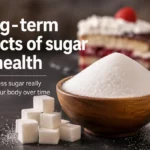

You probably don’t think much about sugar when you pour your morning coffee, grab a flavored yogurt, or reach for an “healthy” snack bar in the afternoon.

But that is exactly how it sneaks in.
Not through one giant dessert.
Through the hidden sugar in your everyday routine.
One sweet drink here. One processed snack there. A sauce, a cereal, a “low-fat” product, a quick energy boost when your day crashes at 3 p.m.
Then come the familiar signs: energy crashes, stronger sugar cravings, brain fog, mood swings, stubborn weight gain, and the feeling that your body is working against you.
That is why reducing sugar is not about punishment.
It is about getting your energy, focus, and long-term health back.
This guide explains why cutting back matters, what the real science says, and how you can start today without turning your life upside down.
[Internal link placeholder: Read our guide to hidden sugars in everyday foods]
[Internal link placeholder: Read our beginner’s guide to healthy living habits]
[Internal link placeholder: Read our article on blood sugar balance naturally]
What this article answers
- Is reducing sugar a good idea?
- Why should I reduce my sugar intake?
- Are added sugars good for you?
- Can eating less sugar reduce diabetes risk?
It also covers the biggest benefits of reducing sugar, a simple action plan, and a 7-day challenge you can start today.
Competitor analysis summary
Most content around this topic focuses on one angle only: weight loss.
That leaves a lot on the table.
Readers are also searching for answers about brain fog, inflammation, skin aging, cravings, blood sugar stability, and whether reducing sugar can actually improve daily life. Many articles mention these points briefly, but do not connect them into one clear, motivating plan.
This version goes further by:
- Answering direct reader questions clearly
- Explaining the science in simple language
- Covering both short-term and long-term benefits
- Including a practical “5 simple replacements” section
- Adding a FAQ section for featured snippet potential
- Leaving internal link placeholders for blog SEO growth
Is reducing sugar a good idea?
Yes, for most people, reducing added sugar is a very good idea.
That does not mean you need to fear fruit or obsess over every gram. It means paying attention to the kinds of sugar that are easiest to overconsume: sugary drinks, desserts, processed snacks, sweetened cereals, flavored yogurts, syrups, sauces, and packaged foods with hidden sugar.
Major health organizations consistently recommend limiting added sugar intake as part of a healthy diet. The American Heart Association explains that too much added sugar can increase the risk of health problems, while the National Institutes of Health supports broad research linking excessive sugar intake to metabolic issues and chronic disease risk.
So yes, reducing sugar is not just a trend.
It is a smart health decision.
Why should I reduce my sugar intake?
Because too much sugar can quietly affect almost every part of how you feel.
It can influence:
- Your body weight
- Your hunger and cravings
- Your blood sugar levels
- Your mood and energy
- Your skin
- Your heart and metabolic health
- Your long-term disease risk
Many people think sugar is only a “calorie problem.”
It is not.
It is also a hormone, appetite, and inflammation problem.
When you regularly eat a lot of added sugar, your body has to deal with repeated blood sugar spikes and crashes. Over time, this can work against your energy, your focus, and your ability to maintain stable health habits.
A quick truth worth hearing
Most people do not realize how much better they can feel until they cut back.
When I first started paying attention to added sugar, I did not expect a huge difference. But the first thing I noticed was not weight-related at all. It was steadier energy. Fewer crashes. Less of that “I need something sweet right now” feeling that used to show up every afternoon.
That is often how the change begins.
Not with perfection. With relief.
Are added sugars good for you?
In general, added sugars are not beneficial in the way whole foods are.
They can make food taste better. They can offer quick energy. But they do not provide the fiber, vitamins, minerals, or protective compounds you get from nutrient-dense foods.
That is the key distinction.
Whole-food sugar vs. added sugar
Sugar in whole fruit comes with:
- Fiber
- Water
- Vitamins
- Minerals
- Antioxidants
- Slower digestion
Added sugar in soda, pastries, candy, and processed foods usually comes with:
- Low satiety
- Easy overconsumption
- Bigger blood sugar swings
- Fewer nutritional benefits
So the issue is not that all sugar is equally harmful.
It is that added sugars are easy to overeat and often displace better foods.
For practical overviews, both Healthline’s guide to cutting sugar and the American Heart Association explain why reducing added sugar is one of the simplest upgrades you can make for better health.
Can eating less sugar reduce diabetes risk?
It can help reduce risk, especially when it improves your overall diet and supports healthier blood sugar levels.
Type 2 diabetes usually develops over time, not overnight. One major factor is insulin resistance, where the body becomes less responsive to insulin. High intake of sugary drinks and excess added sugar can contribute to weight gain, poor metabolic health, and unstable blood sugar control, all of which can increase diabetes risk.
Reducing sugar alone is not a magic shield.
But it is one important part of the picture.
Especially when paired with:
- More protein and fiber
- Better sleep
- Regular movement
- Fewer ultra-processed foods
- Healthier body weight
- More consistent eating habits
This is one reason why cutting back on added sugar can be a strong step toward healthy living and diabetes prevention.
The 5 Main Benefits of Cutting Back on Sugar
1. Weight Management: Less Sugar Can Make Fat Gain Easier to Control
One of the biggest benefits of cutting out sugar is better weight management.
Sugary foods and drinks are often easy to consume quickly and hard to regulate naturally. They can increase calorie intake without keeping you full for long.
This matters because when you are hungry again an hour later, you are much more likely to keep eating.
Why this happens
High-sugar foods often:
- Digest quickly
- Create less fullness
- Trigger more cravings
- Encourage snacking
- Show up in highly processed foods that are easy to overeat
Reducing added sugar does not automatically cause weight loss. But it often helps by reducing excess calories and making appetite easier to manage.
What most beginners do vs. what works better
| What most beginners do | What works better |
|---|---|
| Remove every sweet food overnight | Start with the biggest sugar sources |
| Focus only on desserts | Also cut sugary drinks and “healthy” packaged snacks |
| Depend on willpower | Build satisfying meals with protein and fiber |
| Skip meals and binge later | Eat balanced meals that reduce cravings |
| Replace sugar with more processed “diet” foods | Choose whole-food alternatives more often |
2. Mental Clarity: Cutting Sugar May Help Reduce Brain Fog
There is a reason you feel amazing right after a sweet snack… and then flat a little later.
Sugar can create a fast rise in energy, followed by a noticeable drop. For some people, that means:
- Brain fog
- Irritability
- Trouble concentrating
- Mood swings
- Afternoon crashes
- More cravings
This is one of the strongest everyday reasons to reduce sugar.
You feel it faster than many long-term benefits.
The brain fog connection
If your day looks like this, sugar may be playing a role:
- Sweet breakfast
- Quick mid-morning snack
- Crash before lunch
- Coffee with syrup
- Sweet snack in the afternoon
- Tired, hungry, and impulsive at night
That pattern can leave you feeling mentally “off” all day.
Most people fail here because they mistake a sugar roller coaster for normal life.
It is not always normal.
Sometimes it is just nutritional chaos.
3. Skin Health: Sugar May Speed Up Premature Aging
This is where things get personal.
Many people start reducing sugar for weight reasons. Then they notice changes in their skin.
One process involved is glycation. This happens when sugar molecules bind to proteins like collagen and elastin. Over time, that may affect skin structure and contribute to visible aging.
Possible skin-related effects of too much sugar
- Duller-looking skin
- Less elasticity
- More visible signs of premature aging
- Inflammation that may worsen certain skin issues
Sugar is not the only factor behind skin quality, of course. Sleep, stress, hydration, genetics, and sun exposure all matter too.
But if your diet is packed with added sugar, your skin may reflect it.
[Suggested visual: infographic titled “What Happens to Your Body After 24 Hours, 7 Days, and 30 Days of Cutting Back on Sugar.”]
4. Heart and Metabolic Health: Better Blood Sugar, Better Long-Term Protection
This is where reducing sugar becomes more than a wellness trend.
High added sugar intake may contribute to:
- Poorer blood sugar levels
- Insulin resistance
- Higher triglycerides
- Weight gain
- Chronic inflammation
- Increased risk of metabolic problems
That means reducing sugar can support both heart health and metabolic health.
The American Heart Association specifically warns about the impact of excess added sugar on heart health. Broader research from the National Institutes of Health also supports concern about sugar-heavy dietary patterns and chronic disease risk.
Can eating less sugar reduce diabetes risk?
Yes, especially if it leads to better eating patterns overall.
Reducing sugar can help:
- Lower excess calorie intake
- Improve insulin sensitivity over time
- Reduce sugar-sweetened beverage intake
- Stabilize hunger and energy
- Support a healthier body composition
No single change solves everything.
But this one matters.
5. Immune System Support: Too Much Sugar May Work Against Your Defenses
You may have heard the phrase that sugar “puts white blood cells to sleep.”
That is a dramatic way of saying that high sugar intake may temporarily interfere with parts of normal immune function and contribute to a more inflammatory internal environment.
The relationship is not as simple as “eat sugar, get sick.” But overall dietary quality absolutely affects immune resilience.
A diet lower in added sugar and richer in whole foods can help support:
- Better nutritional intake
- Better sleep and energy patterns
- Lower chronic inflammation
- Better overall health habits
And that matters because a stronger daily routine often supports a stronger immune system too.
Here’s the part nobody tells you
Reducing sugar is not only about preventing disease years from now.
It is also about how you feel tomorrow morning.
Better energy.
Fewer cravings.
More mental clarity.
Less dependence on “just one more sweet thing” to get through the day.
That is why this change can feel life-changing even before you see changes on the scale.
Action Plan: 5 Simple Replacements That Make Cutting Sugar Easier
This is the shareable part.
The practical part.
The part that helps people actually follow through.
1. Replace soda with sparkling water and citrus
Instead of: sugary soft drinks
Try: sparkling water with lemon, lime, or berries
You still get the fizzy experience without the sugar hit.
2. Replace candy or pastries with fruit and nuts
Instead of: a donut, chocolate bar, or candy
Try: apple slices with nut butter, berries with yogurt, or a banana with almonds
This helps manage sugar cravings with more fiber and staying power.
3. Replace flavored yogurt with plain Greek yogurt plus fruit
Instead of: high-sugar flavored yogurt
Try: plain Greek yogurt with berries, cinnamon, and a few seeds
You get protein, texture, and sweetness without the same sugar load.
4. Replace sugary coffee drinks with simpler versions
Instead of: syrup-heavy coffee beverages
Try: coffee with milk, cinnamon, and gradually less sweetener
This is one of the easiest wins because many people drink a surprising amount of sugar.
5. Replace sugary sauces and snacks with real-food options
Instead of: sweet sauces, bars, and processed snacks
Try: hummus, boiled eggs, fruit, cheese, nuts, or veggie sticks
Small swaps matter more than grand promises.
Natural sweeteners: are they better?
Many people ask about natural sweeteners.
Some can be useful tools, but they are not magic.
Natural options like honey or maple syrup may sound healthier, but they still act like sugar in the body and should be used with awareness. Others, like stevia, may help some people reduce sugar intake, though taste and tolerance vary.
The smartest approach is not just switching sweeteners.
It is slowly training your taste buds to need less sweetness overall.
That is where real transformation happens.
A simple 7-day sugar detox trial
You do not need a perfect “sugar detox.”
You need a realistic experiment.
Try this for 7 days:
Day 1–2
Cut sugary drinks completely.
Day 3–4
Eat a protein-rich breakfast instead of a sweet one.
Day 5
Read labels on three foods you buy often.
Day 6
Replace one dessert or sweet snack with fruit and protein.
Day 7
Notice what changed:
- Energy
- Mood
- Cravings
- Hunger
- Sleep
- Focus
This is not about becoming extreme.
It is about noticing what your body has been trying to tell you.
Internal linking opportunities for your blog
Use these placeholders to strengthen your blog structure:
- [Internal link placeholder: How to stop sugar cravings naturally]
- [Internal link placeholder: Healthy living habits that actually stick]
- [Internal link placeholder: Best foods for stable blood sugar levels]
- [Internal link placeholder: Signs you are eating too much hidden sugar]
- [Internal link placeholder: Natural sweeteners explained]
- [Internal link placeholder: How to improve metabolic health step by step]
FAQ
Is reducing sugar a good idea?
Yes. For most people, reducing added sugar is a smart move for better health. It can support steadier energy, fewer cravings, better weight control, and healthier blood sugar balance over time.
Why should I reduce my sugar intake?
You should reduce sugar intake because too much added sugar can contribute to energy crashes, brain fog, weight gain, chronic inflammation, poor metabolic health, and increased risk of type 2 diabetes.
Are added sugars good for you?
Added sugars are generally not beneficial in the same way whole foods are. They provide sweetness and quick energy, but they do not offer the fiber, vitamins, and nutrients found in healthier foods.
Can eating less sugar reduce diabetes risk?
Yes, it can help reduce diabetes risk, especially when it leads to better blood sugar control, healthier body weight, improved eating habits, and lower intake of sugary beverages.
Will cutting sugar improve energy?
For many people, yes. Reducing added sugar can help reduce spikes and crashes that leave you tired, irritable, or foggy during the day.
Do I need to give up all sugar?
No. Most people benefit most from reducing added sugar, not eliminating every source of sweetness. Whole fruit can still fit into a healthy diet.
How long does it take to feel better after reducing sugar?
Some people notice changes in energy and cravings within a few days. Bigger changes in weight, metabolic health, and habits usually take longer and depend on the full diet and lifestyle pattern.
What to do next
Do not wait for the “perfect time.”
Pick one habit today:
- Stop drinking sugar
- Replace one daily sweet snack
- Check labels for hidden sugar
- Start the 7-day trial
A small step done today is worth more than a perfect plan that never begins.
Final takeaway
Reducing sugar is one of those rare changes that can improve both how you feel now and how your body performs in the long run.
It can help with energy, cravings, focus, skin, weight, and long-term protection against metabolic problems. More importantly, it can break the cycle of feeling controlled by food that never truly satisfies you.
If nothing changes, nothing changes. But if you commit to one simple shift for the next 7 days, your energy, cravings, and confidence can start to look very different.
Your body does not need another extreme reset.
It needs a better direction.
Start there.
Primary keywords
- why reduce sugar intake
- benefits of cutting out sugar
- sugar detox
- healthy living
- sugar cravings
- natural sweeteners
- blood sugar levels
- health transformation
Suggested keyword cluster
| Main Keyword | Supporting Keyword |
|---|---|
| why reduce sugar intake | hidden sugar in foods |
| benefits of cutting out sugar | health benefits of less sugar |
| sugar detox | 7-day sugar detox plan |
| healthy living | simple healthy swaps |
| sugar cravings | how to stop sugar cravings |
| blood sugar levels | stabilize blood sugar naturally |
| natural sweeteners | best sugar alternatives |
| health transformation | habits for better energy |
Author
Author: A health and wellness writer focused on evidence-based nutrition, metabolic health, and simple lifestyle changes that help real people feel better without extremes.