
Learning how to cook Mediterranean-style meals can completely change the way healthy eating feels. Instead of relying on generic diet rules, you begin to understand how to build meals that are simple, flavorful, and easy to repeat. That is why interest in Mediterranean diet cooking classes keeps growing. People do not just want another meal plan. They want real skills they can use every week.
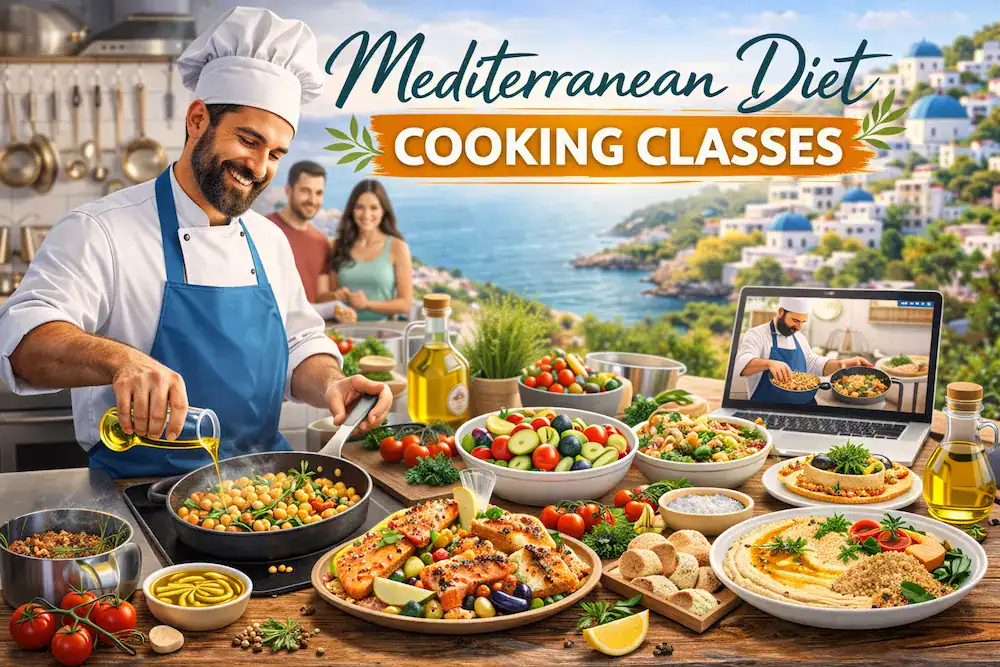
The Mediterranean diet is often recommended because it is practical and sustainable. It focuses on vegetables, beans, lentils, olive oil, fish, yogurt, herbs, whole grains, nuts, seeds, fruit, and balanced portions of other foods. But knowing that in theory is different from actually turning it into daily meals. Cooking classes help close that gap.
A good Mediterranean cooking class shows you how to prepare food that supports heart health, blood sugar balance, weight management, and long-term consistency without making meals feel restrictive or boring. It also makes the diet feel more human. You stop chasing perfect nutrition and start building confidence in the kitchen.
Why Mediterranean diet cooking classes are so useful
Many people understand the basics of the Mediterranean diet but still struggle with one practical question: what do I actually cook?
That is exactly where cooking classes help. They turn healthy eating from an abstract idea into something concrete. Instead of reading about olive oil, legumes, and vegetables, you learn how to turn them into soups, trays, salads, grain bowls, baked fish, simple egg dishes, and quick Mediterranean dinners that feel satisfying.
Cooking classes are especially helpful because they teach patterns, not just recipes. Once you learn how to make a lentil soup, a chickpea bowl, a Greek salad with protein, or a sheet-pan fish dinner, you can keep adapting those meals with different ingredients.
That kind of flexibility is one of the biggest reasons the Mediterranean diet works so well in real life.
Mediterranean diet cooking classes online
Mediterranean diet cooking classes online are one of the easiest ways to learn this style of cooking without leaving home.
Online classes work well for busy people because they remove the need to travel and often let you learn at your own pace. Some are live and interactive, while others are recorded so you can pause, replay, and practice when it fits your schedule.
They can be especially useful for beginners who want to understand the building blocks of Mediterranean cooking, such as how to use olive oil properly, how to season vegetables, how to cook beans and lentils, how to build balanced plates, and how to make simple meals with fish, eggs, yogurt, herbs, and grains.
The biggest advantage of online classes is convenience. The biggest test is whether they teach recipes and systems you will actually use again.
Mediterranean diet cooking classes near me
When people search for Mediterranean diet cooking classes near me, they are often looking for a more hands-on experience.
In-person classes can be especially valuable because they give you direct feedback, help with technique, and often make the experience more enjoyable. You get to see ingredients up close, practice knife skills, ask questions in real time, and learn how Mediterranean food should actually look, smell, and taste.
A local class may focus on general Mediterranean cooking or be more specific, such as Greek cooking, Italian-inspired Mediterranean meals, Blue Zone style cooking, or nutritional cooking classes. Any of these can be useful as long as they stay grounded in whole foods and practical meal-building.
The right local class can make healthy eating feel less like a personal struggle and more like a skill you are actively developing.
Mediterranean diet cooking classes for beginners
Mediterranean diet cooking classes for beginners are often the best place to start because they focus on simple meals, foundational ingredients, and basic techniques instead of overwhelming people with advanced recipes.
A beginner-friendly class should teach how to build a balanced Mediterranean meal using vegetables, legumes, protein, healthy fats, and slower-digesting carbohydrates. It should also help people understand how to stock a Mediterranean pantry and prepare meals without spending hours in the kitchen.
The most useful beginner lessons often include dishes like lentil soup, roasted vegetables, chickpea salads, fish with lemon and herbs, Greek yogurt breakfasts, grain bowls, egg dishes, and homemade dips like hummus or yogurt-based sauces.
Beginners do best when they leave with a handful of meals they feel confident making on their own.
Greek cooking class near me
A Greek cooking class near me is often one of the best entry points into Mediterranean eating because Greek food naturally reflects many of the principles people are trying to learn.
Greek-style cooking often includes olive oil, vegetables, beans, lentils, yogurt, herbs, lemon, fish, simple grilled proteins, whole foods, and balanced meals built around flavor rather than heavy processing. A good Greek cooking class can teach dishes that feel generous and satisfying while still fitting the Mediterranean pattern beautifully.
For many people, Greek cooking makes the Mediterranean diet feel less clinical and more enjoyable. It becomes about real meals, shared food, and cooking traditions rather than rigid diet rules.
Greek cooking classes
Greek cooking classes can be especially helpful for people who want to learn a recognizable Mediterranean style with recipes they are likely to make again.
These classes often include dishes like Greek salad, baked fish, roasted vegetables, stuffed peppers, lentil soup, chickpea dishes, tzatziki, yogurt-based breakfasts, herb-forward sides, and egg-based meals. They also teach something important that many diets ignore: food should taste good enough to repeat.
That matters because consistency comes much more easily when people actually enjoy what they are eating.
Blue zone cooking class
A Blue Zone cooking class can also overlap very well with Mediterranean diet principles.
Blue Zone eating patterns often emphasize plant-forward meals, beans, vegetables, healthy fats, moderate portions, and a lifestyle built around long-term health rather than short-term weight loss. That makes these classes a useful option for people interested in heart health, longevity, and sustainable cooking habits.
There may be differences depending on the specific class, but many Blue Zone cooking classes teach the same kinds of practical habits that support Mediterranean eating: simple ingredients, more legumes, more vegetables, less processed food, and meals that feel nourishing without being extreme.
Nutritional cooking classes
Nutritional cooking classes can be a smart choice for people who want Mediterranean cooking with more emphasis on health outcomes.
These classes often focus not only on how to cook, but also on why certain ingredients matter. That may include learning about fiber, healthy fats, blood sugar balance, satiety, heart-friendly meal composition, and ways to reduce reliance on processed foods.
The best nutritional cooking classes do not make food feel intimidating. They connect the science to everyday cooking in a simple and practical way. That makes them especially useful for people who want to improve triglycerides, blood sugar markers, or overall diet quality through real meals.
Greek chef recipes
Many people searching for Greek chef recipes are really looking for Mediterranean meals that feel authentic, flavorful, and worth making again.
Greek chef-style recipes often show how powerful simple ingredients can be. Olive oil, lemon, garlic, herbs, yogurt, fish, tomatoes, beans, greens, and eggs can create meals that taste rich without being heavy. That is one of the strongest lessons Mediterranean cooking classes can teach.
The value is not just in copying a professional recipe exactly. It is in learning how Mediterranean cooks balance freshness, acidity, herbs, texture, and simplicity so meals feel naturally satisfying.
Is the Mediterranean diet good for lowering triglycerides?
Yes, the Mediterranean diet is often considered one of the strongest eating patterns for helping improve triglycerides.
One reason is that it tends to reduce the foods that often drive triglycerides higher, such as sugary drinks, sweets, refined carbohydrates, and ultra-processed snacks. At the same time, it increases foods associated with better cardiometabolic health, including olive oil, fish, legumes, nuts, seeds, vegetables, and fiber-rich meals.
Cooking classes can help with this because they make it easier to prepare balanced meals at home instead of relying on takeout or processed convenience foods. The more often someone cooks Mediterranean-style meals, the more likely they are to improve the overall quality of their diet.
How many pounds can you lose each week with a Mediterranean diet?
Weight loss on a Mediterranean diet varies from person to person, so there is no single number that applies to everyone.
For many people, a realistic pace of weight loss is gradual rather than extreme. The Mediterranean diet is not designed as a crash diet. It works best as a sustainable pattern that improves food quality, appetite control, and consistency over time.
Some people lose weight steadily because they eat more vegetables, more protein-rich whole foods, fewer processed snacks, and more satisfying meals. Others may improve health markers before seeing major changes on the scale.
The most useful way to think about Mediterranean weight loss is not how fast it is, but whether it is realistic enough to maintain. Cooking classes can support that by making healthy meals easier to prepare and more enjoyable to eat.
Are potatoes allowed on a Mediterranean diet?
Yes, potatoes are allowed on a Mediterranean diet.
Potatoes are not the problem many people assume they are. What matters more is how they are prepared and what they are eaten with. Roasted potatoes with olive oil and herbs, potatoes served with fish and vegetables, or potatoes included in a balanced meal can fit very well in the Mediterranean pattern.
The less helpful versions are usually highly processed or deep-fried forms eaten as the center of the meal. Mediterranean eating works best when potatoes are part of a balanced plate rather than the only substantial food on it.
Cooking classes often help people see this more clearly because they teach how to use potatoes in a way that supports fullness and balance rather than excess.
Are eggs allowed on a Mediterranean diet?
Yes, eggs are allowed on a Mediterranean diet.
Eggs can be a very practical Mediterranean food because they are affordable, versatile, and rich in protein. They work well in vegetable omelets, baked egg dishes, simple breakfasts, lunch plates, and quick dinners. Paired with vegetables, olive oil, herbs, and whole grain toast or salad, they fit beautifully into the Mediterranean style.
For many people, eggs are one of the easiest ways to make Mediterranean eating more realistic, especially on busy days when cooking fish or legumes from scratch feels like too much.
Cooking classes often include egg-based recipes because they are beginner-friendly and easy to adapt.
What a good Mediterranean cooking class should teach
A useful Mediterranean class should do more than show one attractive recipe. It should help you understand how to build meals consistently.
That usually means teaching pantry basics, ingredient combinations, knife skills, roasting, simple sauces, soups, grain and legume preparation, fish and egg dishes, and easy ways to flavor food with herbs, lemon, garlic, yogurt, and olive oil.
The most valuable classes also teach flexibility. Instead of making people depend on exact ingredients, they show how to swap vegetables, proteins, grains, and seasonings while keeping the meal balanced.
That is where real confidence comes from.
Why cooking classes can make the Mediterranean diet easier to follow
Many diets fail because people are trying to follow rules without building the skills behind them.
Mediterranean cooking classes solve that problem. They make healthy eating more practical, less repetitive, and much easier to sustain. Once people know how to make a few good soups, salads, grain bowls, roasted dishes, fish meals, and egg-based recipes, they stop feeling stuck.
That shift matters more than most people realize. Healthy eating becomes less about willpower and more about having good defaults.
Final thoughts
Mediterranean diet cooking classes can be one of the smartest ways to make this lifestyle feel real. They help people move beyond theory and start creating meals that support heart health, blood sugar balance, weight management, and everyday consistency. Whether the class is online, local, beginner-focused, Greek-inspired, Blue Zone based, or more nutrition-centered, the real value is the same: it teaches skills you can keep using.
The Mediterranean diet works best when it becomes part of normal life. Cooking classes help make that happen. They give people the tools to prepare food that tastes good, feels satisfying, and supports better health without turning every meal into a struggle.