
Most healthy eating plans do not fall apart at lunch or dinner. They usually fall apart between meals, when hunger shows up fast, energy drops, and the easiest option is something salty, sugary, or overly processed. That is exactly why smart snacking matters.
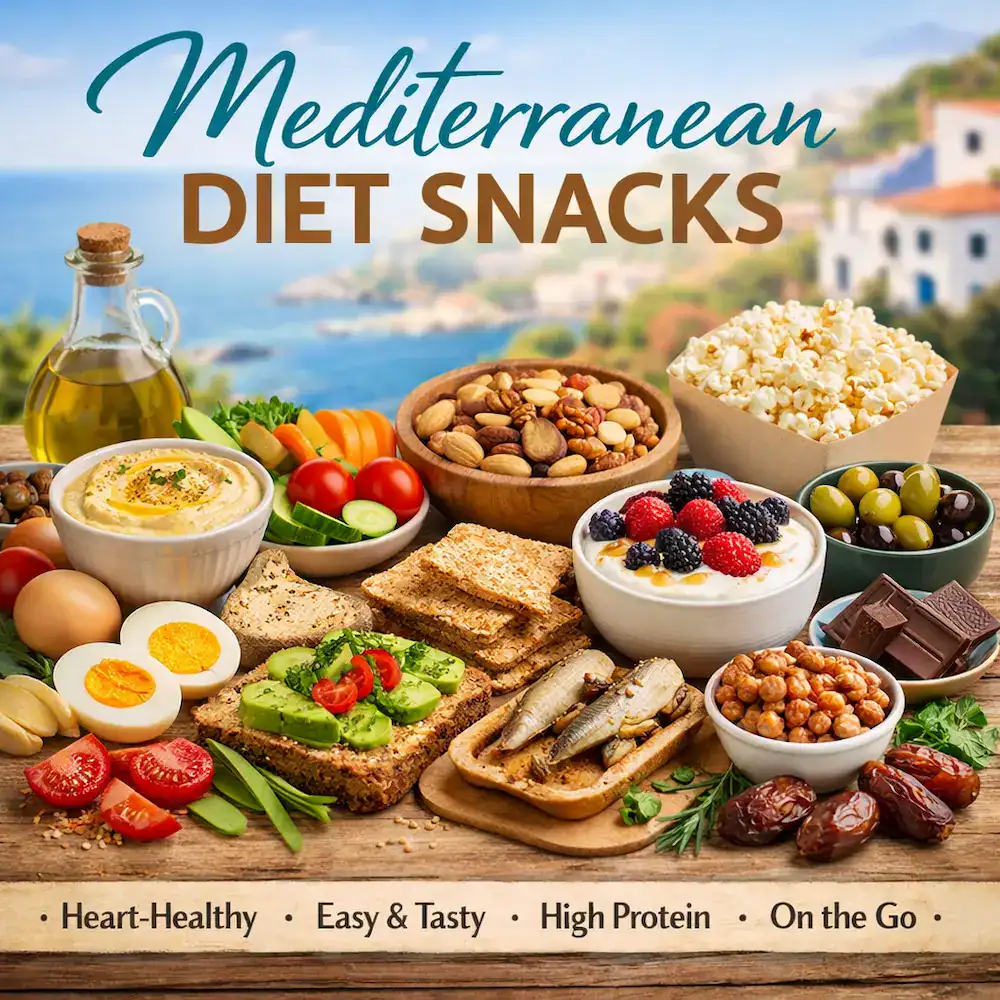
Mediterranean diet snacks can make healthy eating feel much easier and much more sustainable. They are built around simple foods like fruit, yogurt, nuts, seeds, vegetables, hummus, olives, beans, whole grains, and small portions of cheese or fish. These foods are satisfying, practical, and much more supportive of heart health, blood sugar balance, and weight management than typical packaged snacks.
The best part is that Mediterranean snacking does not need to be complicated. You do not need fancy ingredients or long prep time. You just need a few balanced options that you actually enjoy eating.
What makes a snack Mediterranean
A Mediterranean-style snack usually includes real, minimally processed food and often combines fiber, healthy fats, and protein. That combination helps with fullness and reduces the urge to keep grazing.
Good examples include:
- Greek yogurt with berries
- Apple slices with almonds
- Hummus with carrots and cucumber
- Whole grain crackers with tuna
- Pear with a small piece of cheese
- Roasted chickpeas
- Olives with cherry tomatoes
- Hard-boiled eggs with sliced peppers
The goal is not to create perfect snacks. The goal is to make better choices easier.
Mediterranean diet snacks to buy
Store-bought snacks can absolutely fit a Mediterranean eating pattern when you choose them carefully. The best options usually have simple ingredients, little added sugar, and a balance of protein, fiber, or healthy fats.
Some of the best Mediterranean diet snacks to buy include plain Greek yogurt cups, hummus snack packs, baby carrots, mini cucumbers, mixed nuts, roasted chickpeas, whole grain crackers, tuna pouches, olives, fresh fruit, cheese portions, and plain popcorn.
When buying packaged snacks, it helps to look out for products marketed as healthy that are still full of added sugars, refined oils, and long ingredient lists. A short ingredient list is often a better sign than flashy health claims on the front of the package.
Easy Mediterranean diet snacks
Easy snacks are the ones that save you on busy days. If a snack takes too much effort, most people will not keep making it.
Some of the easiest Mediterranean diet snacks are Greek yogurt with cinnamon, an apple with almond butter, hummus with bell peppers, a handful of walnuts with a clementine, boiled eggs with cherry tomatoes, and whole grain toast with avocado. These snacks take only a few minutes and work well at home, at work, or even packed in advance.
A simple rule that works well is this: pair a fruit or vegetable with protein or healthy fat. That small adjustment often makes the snack much more satisfying.
Mediterranean diet snacks recipes
Homemade snacks do not need to be complicated. A few simple recipes can give you enough variety for the whole week.
One easy option is a yogurt bowl made with plain Greek yogurt, berries, chia seeds, and chopped walnuts. It is creamy, filling, and naturally sweet without relying on heavy added sugar.
Another simple choice is roasted chickpeas. Drain and dry a can of chickpeas, toss them with olive oil, paprika, garlic powder, and a little salt, then roast until crisp. They are crunchy, savory, and a great alternative to chips.
A quick Mediterranean snack plate also works well. Add cucumber slices, cherry tomatoes, a few olives, hummus, and a boiled egg or a small piece of cheese. It feels more satisfying than random snacking and still takes very little effort.
A sweeter option is dates filled with almond butter and topped with crushed pistachios. This feels like a treat but still fits the overall Mediterranean pattern much better than most packaged desserts.
Mediterranean diet snacks for weight loss
Mediterranean diet snacks can support weight loss when they help control hunger instead of adding mindless calories. The key is not to snack constantly. The key is to choose snacks that actually satisfy you.
The best Mediterranean diet snacks for weight loss usually include protein and fiber. Greek yogurt with berries, apple slices with a small handful of almonds, cottage cheese with cucumber, hummus with raw vegetables, boiled eggs, and roasted chickpeas all work well because they help you stay full longer.
Many people make the mistake of choosing snacks that sound light but do not satisfy them. A few crackers or a piece of fruit alone may leave them hungry again very quickly. A more balanced snack usually works better and can help prevent overeating later in the day.
Portion awareness also matters. Nuts, dried fruit, dark chocolate, and nut butters are healthy foods, but they are also calorie-dense. They fit well in a Mediterranean diet, but they still work best in moderate portions.
High protein Mediterranean diet snacks
Protein makes a major difference in how filling a snack feels. It can also help with muscle support, energy, and blood sugar balance.
Some of the best high protein Mediterranean diet snacks include Greek yogurt, cottage cheese, hard-boiled eggs, tuna pouches, sardines, edamame, hummus, roasted chickpeas, labneh, and small portions of cheese paired with fruit or vegetables.
A few strong combinations include Greek yogurt with chia seeds, tuna with whole grain crackers, cottage cheese with tomato and olive oil, boiled eggs with cucumber slices, and hummus with extra chickpeas and peppers.
These are simple options, but they often work much better than packaged protein bars that claim to be healthy while still tasting like candy.
15 heart-healthy Mediterranean diet snacks
Heart-healthy snacking is one of the strongest reasons people choose a Mediterranean eating style. This way of eating naturally includes more fiber and unsaturated fats, and less reliance on heavily processed snack foods.
Here are 15 heart-healthy Mediterranean diet snacks that fit beautifully into this pattern:
Greek yogurt with berries and walnuts, apple slices with almonds, pear with pistachios, hummus with carrots, hummus with cucumber and bell peppers, roasted chickpeas, olives with tomatoes, avocado on whole grain toast, tuna on crispbread, sardines on whole grain toast, cottage cheese with sliced tomato, chia pudding with berries, plain popcorn with olive oil and herbs, boiled eggs with vegetables, and dates with walnuts.
These snacks are simple, flavorful, and far more helpful than the usual mix of chips, cookies, and sugary snack bars.
Mediterranean diet snacks on the go
Busy schedules can make healthy snacking harder, but there are still plenty of Mediterranean-style options that travel well.
Good Mediterranean diet snacks on the go include apples, pears, bananas with nut butter packets, portioned nuts, roasted chickpeas, popcorn, tuna pouches, olives, whole grain crackers, string cheese or mini cheese portions, dates, dried figs, and single-serve hummus with ready-cut vegetables.
It helps to keep a small system in place. A few shelf-stable snacks in your bag, car, or desk can prevent last-minute choices that do not support your goals. This is one of those small habits that can make a surprisingly big difference over time.
Mediterranean diet snacks and A1c levels
A Mediterranean-style eating pattern can support lower A1c levels in many people, especially when it replaces a diet high in refined carbohydrates, sugary drinks, pastries, and ultra-processed foods. The reason is fairly simple. Mediterranean eating tends to include more fiber, better fat quality, more balanced meals, and fewer extreme blood sugar swings.
For snacks, that means options built around protein, healthy fats, and fiber usually work better than snacks based mostly on refined starch or sugar. Greek yogurt with chia seeds, an apple with almonds, hummus with raw vegetables, boiled eggs, and cottage cheese with berries are stronger choices for blood sugar stability than cookies, crackers, or sweet granola bars eaten alone.
Results still depend on the whole diet, activity level, body weight, sleep, and medical history, but Mediterranean-style snacking is often a smart and sustainable direction for better blood sugar control.
Popcorn in a Mediterranean diet
Popcorn can fit a Mediterranean diet very well, especially when it is prepared simply. Air-popped popcorn or popcorn lightly drizzled with olive oil is a much better option than heavily buttered, sugary, or artificially flavored versions.
Popcorn is a whole grain, which gives it an advantage over many processed snack foods. It can be a good crunchy option when you want something light but still satisfying. The smartest way to enjoy it is in a reasonable portion and without turning it into a dessert-like snack covered in caramel or powdered flavorings.
For a more Mediterranean feel, popcorn works nicely with olive oil, sea salt, oregano, smoked paprika, or rosemary.
Mediterranean diet and triglyceride support
The Mediterranean diet is widely considered a strong eating pattern for heart health, and it can also help improve triglyceride levels when followed consistently. One of the biggest reasons is that it tends to reduce the foods that often push triglycerides higher, especially added sugars, refined carbohydrates, excess alcohol, and highly processed snack foods.
Mediterranean snacks that may support healthier triglycerides include walnuts, almonds, chia pudding, Greek yogurt with berries, hummus with vegetables, edamame, tuna, sardines, and whole-food snacks that replace sugary or heavily refined alternatives.
The benefit usually comes from the overall pattern. More fiber, better fats, fewer sweets, and more real food can add up to a meaningful difference.
Sweets that fit a Mediterranean diet
Sweets do not have to disappear completely on a Mediterranean diet. The difference is that they are usually simpler, less processed, and eaten in more moderate portions.
Fruit is the most natural sweet choice in this eating pattern. Berries, grapes, apples, pears, figs, and oranges all fit beautifully. Greek yogurt with berries and a little honey can also work well. Dates with nuts, baked apples with cinnamon, ricotta with pear, chia pudding, and a small portion of dark chocolate can all fit in a balanced Mediterranean lifestyle.
The real shift is not about banning sweets forever. It is about moving away from highly processed desserts and toward more nourishing options that still feel enjoyable.
Mediterranean diet snacks Reddit-style reality
People online often ask for Mediterranean snack ideas in the most practical way possible. They want something easy, cheap, filling, and realistic. That is probably why the most repeated snack ideas are not complicated recipes. They are things like yogurt, fruit, hummus, nuts, eggs, popcorn, and simple snack plates.
That makes sense, because sustainable eating is usually built on repeatable choices. Most people do not need twenty complicated snack recipes. They need a short list of options they actually like and can keep available all week.
A simple Mediterranean snack strategy that works
The easiest way to stay consistent with Mediterranean snacks is to keep a small rotation ready at all times.
Choose one creamy option, one crunchy option, one sweet option, and one high-protein option. For example, Greek yogurt, roasted chickpeas, fruit with nuts, and boiled eggs. This gives you enough variety without making things feel complicated.
You can also build snacks around a simple structure:
fruit plus nuts, vegetables plus hummus, yogurt plus berries, or whole grain crackers plus fish or cheese.
That kind of structure is practical, flexible, and much easier to maintain than trying to reinvent your snacks every day.
Final thoughts
Mediterranean diet snacks do not need to be fancy to be effective. In fact, the simplest ones are often the most useful. A bowl of Greek yogurt, a handful of nuts, a piece of fruit, a few olives, some hummus with vegetables, or plain popcorn with olive oil can do a lot more for your energy, hunger, and consistency than packaged foods that only pretend to be healthy.
Small choices like these may not look dramatic in the moment, but over the course of weeks and months, they can support better habits, steadier blood sugar, improved heart health, and easier weight control. The people who do well with the Mediterranean diet are usually not the ones chasing perfection. They are the ones who keep good food nearby and make the next snack choice a little better than the last one.