

There is something powerful about seeing real change happen in ordinary life. Not a perfect celebrity routine, not an impossible detox, and not another extreme plan that lasts ten days and ends in frustration. That is why Mediterranean diet success stories connect with so many people. They feel realistic.
The Mediterranean diet has built its reputation not because it is trendy, but because it is sustainable. It is based on food people can actually eat long term: vegetables, fruit, beans, lentils, olive oil, fish, yogurt, eggs, whole grains, nuts, seeds, and balanced portions of other foods. It does not demand perfection. It asks for consistency.
That is also why so many people report meaningful Mediterranean diet results over time. Some notice easier weight loss. Others see better energy, improved digestion, steadier blood sugar, lower triglycerides, or less dependence on ultra-processed foods. In many cases, the biggest transformation is not just physical. It is mental. Food starts to feel less chaotic.
Why Mediterranean diet success stories are so common
The biggest reason people do well on this style of eating is simple: it does not feel like punishment.
A diet built around severe restriction often creates the same cycle. People start motivated, cut out too much, get tired, feel deprived, and eventually rebound. The Mediterranean diet works differently. It gives people structure without making life miserable.
Meals tend to be more satisfying because they include fiber, protein, and healthy fats. Hunger often feels more manageable. Cravings may ease when meals are more balanced. And because the food is enjoyable, people are much more likely to stick with it.
That is what most success stories have in common. They are not based on quick suffering. They are based on repeatable habits.
Mediterranean diet success stories before and after
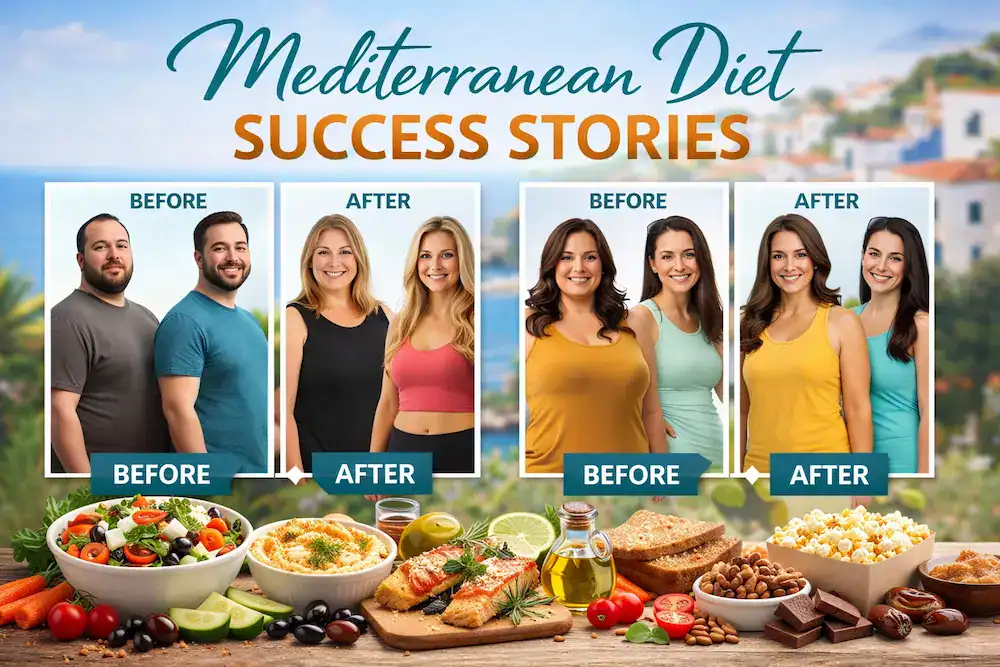
When people search for Mediterranean diet success stories before and after, they are usually hoping to see proof that real change is possible without extremes. And that is exactly what this eating style offers.
A typical before-and-after story often looks like this: someone starts out relying heavily on takeout, sugary snacks, refined carbs, and irregular eating habits. Energy is inconsistent. Weight has slowly crept up. Bloodwork may not look great. Meals feel random.
Then the shift begins. Breakfast becomes Greek yogurt with berries and nuts instead of pastries. Lunch becomes a grain bowl, salad, or leftovers instead of fast food. Dinner includes fish, beans, olive oil, vegetables, and a more balanced portion of carbohydrates. Snacks become fruit, nuts, hummus, yogurt, or boiled eggs instead of chips and sweets.
After a few weeks, some people notice less bloating, fewer crashes, and more stable hunger. After a month, clothes may fit differently. After several months, the changes often become more visible and more meaningful.
The best before-and-after results usually come from boring consistency, not dramatic tricks.
Mediterranean diet success stories female
Many Mediterranean diet success stories female readers look for are not only about weight. They are often about energy, hormone-friendly eating patterns, reduced overeating, better digestion, and a healthier relationship with food.
A lot of women do well with the Mediterranean diet because it is flexible. It does not force all-or-nothing thinking. It can work for busy mothers, professionals, students, and women trying to get back on track after years of dieting.
A common pattern goes like this: instead of skipping meals and overeating later, meals become more regular and satisfying. Instead of fearing carbs, women start eating smarter carbohydrates in better combinations, like oats with yogurt, lentils with vegetables, or whole grain toast with eggs and avocado. Instead of chasing low-calorie packaged foods, they focus on whole foods that actually keep them full.
That often leads to more stable eating, better appetite control, and less mental exhaustion around food.
Mediterranean diet success stories Reddit-style reality
When people look for Mediterranean diet success stories Reddit, they usually want honesty. They want stories from people who are not selling anything. And the most repeated themes are surprisingly practical.
People often say they lost weight without feeling like they were really dieting. Others mention that their cholesterol or triglycerides improved. Some say they stopped snacking mindlessly because meals were more satisfying. Many describe the same unexpected benefit: they began enjoying food more, not less.
What stands out most in these kinds of stories is that success usually comes from a handful of habits repeated over time. Olive oil replaces heavy processed sauces. Vegetables show up more often. Protein becomes more consistent. Sugary snacks become less frequent. Walking becomes more regular. Nothing sounds flashy, but together it works.
That is probably why this way of eating survives every trend cycle. It is not built on hype.
Has anyone lost weight on a Mediterranean diet?
Yes, many people have lost weight on a Mediterranean diet.
The reason it can work so well is that it often helps people eat in a more balanced and satisfying way. Meals rich in vegetables, beans, fish, yogurt, eggs, fruit, and healthy fats can reduce the constant urge to snack on highly processed foods. The diet also tends to encourage better food quality overall, which often makes calorie control feel more natural.
That said, weight loss is not automatic just because a food is Mediterranean. Olive oil, nuts, cheese, bread, and dark chocolate can all fit into this lifestyle, but portions still matter. The people who usually lose weight on the Mediterranean diet are the ones who use it as a structure for better habits, not as an excuse to overeat healthy foods.
A successful approach often includes balanced meals, less mindless snacking, more home cooking, and more movement.
Mediterranean diet results after 7 days
When people search for 7 day Mediterranean diet success stories, they are often curious about what can realistically happen in one week.
In seven days, most people will not see a dramatic body transformation, but they may notice some encouraging early changes. Digestion may improve. Energy may feel steadier. Water retention may drop if ultra-processed foods and excess sodium go down. Some people feel less bloated and more in control around food within the first week.
That first week matters because it builds momentum. It shows that healthy eating does not need to feel punishing. Even small wins like cooking more meals at home, eating more vegetables, and having fewer cravings can be enough to keep someone going.
The first seven days are not about perfection. They are about proving to yourself that change is possible.
Mediterranean diet before and after 30 days
The Mediterranean diet before and after 30 days difference can be more noticeable.
After a month, people often describe better energy, fewer intense cravings, more regular eating habits, less bloating, and modest but meaningful weight changes. Some also feel more confident because meals are no longer a daily struggle.
A thirty-day period is long enough to start seeing how habits shape results. If someone moves from a highly processed diet to one based more on whole foods, the impact can be surprisingly clear. Pants may fit better. Afternoon crashes may happen less often. Sleep may improve. Hunger may feel less extreme.
This is often the point where people stop seeing the Mediterranean diet as a temporary plan and start seeing it as a lifestyle they can actually keep.
Will a Mediterranean diet lower A1c?
A Mediterranean diet can help lower A1c for many people, especially when it replaces a pattern high in sugary drinks, refined carbohydrates, desserts, and ultra-processed foods.
It tends to support blood sugar control because it emphasizes fiber-rich foods, better fat quality, more balanced meals, and a lower reliance on refined snacks. Foods like beans, lentils, vegetables, Greek yogurt, fish, eggs, nuts, seeds, and whole grains can all contribute to steadier blood sugar when eaten in appropriate portions.
For many people, the biggest improvement comes from changing the overall pattern of eating rather than focusing on one superfood. More balanced meals, fewer sugary snacks, and better consistency can all support lower A1c over time.
Individual results vary, especially if someone has prediabetes or diabetes, but the Mediterranean pattern is often seen as one of the most practical and sustainable ways to improve blood sugar habits.
How did Kim Kardashian lose 16 lbs in 3 weeks?
Kim Kardashian’s well-known rapid weight loss for the Met Gala was described publicly as a short-term, highly aggressive effort to fit into a specific dress. That kind of fast loss is not the same thing as a balanced Mediterranean lifestyle, and it is not a realistic or healthy model for most people to follow.
Extreme short-term weight loss often involves heavy restriction, water shifts, and unsustainable habits. It may create dramatic headlines, but it does not teach people how to eat in a way they can maintain for months or years.
The Mediterranean diet takes the opposite approach. It focuses on gradual, realistic progress. Instead of chasing a crash result for one event, it helps people build eating habits they can actually live with. That may sound less exciting, but it is far more useful in real life.
What is the #1 habit to break on the Mediterranean diet?
The number one habit to break is relying on ultra-processed food as your default.
That habit shows up in many forms: sugary breakfast foods, packaged snacks, takeout most nights, sweet coffee drinks, mindless grazing, and meals built around convenience instead of nourishment. Even when people think they are eating reasonably well, ultra-processed foods often sneak in as the foundation of the day.
The Mediterranean diet works best when real food becomes the default. That does not mean every meal has to be perfect. It means most meals and snacks start with foods like vegetables, fruit, beans, eggs, yogurt, fish, olive oil, whole grains, and nuts rather than boxed or highly refined products.
Breaking that one habit changes everything. It improves fullness, food quality, energy, and long-term consistency.
Mediterranean diet meal plan
A good Mediterranean diet meal plan does not need to be complicated. It just needs to be balanced.
A simple day might start with Greek yogurt, berries, walnuts, and a sprinkle of chia seeds. Lunch could be a chickpea salad with cucumber, tomato, olive oil, lemon, and feta. Dinner might be salmon with roasted vegetables and a side of potatoes or brown rice. Snacks could include fruit, hummus with carrots, a boiled egg, or a handful of nuts.
Another day might begin with eggs and whole grain toast, followed by lentil soup for lunch and grilled chicken or beans with salad for dinner. The exact menu matters less than the pattern. The pattern is what produces results.
When meals are built around protein, fiber, healthy fats, and whole foods, success becomes much easier.
Mediterranean diet recipes that support success
The best Mediterranean diet recipes are the ones that are simple enough to repeat.
A lentil soup with olive oil, onion, carrot, celery, and tomato is a classic example. It is budget-friendly, filling, and full of fiber. Greek yogurt bowls with berries and nuts are another easy staple. Sheet pan salmon with vegetables is one of the easiest Mediterranean dinners because it gives you protein, color, and healthy fats without much effort.
Another reliable recipe is a chickpea bowl with cucumber, tomato, olives, herbs, lemon, and olive oil. Add tuna, feta, or boiled eggs if you want more protein. Meals like this show why the Mediterranean diet works so well. They are nourishing without feeling restrictive.
The more simple recipes a person has on repeat, the easier it becomes to turn motivation into actual results.
A realistic picture of Mediterranean diet results
The most realistic Mediterranean diet results usually include more than one benefit.
Some people lose weight. Some improve blood sugar markers. Some lower triglycerides or cholesterol. Some feel more energetic and less bloated. Others simply feel less trapped in the cycle of overeating, guilt, and starting over every Monday.
That is what makes these success stories so powerful. They are not always dramatic in the way social media likes. But they are meaningful. A person who cooks three more meals at home each week, eats vegetables daily, cuts back on sugar, and feels better in their body is creating a success story, even before the scale changes in a big way.
Most people fail because they chase intensity instead of consistency. The Mediterranean diet rewards the opposite.
Final thoughts
Mediterranean diet success stories matter because they remind people that healthy change does not have to come from extremes. It can come from olive oil instead of processed sauces, fruit instead of packaged sweets, beans instead of fast food, and meals that leave you satisfied instead of deprived.
The real magic of this way of eating is not that it promises instant transformation. It is that it gives people a way to improve their food choices without making life harder. And when a plan feels livable, people stay with it long enough to actually see results.
If nothing changes, nothing changes. But if someone commits to simple Mediterranean habits for the next 30, 60, or 90 days, the before and after can become very real. Not because of hype. Because small choices, repeated often enough, really do change outcomes.