

You know the feeling.
A sweet breakfast. A quick coffee drink. A pastry, cereal bar, or “healthy” yogurt on the go. For an hour or two, you feel sharper, lighter, almost relieved. Then it hits: the 3 PM crash. Your mood dips, your focus blurs, your patience shrinks, and suddenly everything feels harder than it should.
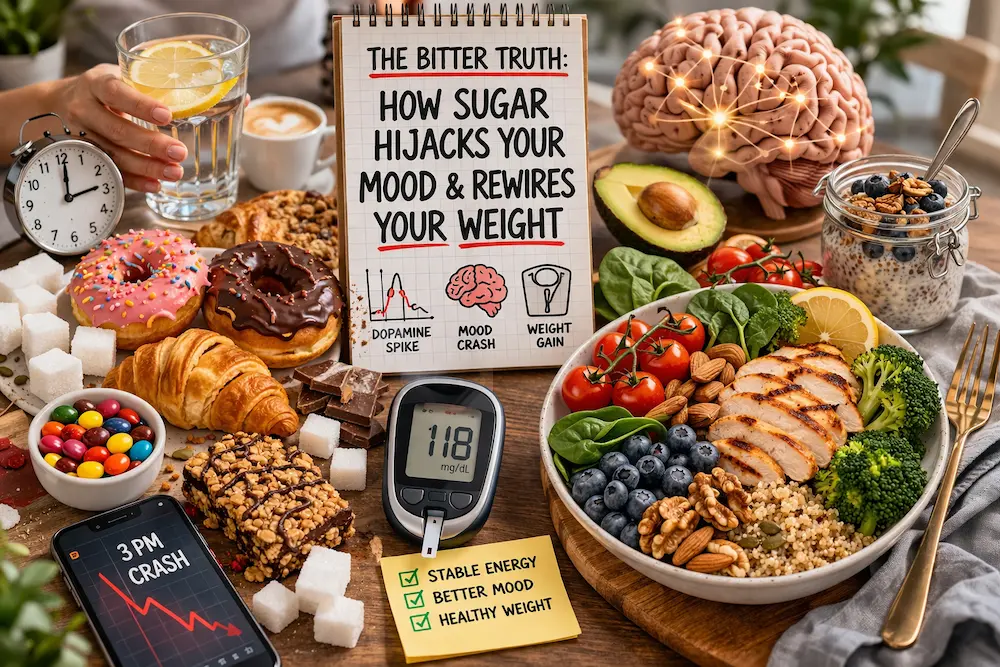
That is the sugar rollercoaster.
It starts with a dopamine spike. Sugar lights up the brain’s reward circuitry fast, which is part of why it feels comforting in the moment. But the payoff is usually short-lived. As blood sugar rises and then drops, many people experience irritability, anxiety, cravings, low energy, and a strange mix of mental fog with emotional restlessness. The body is not just processing a dessert. It is managing a biochemical swing.
That is why the real story of sugar is bigger than calories. Sugar can influence mood, appetite, stress response, and fat storage signals at the same time. And when that pattern repeats every day, it can quietly shape how you feel, think, and eat.
This guide breaks down the science in a practical way.
It answers these key questions:
- Can eating sugar affect mood?
- What happens after 2 weeks of no sugar?
- What are the 5 signs you’re eating too much sugar?
- How to flush sugar out of your body overnight?
[Suggested visual placement: Infographic here comparing “Sugar Energy” vs. “Complex Carb Energy” across 6 hours, showing fast spike/crash versus steady release.]
Can Eating Sugar Affect Mood?
Yes, it can.
Sugar can affect mood through a combination of blood sugar swings, reward signaling, inflammation, sleep disruption, and stress hormones. Not everyone reacts the same way, but many people notice that high-sugar eating patterns are linked with:
- irritability
- anxiety-like restlessness
- energy crashes
- stronger cravings
- low motivation
- poor concentration
The mechanism is not just psychological. It is also physiological.
When you eat a large amount of sugar, your blood glucose rises quickly. Your body responds with insulin to move glucose out of the bloodstream. If the rise is sharp, the drop can feel sharp too. That swing can leave you tired, shaky, hungry, moody, or mentally “off.”
At the same time, highly sweet foods can reinforce reward-seeking behavior. The brain starts learning that quick sugar equals quick relief. Over time, that can make stress eating and emotional eating feel more automatic.
For deeper reader research, you can link here to trusted medical sources such as Harvard Health [insert link], Cleveland Clinic [insert link], and Nature.com [insert link].
Section 1: The Brain Chemistry Behind Sugar and Mood
Sugar, Dopamine, and the Emotional Crash
Sugar is appealing because it works quickly. It stimulates reward pathways that involve dopamine, the neurotransmitter associated with motivation and reinforcement. That does not mean sugar is a drug in the exact same way as substances of abuse, but it does mean repeated exposure can strengthen habit loops around craving and comfort.
This is why people often say things like:
- “I need something sweet to feel normal.”
- “I can’t function without dessert after lunch.”
- “When I’m stressed, I crave sugar immediately.”
The pattern is real. The relief is real too. But it is temporary.
Neuroinflammation: The Underestimated Mood Link
One of the more serious concerns is neuroinflammation, a term used to describe inflammatory activity that may affect the brain and nervous system. Diet patterns high in added sugars and ultra-processed foods are increasingly discussed in relation to inflammation, metabolic dysfunction, and mental health burden.
A strong article can reference a study or review from journals such as Scientific Reports [insert link] or Lancet Psychiatry [insert link] discussing links between diet quality, inflammation, and symptoms of depression or anxiety. The key journalistic point is this: when sugar-heavy eating becomes chronic, the brain may not just feel tired—it may function under a more unstable biological environment.
Sugar and Cortisol
Another overlooked issue is Sugar and Cortisol.
Cortisol is one of the body’s main stress hormones. When you are sleep-deprived, overwhelmed, or constantly snacking on quick carbohydrates, the body may get pushed into a more chaotic stress-and-reward cycle. Poor sleep increases cravings. Cravings lead to more sugar. More sugar can worsen energy instability. Then stress rises again.
It becomes a loop:
stress → sugar craving → temporary relief → crash → irritability → more craving
That cycle is one reason sugar can feel so emotionally powerful.
What Are the 5 Signs You’re Eating Too Much Sugar?
This is one of the most useful questions because many people assume they would “know” if they were overdoing sugar. Often, they do not.
1. You crash hard in the afternoon
If you feel foggy, irritable, sleepy, or desperate for caffeine or sweets around 3 PM, unstable blood sugar may be part of the problem.
2. You crave dessert even when you are full
This can suggest reward-driven eating rather than true physical hunger.
3. You feel hungry again soon after eating
Meals high in refined carbs and low in protein or fiber often fail to keep you satisfied.
4. Your mood changes fast when you have not eaten
Some people feel anxious, shaky, impatient, or emotionally reactive when blood sugar dips.
5. You rely on “healthy” packaged foods that are secretly sweet
Granola bars, flavored yogurts, sauces, smoothies, cereals, and protein snacks can add up quickly.
Here’s the part many people miss: you may not be eating obvious candy all day. You may be eating hidden sugars.
The “Silent Killer” Insight: Hidden Sugars in Everyday Foods
Sugar does not only live in desserts.
It hides in foods people barely think about:
- salad dressings
- pasta sauces
- sandwich breads
- flavored oatmeal
- plant milks
- “light” yogurt
- breakfast cereals
- protein bars
- ketchup and condiments
- ready-made soups
This creates the perfect trap. A person thinks they are eating reasonably well, but their day is still full of glucose spikes and sweetened products.
That is the real aha moment.
You do not need to eat cake all day to end up stuck in a sugar-driven cycle.
Section 2: The Hormone Lock Behind Weight Gain
If sugar only mattered because of calories, the story would be simpler. But it does not.
Insulin Resistance Weight Gain: The Real Metabolic Trap
One of the biggest issues is Insulin Resistance Weight Gain.
Insulin helps move glucose from the blood into cells. When high-sugar, high-refined-carb eating becomes frequent—especially alongside poor sleep, inactivity, and excess calorie intake—the body may begin responding less efficiently. This is called insulin resistance.
When that happens, the body often produces more insulin to compensate.
Why does that matter for weight?
Because chronically elevated insulin can make it easier to store energy and harder to regulate hunger. It is not the only cause of weight gain, but it is one of the key hormonal players in the story.
Sugar, Fat Storage, and Leptin Confusion
Sugar can also interfere indirectly with the body’s appetite signaling.
Leptin is often called the “I’m full” hormone. In a healthy system, it helps communicate that the body has enough stored energy. But poor diet quality, inflammation, sleep disruption, and excess body fat can make leptin signaling less effective.
In plain English: the body may have enough energy stored, yet the brain still behaves as if more food is needed.
That is why some people say:
- “I just ate, but I still want something.”
- “I don’t feel satisfied unless the meal ends with sugar.”
- “The more sweets I eat, the more I want.”
This is not a character flaw. It is often a signal problem.
What Happens After 2 Weeks of No Sugar?
If by “no sugar” you mean removing added sugar and sharply reducing ultra-processed sweet foods, two weeks can make a noticeable difference.
Common changes after 2 weeks of no sugar
- cravings often begin to weaken
- taste buds become more sensitive to sweetness
- energy may feel steadier
- afternoon crashes may become less intense
- bloating may improve
- appetite can feel more predictable
- some people notice better sleep or calmer mood
Not everyone experiences dramatic changes, and the result depends on what replaces sugar. If you cut sugar but under-eat, skip protein, and rely on caffeine, you may feel worse, not better.
The goal is not starvation. It is stability.
What Happens After 7 Days Without Sugar?
A full week is usually enough to notice the first real shift.
What happens when you stop eating added sugar for 7 days
- the first few days may feel uncomfortable
- cravings may rise before they fall
- headaches or fatigue can appear if your diet was heavily sugar-based
- by the end of the week, many people notice less constant snacking
- your mood may start feeling more even
- you may stop obsessing over “something sweet” after every meal
For many readers, this is the most encouraging point: the first week is often the hardest, but it is also when the sugar habit starts losing power.
Sugar-Free Mood Boost: What to Eat Instead
If you want a real Sugar-Free Mood Boost, focus on foods that support steady energy and satiety.
Mood-stabilizing meal components
- protein: eggs, Greek yogurt, chicken, fish, tofu
- fiber: vegetables, beans, oats, berries
- healthy fats: olive oil, nuts, seeds, avocado
- complex carbs: lentils, quinoa, sweet potato, oats
Better snack options
- apple with nut butter
- plain yogurt with cinnamon
- boiled eggs
- nuts and berries
- hummus with vegetables
These foods do not create the same dramatic spike-and-crash pattern as sugary snacks for many people.
How to Flush Sugar Out of Your Body Overnight?
This question is extremely common, but it needs an honest answer.
You cannot magically flush sugar out of your body overnight with a tea, detox drink, or supplement. That promise is misleading.
What you can do is support your body’s normal regulation overnight and help yourself feel better by the next day.
What actually helps
- drink water normally and stay hydrated
- stop eating added sugar for the rest of the day
- choose a balanced dinner with protein, fiber, and healthy fat
- take a short walk after dinner
- get a full night of sleep
- avoid alcohol and late-night snacking
- eat a protein-rich breakfast the next morning
The liver, muscles, pancreas, and hormonal systems are already doing the work. Your job is not to “flush” sugar. Your job is to stop feeding the rollercoaster.
A 3-Day Sugar Reset to Stabilize Mood Fast
This is a simple 3-Day Sugar Reset designed to calm cravings and support more stable energy.
Day 1: Remove obvious sugars
Cut:
- soda
- candy
- pastries
- sweet coffee drinks
- flavored yogurt
- juice
Eat:
- eggs or yogurt for breakfast
- protein + vegetables for lunch
- fish, chicken, or beans with vegetables for dinner
Day 2: Fix the crash points
Focus on:
- protein at every meal
- no sugary snacks between meals
- water, herbal tea, or unsweetened coffee
- fruit only with a meal or with protein
Eat:
- oatmeal with nuts and cinnamon
- salad with salmon or chicken
- lentils with olive oil and vegetables
Day 3: Stabilize and repeat
Add:
- a 10-minute walk after meals
- earlier bedtime
- a label check on sauces, bread, bars, and dressings
Eat:
- omelet with vegetables
- turkey and avocado salad
- quinoa, roasted vegetables, and grilled fish
Expert Pro-Tips
Pro-Tip 1: Do not replace sugar with constant “sugar-free treats.” That often keeps cravings alive.
Pro-Tip 2: A protein-first breakfast can reduce the urge to binge on sweets later in the day.
Pro-Tip 3: If your mood tanks when you cut sugar, check sleep, stress, and total calories too.
Which Foods Help Break the Sugar-Mood Cycle?
These are strong staples for a low-sugar reset:
Proteins
- eggs
- Greek yogurt
- chicken
- turkey
- fish
- tofu
- cottage cheese
Fiber-rich foods
- broccoli
- spinach
- beans
- lentils
- berries
- oats
- chia seeds
Better carbs
- quinoa
- oats
- sweet potatoes
- legumes
- fruit in whole form
Healthy fats
- avocado
- olive oil
- walnuts
- almonds
- pumpkin seeds
People Also Ask
Can eating sugar affect mood?
Yes. Sugar can affect mood by driving blood sugar swings, reinforcing reward-driven cravings, and contributing to energy crashes, irritability, and anxiety-like symptoms in some people.
What happens after 2 weeks of no sugar?
Many people notice fewer cravings, steadier energy, less bloating, and improved appetite control after about two weeks without added sugar.
What are the 5 signs you’re eating too much sugar?
Common signs include afternoon crashes, constant cravings, frequent hunger, mood swings when you have not eaten, and dependence on sweetened packaged foods.
How to flush sugar out of your body overnight?
There is no instant flush. The best approach is hydration, a balanced dinner, light movement, solid sleep, and avoiding more added sugar.
Final Take
Sugar is not just a taste. It is a signal.
It can affect reward pathways, inflammation, stress hormones, hunger cues, and fat-storage biology all at once. That is why the conversation around sugar has become more urgent. People are starting to realize that the real cost is not just weight gain. It is mood instability, energy disruption, and the quiet feeling that your body is no longer working with you.
The good news is that the cycle can change quickly. Even a few days of eating with more structure—less sugar, more protein, more fiber, better sleep—can start to calm the chaos.
And once your energy stops swinging, everything feels easier: focus, discipline, appetite, even mood.
Important: This article provides nutritional information and is not medical advice. Always consult your doctor or a healthcare professional before making changes to your diet, especially if you have underlying health conditions.