

Ever found yourself reaching for something sweet late at night, even when you weren’t really hungry?
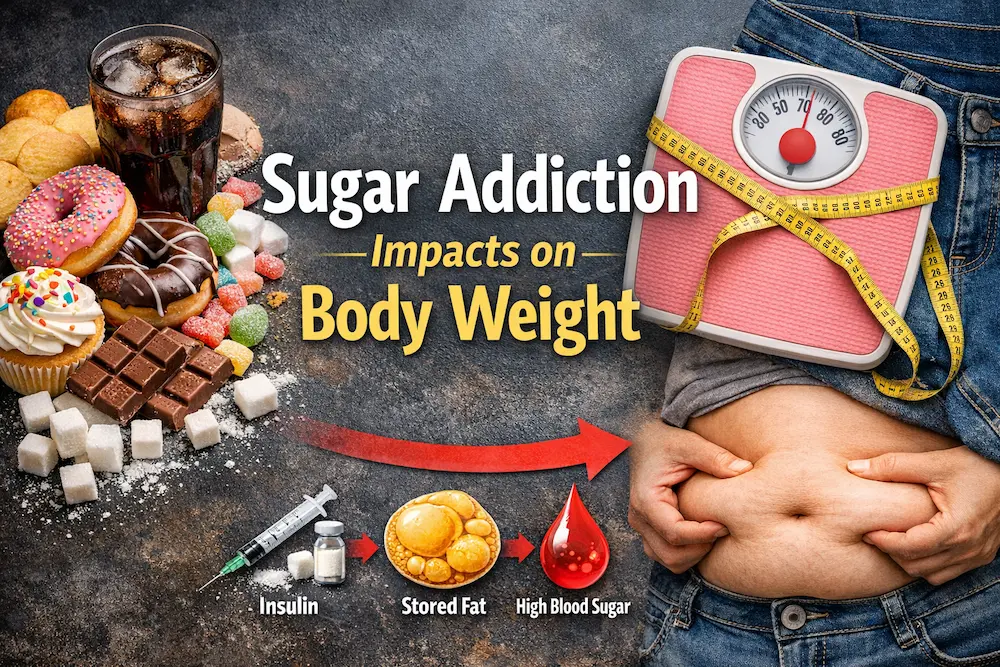
It starts innocently. A cookie after dinner. A sugary coffee in the afternoon. A soda to get through the slump. Then, before you know it, cravings seem to run the show. If this sounds familiar, keep reading. Here’s the part nobody tells you: sugar does not just affect your taste buds. It can shape your cravings, appetite, energy, and body weight in ways that feel surprisingly hard to control.
This article answers four common questions:
- How does sugar addiction affect health?
- Does added sugar cause weight gain or incident obesity?
- Can sugar addiction cause weight gain?
- Does sugar-sweetened beverage intake affect weight gain or incident obesity?
Important note: This article is for general educational purposes and shares simple, practical advice. It does not replace medical evaluation, diagnosis, or treatment. For personal guidance, especially if you have diabetes, obesity, insulin resistance, eating-related concerns, or other health conditions, please speak with your doctor or a registered dietitian.
What This Article Covers
You will learn:
- Why sugar can feel addictive
- How the dopamine loop drives cravings
- How sugar and insulin resistance are connected
- Why added sugar can hurt metabolic health
- How hidden sugars sneak into everyday foods
- What to do with a simple 24-hour reset plan
How Does Sugar Addiction Affect Health?
Sugar addiction can affect health in more ways than most people realize.
For many people, it is not just about eating dessert. It is about getting trapped in a cycle of cravings, energy crashes, overeating, and feeling like food has more control than it should.
Common ways sugar addiction can affect health
- Increased calorie intake
- More intense cravings throughout the day
- Blood sugar highs and crashes
- Low energy and brain fog
- Poorer appetite control
- Higher risk of weight gain over time
- Worse metabolic health
- Greater likelihood of insulin resistance
Research from trusted health organizations has linked excess added sugar intake to poorer cardiometabolic health, especially when intake is high and frequent.
Helpful references:
- World Health Organization: Guideline on sugars intake
- American Heart Association: Added sugars
- CDC: Get the facts about added sugars
The Dopamine Loop: Why Sugar Feels So Addictive
One reason sugar feels so hard to quit is the reward cycle in the brain.
How dopamine and cravings work
Dopamine is a chemical messenger involved in reward and motivation. When you eat highly sweet foods, your brain gets a reward signal. That reward teaches your brain to remember the experience and want it again.
This can create a loop:
- You feel stressed, tired, bored, or emotional
- You reach for sugar
- You feel a quick boost or comfort
- Your brain remembers that relief
- The craving comes back again
That is why sugar cravings often feel emotional, not just physical.
Some scientific discussions around sugar, reward, and addictive-like eating behavior can be explored here:
- PubMed: Sugar addiction and reward system research
- NIH/PMC: Research on addictive-like eating and sugar
When I first tried to cut back on sugar, I thought I just needed more discipline. That did not work for long. What helped more was understanding that cravings often follow patterns: poor sleep, stress, skipped meals, and too many ultra-processed foods.
Can Sugar Addiction Cause Weight Gain?
Yes, sugar addiction can contribute to weight gain.
It does not cause weight gain in a magical way on its own, but it can absolutely make weight gain more likely by driving the behaviors and body responses that lead to excess calorie intake.
How sugar addiction may lead to weight gain
- It increases cravings and snacking
- It can lead to overeating even when you are not hungry
- It pushes people toward highly processed, calorie-dense foods
- It makes liquid calories easier to overconsume
- It often goes hand in hand with stress eating and poor sleep
Most people fail at this because they think weight gain is only about “eating too much.” But the real issue is often deeper: repeated cravings, emotional eating, and foods that are engineered to be hard to stop.
Does Added Sugar Cause Weight Gain or Incident Obesity?
Added sugar is strongly associated with weight gain and a higher risk of obesity, especially when consumed regularly and in large amounts.
The clearest evidence is not that sugar alone explains every case of obesity. It is that high added sugar intake, especially from ultra-processed foods and sugary drinks, makes it easier to consume excess calories without feeling full.
What the evidence suggests
- Higher added sugar intake is associated with greater long-term weight gain
- Diets high in added sugar may increase obesity risk
- Excess added sugar can worsen metabolic health
- Sugar-sweetened beverages are especially linked to weight gain
Helpful references:
- Harvard T.H. Chan School of Public Health: Sugary drinks
- PubMed: sugar-sweetened beverages and weight gain
- WHO recommendations on sugar intake
So the honest answer is this: yes, excess added sugar can contribute to weight gain and incident obesity, especially in the context of a high-calorie, low-satiety diet.
How Sugar Triggers Insulin and Promotes Fat Storage
This is where things get very real for body weight.
When you eat sugar, your blood glucose rises. Your body responds by releasing insulin, a hormone that helps move glucose into cells.
Why insulin matters
Insulin is not “bad.” Your body needs it. But frequent spikes from high-sugar foods and drinks can create a pattern that is harder on appetite regulation and fat storage over time.
What can happen with repeated high sugar intake
- More frequent insulin release
- More hunger after blood sugar drops
- Greater chance of storing excess energy as fat
- Higher risk of insulin resistance
Insulin resistance means the body’s cells respond less effectively to insulin. When that happens, the body may produce more insulin to compensate. Over time, this can worsen metabolic health and increase the risk of weight gain, prediabetes, and type 2 diabetes.
Helpful references:
- CDC: Prediabetes and insulin resistance information
- NIDDK: Insulin resistance and prediabetes
- PubMed: added sugar, insulin resistance, and metabolic health
Does Sugar-Sweetened Beverage Intake Affect Weight Gain or Incident Obesity?
Yes, very clearly.
This is one of the strongest and most consistent findings in nutrition research.
What counts as sugar-sweetened beverages?
- Soda
- Sweetened iced tea
- Energy drinks
- Sports drinks
- Sweetened coffee drinks
- Fruit drinks with added sugar
These drinks are a major problem because they add sugar quickly without making you feel full in the same way solid food does.
Why sugary drinks are so risky
- They are easy to consume fast
- They add calories without much satiety
- They can spike blood sugar quickly
- They can quietly increase total daily calorie intake
- They are easy to normalize as an everyday habit
If this sounds familiar, keep reading: many people who believe they “do not eat much sugar” are drinking it daily.
Helpful references:
- Harvard Nutrition Source: Sugary drinks and obesity
- CDC: Drinks and added sugars
- PubMed search: sugar-sweetened beverage intake and incident obesity
Hidden Sugars in Everyday Foods
One of the most frustrating parts of cutting back on sugar is realizing how often it hides in foods that look healthy.
Common foods with hidden sugars
- Flavored yogurt
- Granola bars
- Breakfast cereals
- Instant oatmeal
- Pasta sauces
- Salad dressings
- Ketchup and barbecue sauce
- Protein bars
- Bottled smoothies
- Coffee creamers
Common names for sugar on labels
- High-fructose corn syrup
- Cane sugar
- Sucrose
- Dextrose
- Maltose
- Brown rice syrup
- Agave syrup
- Fruit juice concentrate
Here’s the part nobody tells you: some “healthy” convenience foods are basically sugar delivery systems with better marketing.
3 Surprising Signs You’re Actually Addicted to Sugar
Not everyone who loves dessert has a real sugar problem. But these signs can be eye-opening.
1. You crave sweets even when you are full
This usually points to habit, emotional comfort, or reward-seeking, not true hunger.
2. You feel moody or foggy when you cut back
Some people get headaches, irritability, low energy, or intense cravings when they reduce sugar.
3. Sweet foods make you lose control
You planned for one treat, but it turns into a binge-like episode. That is a strong warning sign that cravings are running deeper than simple preference.
What Most Beginners Do vs What Actually Helps
| What most beginners do | What works better |
|---|---|
| Try to quit everything at once | Start with the biggest sugar sources first |
| Depend only on willpower | Build meals that reduce cravings |
| Skip meals to “be good” | Eat enough protein and fiber |
| Ignore liquid sugar | Cut sugary drinks early |
| Feel guilty after slip-ups | Reset fast and learn the trigger |
A 24-Hour Reset Plan
You do not need a dramatic detox. You need one clean day that calms the craving cycle and gives your body a break.
Morning
- Start with a protein-rich breakfast
- Drink water first
- Avoid juice, pastries, and sugary cereals
Good ideas:
- Eggs with avocado
- Greek yogurt with chia seeds
- Oatmeal with nuts and cinnamon
Afternoon
- Eat a real lunch with protein, fiber, and healthy fats
- Do not wait until you are starving
Good ideas:
- Chicken salad
- Lentil bowl
- Tuna wrap
- Tofu with rice and vegetables
Mid-afternoon cravings
Instead of grabbing sugar, try:
- An apple with peanut butter
- Cottage cheese
- Nuts
- Hard-boiled eggs
Evening
- Eat a balanced dinner
- If cravings hit after dinner, try:
- Herbal tea
- Plain Greek yogurt with cinnamon
- Frozen berries
- A short walk
Your 24-hour reset rules
- No sugary drinks
- No mindless snacking
- Prioritize sleep
- Drink more water
- Do not skip meals
[Suggested visual: simple 24-hour sugar reset plan with breakfast, lunch, snack, dinner, and craving rescue options.]
Practical Ways to Reduce Sugar Without Feeling Miserable
Start with addition, not restriction
Add more of these:
- Protein
- Fiber
- Whole foods
- Water
- Sleep
- Regular meals
Make simple swaps
- Soda → sparkling water
- Sweet coffee → lower-sugar coffee
- Sugary cereal → eggs or oats
- Candy bar → fruit and nuts
- Flavored yogurt → plain Greek yogurt with berries
Create friction
Do not keep your biggest trigger foods easily available at home. Environment matters more than people think.
A Simple Reminder Before You Change Your Diet
These are simple, general tips meant to support healthier habits. They are not a personal treatment plan.
Please talk with your doctor or dietitian if you have diabetes, obesity, strong cravings, binge-eating symptoms, insulin resistance, or any medical condition that affects your nutrition or body weight.
What to Do Next
Pick one move for the next 24 hours:
- Cut sugary drinks completely
- Eat a high-protein breakfast
- Read labels for hidden sugars
- Remove your top trigger food from the house
Small steps work better than dramatic promises.
Final Thoughts
Sugar addiction can affect health by increasing cravings, disrupting appetite, worsening metabolic health, and making weight gain more likely. Added sugar can contribute to weight gain and obesity risk, especially when consumed often and in liquid form. And yes, sugar-sweetened beverage intake is strongly linked to weight gain in many studies.
But this is the hopeful part: once you understand the pattern, you can start to break it.
Nothing changes overnight. But if you commit to one better choice each day for the next 60 to 90 days, your cravings, energy, and body weight may start to shift in a very real way.
What is your biggest sugar trigger right now: soda, late-night snacks, sweet coffee, or “healthy” snacks that are not so healthy? Leave a comment and choose one step you will take today.
Author: A health and wellness writer focused on practical nutrition habits, behavior change, and beginner-friendly strategies for improving energy, cravings, and body weight without hype


